Pages

Showing posts with label Musica. Show all posts

Wednesday, February 2, 2022

Five Classical Composers Every Catholic Should Know

 Hey-ho! I'm here with something a bit new today. So, the story begins with my two music history classes, wherein one listens to various music from various periods and composers and analyses it and all such stuff. (I have to say, if you ever get the chance to take a music listening course, do it. It's such a wonderful experience. I am taking a general music history one and one on Nonwestern music, and both are utterly fascinating.) 

Anyhow, because of this class and my past love of classical music, I have discovered a few quite wonderful composers, and - more importantly - learned some history behind them. You know, even in a secular, liberal college, it's quite striking how massive a role the Church plays in getting music off to a running start. And that, I suppose, brings me to my point. I love classical music, and, obviously, as a Catholic, I love Catholicism. The cathedral space where they overlap is quite my cup of tea, and we're always told to write what we know, so, thus, this post is born. In short, I'd like to share a few classical composers/works that I think Catholics should know as a part of the rich music history that the Church takes part in. Obviously, if you're a classical aficionado already, you probably know these composers and such, but I will try not to be too mainstream with the ones I talk about - so, no Mozart or Palestrina or anything. (And if you don't like classical music, you... should give it another go. Skip the post, if you will, but, really - give classical music another try.) 


Couldn't find a pic without the wig...

Antonio Vivaldi (1678-1741)

(If you like the Piano Guys - like this and this - chances are, you've already heard Vivaldi. He's best known for his four Season concertos, especially Spring and Winter.)

Antonio Vivaldi was deeply interested in the priesthood as a young boy, becoming ordained at only twenty-five years old, despite extreme frailty. In fact, long before people ever called him "composer," people called him "Il Prete Rosso" - Italian for "the Red Priest," referring to his bright orange hair color. 

Vivaldi was a pioneer composer when it came to opera, concertos (instrumental solo works), and oratorios (sung religious texts). He loved to compose, and, while his health sometimes made it impossible for him to write things himself (and eventually killed his ability to say Mass on his own), he was quite devoted to ordering sounds into beauty. His devotion to the Faith never waned either, even once he was too sickly to say Mass. A fellow composer wrote of him, "the [R]osary never left his hand except when he picked up his pen to write an opera." 

I definitely recommend all his operas, but especially Griselda, a beautiful fairy tale about a common woman marrying a king and then proving her fidelity to him. (Here is one aria from it, and here's one of the Seasons, while you're at it.)


Edward Elgar (1857-1934)

(Elgar is best known for this gorgeous little instrumental love song to his wife, Salut D'Amour.)

Chesterton, Belloc, and Elgar had something in common, living in England near the turn of the century: an unpopular Faith. In England, the religion of the State had been Anglicanism for years, and Catholics were looked down upon, even highly discriminated against in academic circles, as St. John Henry Newman wrote about in his Apologia Pro Vita Sua (Defense of His Life). 

Elgar's mother converted to Catholicism just before his birth, and, despite the disapproval of his father and all their friends, Elgar was baptized and raised Catholic from his earliest days. In an Anglican world, it was difficult to be taken seriously as an intellectual or artist of any kind when one was a Catholic. Elgar, however, bulldozed through any suspicion or dislike from his peers, and he quickly became one of England's most honored composers purely through the beauty and genius of his own compositions. In addition to this, he was one of the first composers to consistently record his music, leading to most of it being relatively intact to this day. 

Perhaps Elgar had a bit of a roguish, teasing streak in him. Once he made it big in the Anglican high society of England, he published his magnum opus, a massive musical setting of St. John Henry Newman's poem, The Dream of Gerontius. This very Catholic work was primarily concerned with purgatory, a doctrine which the Anglicans rejected. To be sure, it got a few Anglicans fired up, but the work is now considered Elgar's best. (The overture to The Dream of Gerontius is here.)


Claudio Monteverdi (1567-1643)

(Monteverdi is best known for his operas, such as the one this overture is from.) 

Monteverdi is less known these days, but he's a big composer in the classical and the liturgical worlds. Late in life, a Catholic priest and music theory genius, he also founded the genre of opera, writing many of the first and pioneering many techniques in acting and singing, especially techniques in ironic contrast.

One of the most beautiful pieces by Monteverdi is this duet, from his historical opera, The Coronation of Poppea.


Camille Saint-Saens (1835-1921)

(Please forgive the incorrect French lettering... My Blogger skills are those of a five year-old, I'm afraid...) 

(Saint-Saens is best known for his Carnival of the Animals. You probably have heard The Swan from it at some point, here. You may also have heard his famous ghost story piece, Danse Macabre, here.)

Okay, so if you know classical music, you might be wondering why I have Saint-Saens on here at all. The man always claimed he wasn't very religious, after all. The truth, I think, is much more complicated than that. Saint-Saens was one of the last bulwarks of a traditional way of composing, making sounds beautiful and intended to awaken and order the emotions and mind rather than, say, this chaos we call contemporary classical (my apologies to anybody who likes contemporary classical). And, as the Church has always held, that's exactly what music is meant to do: raise the emotions to some order using beauty in sound. Because Saint-Saens was composing in the period where music started splitting into camps of beautiful music and jarring music, he became, intentionally or unintentionally, aligned with much more religious forces, becoming a prominent choral and organ composer, and writing many beautiful sacred pieces.

Even more than the camp that Saint-Saens was put in by others, however, Saint-Saens had an interesting fascination for an "unreligious" man: he wrote many of his most beautiful works in dedication to the Blessed Mother. For some reason, throughout his composition career, the idea of the Ave Maria haunted him and pervaded his music. To be sure, it was relatively standard for a great, traditional composer of the time to write at least one Mass or Ave or something like that. It was a way to show off choral and liturgical writing skills, and it was a sort of aging lip service to that old patron of the Arts, the Catholic Church. Writing one Ave was relatively normal. Saint-Saens wrote five. They were all completely original (many composers of the time liked to just recycle melodies when it came to writing their liturgical works), all very beautiful, and all pretty reverent, fitting within the Church's rubrics for music (as opposed to, say, Beethoven, whose Mass has a whole orchestra... very difficult to fit in a choir loft). For a man who specialized in the old, Romantic Age ideals of passion and complexity in music, it's strange that he wrote some of his most moving melodies for Mary, a figure of humility and simplicity. I highly suggest you look up his Ave in A Major, here - it's definitely worth a listen.
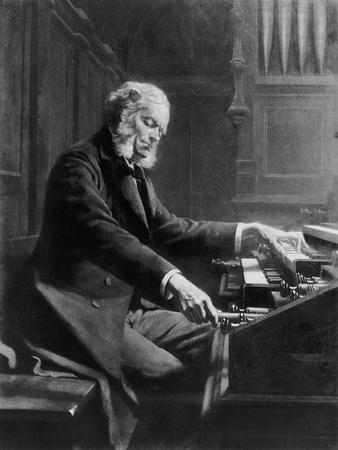


Cesar Franck (1822-1890)

(Franck is best known for this sonata for violin and piano, as well as other instrumental works like it.)

Franck was a cradle Catholic, organist, and pianist. Supposedly, the dude had such big hands that his works are very difficult - if not impossible - to play as written. (I wonder if Sergei Rachmaninov ever gave him a run for his money...?) He was a conservatory professor for a time and was known as an eccentric. His students who got into his confidence and could look past his childlike oddities often called him "Papa Franck" due to how amiable a teacher he was.

Franck believed strongly in expressing the virtues through music. Nearly every work he ever wrote, especially his instrumental music, he based on his meditation on the virtues, the Beatitudes, and various Gospel verses. He believed that music was intrinsically good, and if it was at all beautiful, it led the way to God. 

Probably my favorite Franck piece is his beautiful duet, Panis Angelicus, here, which I have been privileged enough to sing many times. (Correction: the version linked is a solo because apparently Youtube has no versions of the duet arrangement with good audio quality.)

Anyhow, that's all for the moment, folks. Sorry if the post is slightly boring... I don't seem to have a non-ramble mode when it comes to music, I'm afraid. Let me know if you like classical music! Who are some of your favorite composers?

Sunday, January 27, 2019

January Updates

Hello, mi amici. I apologize for my sudden disappearance - I wish I had an excuse. Unfortunately, as you all know me well, you know that I am very prone to be absent-minded, and often poor old bloggie suffers for it. So... I apologize. And I figure, since it's been a while, I'll attempt to re-start the blogging train with what I've been up to lately.
Life
I'm not even sure why this is a section of my life updates, because, obviously, my life is not a big part of my life. Anywho. Primarily, I went to a swing dance, babysat a ton, and failed to make enough time for homework.
Books
Now we're into the more interesting part. I am in the midst of reading C.S. Lewis' Space Trilogy (I'm almost finished with the last book), but not quite done, so I'll probably write a review of it as soon as I finish, but so far, I can tell you that these books are seriously worth reading - I would say that they're easily better by far than The Chronicles of Narnia, and Narnia's pretty awesome, so that should say something. I also am reading the Sacred Heart Press's Imitation of Christ, which is also quite commendable.
Writing
I finished TPoaM, as you all know, of course, and am currently on a bit of a break before my next big writing project. I am working on a short story which I intend to make known soon enough, but just haven't written a Meet the Books! for yet - but I am trying a new genre. Also, the story that will get finished this year has been decided, I believe - The Second Brother will hopefully not see the end of the year incomplete. I have been reading a lot of other people's writing as well, though, and come across some serious gems, some honorable mentions being Catherine Hawthorn's The White Rose and Megan Chappie's Barnstormers.
Music
Well. It seems that I'm in over my head... as usual. Not only am I performing in a musical (thankfully in the chorus), but I agreed to do a piano duet for a talent show, and sing solo for a Mass at my music teacher's parish. Help. Not only that, but I am on the road to getting a song I composed published, which is both exciting and simultaneously terrifying. If it is without kinks, then it should be out probably before the summer, but even with kinks, I shall probably announce its arrival within the year. As for the rest of my music... I'm taking it easy for a while. I realize that my music is still pretty amateur, so I'm putting my opera on hold for a time when I can do it more justice, and working strictly on more simple things right now. Hopefully this will allow for more devotion to choir and more attention to other people's compositions.
In Conclusion...
Well, all in all, it's not been a terribly busy month due to sickness (thankfully my siblings are all better now), but blogging will be better soon, I hope, and I will definitely try not to lose the thread again. I suppose I shall try and get that Meet the Books! post up soon and another snippet of TPoaM, as well as (perhaps) a new tag. For now, though, I believe that's all!
What have you been up to this month? Have you ever been swing-dancing? Do you know Lewis' Space Trilogy? Can you ever forgive me for forgetting the blog?!

Monday, July 30, 2018

Concerning Modern Music - A Brief Essay


           [Note - this is an academically-inclined essay, though I wrote it with keen interest and enjoyment in the subject, so do not feel obliged to read it if you are uninterested, and know that it is not so casual as my usual writing in its style, and so may be less pleasant reading, if you do indeed still wish to read it.]
           Oftentimes when I discuss music with my peers, the first thing that comes up is modern music. They like this or that popular song that played on the radio, and wonder why I don't like it. I am a musician myself - an amateur vocalist and pianist. It can be hard to please me music-wise sometimes, and I know this. Thus, as a short and perhaps less adequate answer, often I simply reply that it's just not my style of music. As a full answer, should this aforementioned brief answer not be enough, I now supply my argument at greater length.


            The first thing that one might notice when contrasting modern pop music to, for example, opera or classical music is that often the melody of the latter takes up at least five sheets of music, while the former's melody oft may be summed up in four bars of music. What does this even mean, though? Even to those who do not read music and so may not be able to tell this fact for themselves, I believe, the result is obvious just by listening to the music.

            Pop music often ends up, in no small part due to the lack of melodic development,  monotonous or rather childishly simple, consisting of a grating repetition of patterns quite indecipherable except as a musical version of a toddler's scribblings or as an unfinished fragment of a melody. The melodies of opera and the classical works are often rich, keeping a listener entranced by minutes upon minutes of new, fresh melody that, while keeping interest, always correlates with what has already occurred musically.

            My second peeve with the rather faulty musicianship of modern music is the - for lack of a better word - emphasis upon rhythm. The operatic singer of only a couple centuries ago would have known his or her singing part inside out; they would have to, because often their rhythms were so complex and multi-layered, and they would be singing with an equally rhythmic accompaniment or other complexly-timed vocal parts. Nowadays, the so greatly convenienced modern singer finds themselves practically singing to a digital metronome as the so-called 'rhythms' of their songs. They are being handed the rhythm of the song on a silver platter.
            Before I continue, though, it may seem that I believe the modern song has no complexity nor any difficulty, and that this is my main case against it. But, indeed, the modern song is not a simple chanson to pick up in an instant, no. Nor do I believe it to be so. The modern singer deals with many difficulties and difficult songs as well as the operatic or choral singer might, and the modern songwriter may well put as much effort into their works as Beethoven or Palestrina. And of course there are modern songs which are complex in their own rite, confusing the beholder upon first attempt at the music. But this does not refute the point that modern music is lacking in the greatest essential to music: beauty.


            Beauty depends upon many factors to exist, but primarily upon order and place. Without some sense of correlation and relevance in the music, the music is not beautiful, nor even music; it is simply an incongruous collection of noises. Modern music is perhaps not completely without order; as I have noted, there are still complexity and difficulty in many modern songs. But modern music is lacking in order by comparison, and even without comparison is found wanting in other aspects of beauty, namely, maturity.

            Maturity is an aspect of beauty often left out because there are beautiful things without great maturity (i.e. children, beginnings, etc). But the distinction is not that those things have no maturity, but they only have maturity according to their order. Children are new to the earth, and oft have little maturity compared to an adult, but this is not because they are lacking; it is because this is the way they are naturally according to their place in order as children. And in this, modern music may be distinguished; modern music has the maturity of an untaught child without that place in order and quite without the innocence that goes with it. Modern music often bears lyrics of whiny, selfish, or simply immature proportion, even when those lyrics are attempting to promote a good message within them. The music is no different; its childish melodies and violent rhythms are not only immature, but oftentimes only an emphasis upon the incomplete lyrics.


            There is, however, another point, which is often brought up at criticism of modern music; beauty cannot be the only point of music, and so therefore, music can be good music without being beautiful necessarily. This is a contradiction of the concept of music itself, though; music is by nature an art, and the point of the arts is to accomplish beauty by imitation of Divine Art and Divine Beauty. However, the point brings up a concept which also cannot be ignored: beauty, while it is the greatest and therefore most necessary goal of music, is not the only goal.


             Music's beauty may be increased by the music also containing other goods. But what are these goods? I believe that, as with any art, or any pursuit in existence, really, the ultimate goals are the three great goods of being: goodness, truth, and beauty. Music may be beautiful in itself even if it communicates a message quite fabricated and untrue or immoral (i.e. just as opera oftentimes is beautiful musically, it oftentimes tells a story that is less than decent or communicates an idea or history that is untrue), but the beauty of music is enhanced by its dependence upon these other two goods. Gregorian chant is often far simpler than opera or classical music, but, at least to my own opinion, it may be considered more beautiful because it communicates the Truth of the Divine, and because it tends ultimately towards the goodness of God.  Even music without lyrics can contain one of these other two goods; many of the great instrumental composers founds ways to put meaning or truths within their music without adding words (such as Tchaikovsky's Dance of the Sapphire Fairy from his ballet, The Sleeping Beauty, was put into 5/4 time to correlate with the five facets of a sapphire), and thus it is not impossible to accomplish goodness and truth in music even without lyrics.

            My case against modern music will undoubtedly anger some; debate often does by its nature, but this does not mean that it is not necessary to establishing the truth. However, whatever the populace may think of my opinion, and of this argument to which I firmly hold, I shall continue to firmly hold to it. And I shall conclude by expressing the hope that my argument has convinced some of my audience and that it was all in the pursuit of beauty, truth, and goodness, as all arts should be.
A penny for your own thoughts on the matter? Disagreement is fine (as I said above, I completely anticipate, so don't be afraid to disagree), just please keep it civil, as with any of my debate posts. I would love to hear your thoughts!

Wednesday, February 14, 2018

The Song of Violetta, Our Song - A Lenten Meditation From the Opera

Some time ago, I was having a sleepover with my best friend - it was pretty fun, and we did a lot. But the one thing that stuck in my mind was the opera we watched: the Gheorghiu/Lopardo production of La Traviata (The Fallen Woman). And within that, one part in particular, here.
It's a very famous part in the opera, but it didn't strike me for its fame - it struck me for its familiarity. The woman - Violetta Valery - and her song were all too familiar. The words are now almost painful to hear, knowing them. Violetta sings as though she hasn't a care in the world, doesn't she? And even the two words she always repeats are so carefree and pleasured; "Sempre Libera!," or "Ever Free!," she sings. And yet, there is a tone of pain. Who could guess that just before this, she was singing a different tune? A sad, drawn, and pained one, with a melody quite heartrending. And within that, she was singing of something else entirely.
In Sempre Libera, Violetta sings "Libera" (free), "Gioia!" (joy), "Follie!" (folly), and "Piacere" (to pleasure). So it seems she has forgotten her anxiety of before. But then suddenly a voice drifts in from the outside... a voice Violetta knows. The voice of Alfredo, Violetta's only faithful admirer, drifts in. She - being the fallen woman that she is - scorned him for being faithful, laughing at him. But that didn't change Alfredo. It did change Violetta, though. The melody Alfredo sings in the distance recalls when he first revealed his faithfulness to her, and it haunts Violetta, but she nonetheless tries to regard it as "Follie!" and enjoy herself. The words describe love, but in a different way from the love Violetta knows - "Mysterious, high, both cross and pleasure..." Violetta does not know of anything like this, and is disturbed.
The sad song of before, Ah, Forse Lui (Ah, Perhaps He...), spoke not of death, or pain, or really anything like that... and yet, it terrified Violetta and brought out mourning from her. It spoke of Alfredo, oddly enough, and Violetta considered to herself whether to actually stop and have love, serious, true love. She has never even thought about this before - Violetta is a prostitute, you see, originally from very poor beginnings - and faithful love is a strange idea to her. And a terrifying idea. Violetta's carefree joy seems to come from her later thoughts, that she must be free and enjoy herself, and love and party as she pleases, and only anxiety comes from thinking about faithful love and giving things up. How familiar.
The words remind me firstly of our culture - how many times have we heard nowadays from our public that we need to be free, be ourselves, enjoy life to its fullest? And they, unfortunately, suggest doing so in the same way as Violetta. They tell us that loving as we please and withholding from ourselves nothing we really want is the way to enjoy ourselves, the only way to be free and empowered. They tell us that it's all about us, and not about love really. And so we enjoy ourselves. We gallivant and break hearts and go about being 'ever free,' a stranger to anything other kind of love. And then, when faced with true love, we are confused. Maybe even pained. 'Why do we have to give other loves up for one?,' 'Why should we be faithful?,' 'Why must we have love in a certain manner?,' 'Why can't we just love anyone we want?,' We complain, and we think we are bound and shackled by these limitations.
Poor, poor Violettas. A lot of them. They agree so much with Violetta in the beginning, but they ignore what happens later. Even she caves in, and finally gives herself up to the true love of Alfredo. But it is still about her for a while. She lives with him and loves, but then one day, something happens. Alfredo's father comes to Violetta, requesting a simple thing. He speaks of Alfredo's sister, unwed, weak. She will never wed or be cared for properly if Alfredo and Violetta's relationship does not stop, because her reputation will be tarnished by it. So Alfredo's father, Signor Germont, asks Violetta to end it, pleading with her for the sake of love. But Violetta refuses. It is her love! Alfredo is hers now - what business has anyone to end this joy? But then, thinking once more of the words about love Alfredo once sang to her long ago, Violetta finally agrees. Now she fully acts in love, though she knows it will be hard. Because she can see Alfredo, her love, in the weak, unknown girl so much in need of care. And so Violetta gives herself up.
Now that Lent has started, I think ever more of this story. Because it's even more familiar than how I pointed it out above. Not just our culture is reflected in poor Violetta's story. What does the love of Violetta recall more than the Church, Christ's imperfect Bride? We are Violetta in a way. We do as we please, considering nothing but "Gioia" and being free. And yet, when faced with the alternative, we are scared. Faithful love terrifies us, because it shows us what we don't do. It shows us something radically different from being ever free or taking joy and pleasure above all else. Christ loves us more than anything, and far more faithfully even than the metaphorical Alfredo. And yet we remain Violetta in her Sempre Libera - we will have our freedom! And when we really think about giving ourselves up, the thoughts are pained and sad, and we only can think of how hard a path it would be. But perhaps He has real love for us. Perhaps we will give ourselves up. There's no better time than Lent. What are you giving up for faithful Love?

Friday, January 26, 2018

Far, Far Away - A Song

This is my first time ever posting one of my songs. They aren't what most people would like, so I've never really been brave enough to do anything but talk about posting them before. But I'm still not. I would like to take this moment, before I post the song lyrics, to give the source of this. Another blogger - someone whose blog title could've told me that she was a fellow out there somewhere - started a while back posting her own songs. She wrote them, and yet still let them out, and to her I am very grateful. Thank you, Lilah, the Singing Writer, for paving the way! And thank you for all the beautiful songs you wrote - I've loved the ones I've read, and I hope that a stranger like me won't embarrass you in saying thank you so very distantly. And this song is also in thank you to everyone who has ever helped me out with my music - my friend in VA, my aunt, and my wonderful music teacher who has taught me so much. And also, if he is listening, which I doubt, a bright-haired, brown-eyed little rascally boy who has so reluctantly inspired many an idea for me. :)
***
Verse 1

When I close my eyes, I see it clear as day,
And when the sunlight dies, the dream is there to stay -
I only know
Somehow, it's there,
I only know
It's waiting for me somewhere.

Refrain

Far, Far Away,
Beyond what I can see,
I know my home
Is waiting there for me -
Someday I'll go back,
Chasing the running day,
But for a little while,
I'm far, far away.

Verse 2

I see the golden smile
That now lights a known face,
And after this small while,
That smile my hand will trace-
I only know
I love the sight so well,
I only long
For it more than I can tell.
-To Refrain-

Bridge
I promise you, never
Will my thoughts be severed
From my love so far away,
But promise me too, home,
That you'll stay my true home
Until this earth's last day.

Refrain
Far, far away,
Beyond what I can see,
I know my home
Is waiting there for me -
Someday I'll be back,
Though my heart always did stay -
And then I'll never leave
To far, so far away.


Thursday, October 26, 2017

The Webs of Venezia - Synopsis

Hello again! :) Just coming back real quick before I take a short hiatus (I'll be out of town), to give you all the promised plot synopsis to my melodramatic (wanna-be) operatic masterpiece, Le Ragnatele di Venezia (The Webs of Venezia). I apologize in advance that it still has the musical number notations in it, but I did not get a chance to edit them out. :P Anyways, though, send any complaints or moaning concerning the ending or the horrible melodrama to me in the comments, and I'll be back in a couple of weeks (but I'll still try to respond to comments during this hiatus, though I can't guarantee anything).
***

[Opera Begins With Lively Overture, Bridging into Duet/Chorus Piece (see below)]

[Act One: Setting - Venezia LaVeirsi's Quaint 1800's Parlor]

Caecilia Teresina, a pretty middle class girl of a small Italian city, is a very sweet lady. She has long-held, however, the friendship of vivacious Venezia LaVeirsi, who is not. One day, they are together in Venezia's parlor talking. [Caecilia; Venezia; Chorus aria: Bello Come Un Giorno! - How Lovely A Day!] Venezia is practically bursting with a piece of news, and eventually persuades Caecilia into asking about it. So she relays it gladly. [Caecilia; Venezia duet aria: Dire, Quindi, Se Si - Tell, Then, If You Will] Her brother, Petrarcho, is coming back from a visit to his friend, Salvatore Bena. However, Petrarcho will be arriving that very day - and Salvatore will be with him! Caecilia offers to leave, since she would be intruding on their visit, but Venezia won't hear of it. So, instead, she tells Caecilia to go and prepare herself for company. Caecilia leaves to do so delightedly. While alone, Venezia thinks aloud to herself. [Venezia solo aria: A Lungo Ho Capito - Long Have I Known It] Venezia has harbored feelings for Salvatore for a small while, but has concealed from Caecilia this one factor in her excitement, wishing to keep it a secret. Salvatore has been there visiting many times before - being such a companion of Petrarcho - but has never paid any romantic attentions to Venezia. This visit, she hopes, will change that. She intends to somehow let him know... she just doesn't know how yet.
Soon, though, her little soliloquy is cut short by the return of Caecilia, and then her guests arriving. [Caecilia; Petrarcho; Salvatore; Venezia; Chorus aria: Ah, Ma Ora Sono Qui! - Ah, But Here They Are Now!] Venezia manages, by having Caecilia fetch something while Petrarcho deposits his baggage, to get Salvatore alone. She leaves the room for a moment, to call to Caecilia about what she wants, though still within hearing of the parlor. Caecilia's voice is heard offstage in answer to Venezia. As though prompted by the voice, Salvatore - alone - begins his own soliloquy, pondering how unusual he feels towards Caecilia, whom he has seen before, but never much known. [Salvatore solo aria (with minimal vocal appearance of Venezia and Caecilia): E Cos'e Questo...? - And What Is This...?] He loves her, but does not want to come to this conclusion, because he knows her so little. Venezia, though just in the next room, hears him, and thinks sadly to herself of this disastrous happening. But she forces herself to keep a stiff upper lip, and then goes to him. She tells Salvatore that she has heard all of this, and that she is willing to help him gain Caecilia's favor. [Venezia solo aria (with minimal vocal appearance of Salvatore): Signor, Il Tuo Vero Cuore - Sir, Your True Heart] She intends to help him but a little, and meanwhile display her own graces, so as to win his love herself.
[Act Two: Setting - Venezia LaVeirsi's Garden]

However, even with Venezia's miniscule and insincere aid, Salvatore begins to succeed in procuring Caecilia's favor. [Salvatore solo aria: O, Piu Bella Al Mio Occhio  - O, Most Lovely To My Eye] Venezia observes it with both sorrow and frustration, as her own love has only grown for Salvatore. Half desperate, she comes up with another plot. [Venezia solo aria: E Se, Forse... - And If, Perhaps...] She knows of the extreme respect that Salvatore holds for her brother, due to an event a long time ago when Petrarcho saved Salvatore's life. She also is aware that Petrarcho is yet unknowing of Salvatore's very inconspicuous affections for Caecilia. Venezia decides to use both factors to her advantage. So she decides to try and make Petrarcho - who is so very hotheaded - fall in love with her friend Caecilia. Petrarcho, as a far more open man, will be far more easily observable in his love than Salvatore , so Caecilia will perhaps be swayed more. Salvatore, on seeing his friend's so clear affections for her, and her own favoring of Petrarcho, may not dare - out of respect to them both - to start a rivalry, and so might leave off his only newborn attentions to Caecilia. Thus, Salvatore's attention may then be captured by the only other lady holding his friendship (a.k.a., Venezia). Venezia recovers herself in light of this plan, and laughs at the simplicity of love, believing this plan sure to succeed. [Venezia solo aria: Amore, Piu Semplice! - O Love, Most Simple!] Venezia begins work upon her brother immediately, when Caecilia visits them not long afterwards. Soon enough, Petrarcho does indeed seem to be falling, and Venezia gloats to herself over her own brilliance, thinking of the happiness she will so soon attain; her brother's felicity, Caecilia as a sister, and her love for her own. [Venezia; Chorus aria: Immagina, Venezia... Amore, Piu Semplice! - Imagine, Venezia... O, Love, Most Simple!]* However, neither Venezia nor her plan had counted on Salvatore leaving for his home again so soon, as he does but a day later. Venezia is told of it by Caecilia, and - while pretending easiness - is inwardly shocked and distressed by the news. [Caecilia; Venezia duet aria: Il Mio Amore Lontano - My Distant Love] Caecilia also tells Venezia of Salvatore's promise to write Caecilia, and to return in two months.

*All arias (except the original) that are labeled Amore, Piu Semplice merely have the main refrain of that aria repeated in them somewhere, and do not necessarily have the whole aria.


[Act Three: Setting - Venezia LaVeirsi's Quaint Parlor]

This news cripples Venezia's designs. If Salvatore is gone, then Venezia cannot work him for herself. But if he's writing Caecilia, he may still continue his courting of her, though far away. He will also then not observe in person Petrarcho's affections for Caecilia, and so will be unaware of any rivalry, thus being unhindered in his courtship. Venezia is forced by this realization to reconsider her strategies. [Venezia solo aria (with minimal vocal appearance of Caecilia; Salvatore; Petrarcho): Frantumi Sono Mie Speranze - Shattered Are My Hopes] So she comes up with a different solution. [Venezia solo aria (with minimal vocal appearance of Salvatore): Senza Di Te, Amore Mio... - Without You, My Love... ] If Venezia can further her brother's affections for Caecilia drastically in those two months before Salvatore returns, then Caecilia herself may be turned faster by the more serious-seeming, present man, rather than the slow-moving, distant one. Then, when Salvatore returns, he will find Petrarcho in a deeper courtship with Caecilia, and Caecilia will be no longer interested in him, thus achieving Venezia's originally intended result. She is hesitant to use this plan, though, because she fears that it will hurt Salvatore. However, she can think of no other way, and so reluctantly resolves on this plan. She then departs to find Petrarcho. After Venezia leaves, Venezia's maid, Pia - who has watched all these goings-on - comes out. She has heard Venezia's plot. She herself loves Petrarcho, but determines to put her own feelings aside for the moment to try and observe Venezia's efforts. She decides to tell Petrarcho of the plot if Venezia continues on this course. [Pia solo aria: Quello Che Ho Sentito Ma Malate Notizie - What Have I Heard But Ill Tidings?]
However, Venezia , having forgotten something, returns to the scene and hears Pia. Furious, she dismisses Pia from the household. As Pia leaves, though, Venezia formulates another plan. She coyly calls Pia back. Venezia tells Pia that this plot of hers would lead to Petrarcho's happiness, and that Pia will keep her job if she helps Venezia (while keeping a silent tongue). Venezia persuades Pia that Petrarcho's true happiness is at stake. As an added point, Venezia threatens Pia not only with the loss of her job, but also declares that she will tell Petrarcho of Pia's affections for him should Pia refuse or reveal the plan. [Pia; Venezia duet aria: Il Riscatto Del Tuo Silenzio - The Ransom Of Your Silence] Pia considers a moment, and then reluctantly agrees. Venezia applauds Pia for her wise choice, and yet again laughs in the shadow of her triumph. [Venezia solo aria (with minimal vocal appearance of Pia): Bravo, Pia!...Amore, Piu Semplice!] With the reluctant help of Pia, Venezia works on Petrarcho with slow but steady success. She now visits Caecilia with Petrarcho almost every day, and Petrarcho pays some attentions to Caecilia. Caecilia, though, still always in a delight from Salvatore's letters to her, barely notices the key of these attentions, and so welcomes Petrarcho, not realizing his feelings for her. Venezia, wishing to speed the process, one day tells Petrarcho that she feels rather too ill to visit Caecilia, and that he must go alone this time. At first Petrarcho is hesitant to do so, but then, considering the proposition a moment, eagerly agrees. [Petrarcho; Venezia duet aria: Fratello, Mio Caro Fratello - Brother, My Dear Brother] Petrarcho exits. He does indeed go to Caecilia, who - despite slight surprise that her friend is not also present - welcomes him. [Caecilia; Petrarcho duet aria (with minimal vocal appearance of Chorus and Pia): Petrarcho? Che Dolce Compagnia - Petrarcho? What Sweet Company] Caecilia enjoys his company for a period of time, and Pia - who was told by Venezia to follow Petrarcho - reports the goings-on to Venezia. [Pia solo aria (with minimal vocal appearance of Venezia and Chorus): Questo Avere Ho Sentito - This Have I Heard]  Venezia listens thoughtfully.
[Act Four, Scene One: Setting - The Grove Between Caecilia Teresina's and Venezia LaVeirsi's Houses, From Which The City Can Be Seen]

Soon enough, Petrarcho is visiting Caecilia - on his own - almost every day, to his sister's delight. [Petrarcho; Venezia; Caecilia; Pia aria: Rosa, Dolce, Rosa - Rose, Sweet Rose] Time passes quickly this way, and soon enough the two months are almost over. Venezia's plot appears in most areas to be succeeding. However, despite Venezia's displeasure at it, Caecilia continues to receive Salvatore's letters with great joy. Venezia only hopes that the letters will have little effect. [Venezia solo aria (with minimal vocal appearance of Pia): Un Cosi Poco Tempo! - So Little A Time!] Petrarcho's visits with Caecilia have become progressively longer and more serious, but - unknown to Venezia - Caecilia's ecstasy over Salvatore's letters has not diminished, and she little notices Petrarcho's attempts at courtship. [Petrarcho solo aria: Con Molla In Inverno - As Spring To Winter...] Venezia worries about the content of Salvatore's letters, and their effect on Caecilia. So Venezia tells Pia to fetch one of the letters for her, that she may read it. [Venezia; Pia duet aria (bridging into a solo Venezia aria): Tranquillamente, Pia... Di Amore E Di Avere - Quietly, Pia... To Love And To Have] All Venezia wishes for seem very close, and so she is cautious, so that she might not yet lose it. The very same day, Petrarcho leaves to see Caecilia, this time with the intention of proposing to her. Venezia senses his intent and warns Pia to stay out of Petrarcho's sight in her mission. Pia leaves. Venezia likewise departs, to go and await Pia's return. Caecilia and Petrarcho come. Petrarcho reaches Caecilia in the grove by her home, where she waltzes and sings joyously in a complete delight. [Caecilia solo aria: Nessuna Canzone! - No Song I Can Sing!] Petrarcho confusedly asks what is making her bustle about so, behaving in such a way. She replies gladly that she has received a letter from Salvatore, saying that he is returning that very day. The letter also contained a proposal of marriage from Salvatore, which, as she tells Petrarcho joyfully, she intends to accept. She tells him that, as one of her greatest friends, she couldn't keep it a secret from him. [Caecilia solo aria (with minimal vocal appearance of Petrarcho): O, Gioia Delle Gioie! - O, Joy Of Joys!]

Petrarcho is stood aback. He had never even known of his friend's courtship with Caecilia, much less ever anticipated Caecilia accepting a proposal from Salvatore. Caecilia observes Petrarcho's shock, and puts the letter down, concerned that her friend is unwell. She asks him what is wrong. [Caecilia; Petrarcho duet aria: Cio Che Vi Affligge Cosi? - What So Ails You?] He attempts to smile, and act as though nothing happened, saying he is fine. So, trying to forget it, Caecilia converses again with Petrarcho for a small while. Once more she notes his uneasiness and distraction, and asks if he is well. Petrarcho again tries to act as though untouched, and insists that there is nothing wrong. He tries to have Caecilia continue in ordinary conversation. Caecilia, still somewhat confused, tries to ignore the highly apparent discomfort of her friend, since he persists in saying that it is nothing. Meanwhile, as they thus converse, Pia carefully comes in and sees Salvatore's proposal letter which Caecilia has put down. Pia picks it up, and cautiously exits, going back to Venezia. Soon, Petrarcho and Caecilia separate,  and Petrarcho - now alone - reveals in aria his true stance. [Petrarcho solo aria: Cosi Vicino Al Mio... - So Close To Mine...] He has been shocked by this event, and hurt in now realizing that Caecilia never really saw him there in the first place. He recalls that Salvatore is to return soon. Petrarcho does not think he will be able to face Salvatore any time soon, and definitely not Caecilia,  so he storms off, going home to pack his things and enlist as a soldier in the nearby encampment.

[Act Four, Scene Two: Setting - Venezia LaVeirsi's Quaint Parlor (again)]

Meanwhile, at Petrarcho's home, Pia has returned to Venezia with Salvatore's letter. Venezia reads it and is blown aback. Shocked and frustrated, she sends Pia out, barely able to even speak in her upset state. This could ruin all her hopes; she has no way of yet knowing whether Caecilia will accept, and Salvatore is arriving that very day. Venezia is for a moment just in a state of shock. Then, suddenly, Petrarcho storms into the room, perhaps even more upset than Venezia. [Petrarcho; Venezia duet aria: Fratello! Che Stai Facendo? - Brother! What Are You Doing?] He quickly begins to gather his things together. Venezia, flustered, asks distressedly what he is doing. He tells her very briefly of his visit with Caecilia, and of Salvatore's accepted proposal to Caecilia, unknowing that Venezia is aware of the letter and its contents. Petrarcho tells his sister of his intent to go away, and that he won't be persuaded out of it. Venezia is yet more distressed by the news of Caecilia's intent and Petrarcho's decision. Venezia tries desperately to get him to stay, even attempting to cling onto him so that he might not leave. He refuses to reconsider, and so departs, despite Venezia's efforts to keep him there. Once he is gone, Venezia collapses onto the floor in her distress and sobs.

[Act Four, Scene Three: Setting - A Part Of Town, By An Enormous Stone Stairway, and The Street Leading Out Of The Town]

In the meantime, Salvatore has returned, and is just in town, ready to go to Caecilia. He hesitates a moment, unsure whether she will receive him as he'd hoped. [Salvatore solo aria: Il Suo Tocco - Her Touch] But then, suddenly, from atop the great stairway by the road, Caecilia herself comes, and spots Salvatore. She rushes to him, and tells him of her agreement to the proposal. Joyfully, Salvatore lifts her high into the air, and - upon her landing - they sing a happy duet, proclaiming their gladness. [Caecilia; Salvatore duet aria: Altezza Di Nessuna - No Star's Height (Is Greater)] Caecilia tells Salvatore that they must inform their good friend, Venezia, of their news. Salvatore heartily agrees, still very grateful for Venezia's previous aid to him. So the couple leaves, to go and tell Venezia their joyful news. Then, on the edge of the road, Petrarcho is traveling out of town, to go to the regiment's encampment, still upset. Suddenly Pia runs up after him and stops him. She tries to convince him to come back, revealing all of Venezia's plot and how Venezia forced her to aid in it, also revealing her own feelings for Petrarcho. She urges him to come back, at least to speak with his sister. [Pia solo aria: Ti Prego Ascoltami, Petrarcho - Please Hear Me, Petrarcho] Shocked by the message, and touched by Pia's cares, Petrarcho agrees to return, and immediately rushes to go back to Venezia, Pia following. Atop the stone stair stumbles Venezia. She is in a great distress, still thinking she has lost everything. In her hand she carries a bottle of poison, with which she plans to kill herself. She glances down at the bottle in her hand, still unsure, but with a great upset in her mind. She slowly begins a sorrowful soliloquy to herself, thinking of what she is about to do, and what could have been. [Venezia solo aria: Ma Non Doveva Essere - But It Was Never Meant To Be] She opens the bottle, still knowing within her that it is wrong. Her soliloquy intensifies, and a battle rages in her over whether to drink it. Finally, with one final effort, she overcomes the desire to end it all, and she throws the bottle far away from her, down the stone steps. Exhausted from the effort, but half relieved now that it is over, she ends her song. The stage lights dim almost completely, but then, with a sudden scream and ominous turn of the music, the lights flash for a moment, only just bright enough to see a figure fall from the top of the stone steps. When the lights are bright again, the chorus can be seen, crowding in the corner of the stage. Then, from either side of the road, the two couples - Caecilia and Salvatore, and Pia and Petrarcho - can be seen rushing into town, one happily and the other grimly. They meet each other. Pia and Petrarcho ask the other two where Venezia is. Of course they reply that they do not know, but wish to, for they have been searching for her for hours (as Pia and Petrarcho have likewise done). Neither couple has seen her, and Pia and Petrarcho worry. Pia tells them of all that has happened, and Venezia's plot. Now both couples are worried.
Then, the chorus starts loudly crying out and singing, and part of the chorus goes to the two couples and begins to scream and exclaim. [Chorus aria (with minimal vocal appearance of Caecilia; Petrarcho; Pia; Salvatore): O, Che Disgrazia! Tragedia Ci Colpisce! - Oh, What Misfortune! Tragedy Strikes Us!] Petrarcho asks confusedly what has happened. The members of the chorus explain flusteredly that an terrible thing has occurred, and a young woman is injured at the foot of the street's stone steps. She has fallen from them due to an accident. All the citizens rushed when they heard her scream. All have gathered, and a doctor has been called, but there is nothing that can be done, and she is languishing near her end. Petrarcho's mind immediately jumps to Venezia with worry, and he - with the other three - push through the crowd to the end of the steps, to where the injured girl can finally be seen. It is indeed Venezia. Petrarcho cries out in distress, and Caecilia begins to sob. [Petrarcho solo aria (with minimal vocal appearance of Caecilia; Pia; Salvatore): Venezia! Come Puo Essere? - Venezia! How Can This Be?] He mourns. Venezia wakes a little, and sees them before her. They are glad that she has awoken, but are still sorrowful in the shadow of what is to come. Venezia knows she is dying. She confesses to all of them her plot, and muses a little sadly on the irony of her death - how she strove so hard, making the choice not to end her life, and then it was ended for her only moments later. [Venezia solo aria (with minimal vocal appearance of Chorus): Pregate Per Me, Miei Compagni... Amore, Piu Semplice - Pray For Me, My Comrades... O, Love, Most Simple] She admits aloud that Love has conquered her and her arrogance, and that she only hopes they will understand and forgive her for all that she has done. Then, finishing the last full aria in the opera, Venezia dies.

[End Of Opera]
What did you think? Are you, like my previous readers, slamming your head against a wall in frustration? Or are you laughing from the melodrama of it all? (trust me - I would not be offended by this reaction; in fact, it would tickle me pink to know that you were cracking up reading this - trust me, I was too.)  ;) Or are you now depressed? Or perhaps you are now nodding to yourself in affirmation of your decision to never get into opera, haha? Talk to me! I would enjoy all comments - especially heckling ones (truly, when people heckle my stuff, it gives me more laughter than I can say, and it keeps me from getting a big head about it, so I very honestly can say go ahead and heckle.  After all, it is opera! ;)

Wednesday, October 25, 2017

Meet The Books! - The Webs of Venezia, a.k.a. Le Ragnatele Di Venezia

Hello, all! I'm back again with another Meet the Books! feature today. But, before I begin - as always - I will relay what Meet the Books! is. :) Meet the Books! is a blog feature intending to introduce your stories - novels, novellas, plays, operas, whatever they are - to your blog audience. Anyone can join, and the only rules are to answer the questions and link back here in a comment so I can see. :D I love participation, so feel free to take it up for your novels, novellas, plays, operas, etc. And speaking of operas - that is what I'm here today to introduce.

What is the genre?
What?! Why is Belle blogging about an opera?!
I'm sure those are along the lines of what you're thinking. ;) Well, maybe it's because - in addition to my novels and one Broadway musical - I am in the midst of writing an opera (what?! I love writing music!). Two, to be precise, but I'm only talking about one of them today.  So, the genre is a tragic opera (I know, I know - but really, unless you write operas, nobody today gives your writing any leeway to be nice and thoroughly melodramatic!). And, for those random nerd-dork-geniuses in the audience who know what this means, this opera is an opera-comique (in Italian!).
But before anybody stops reading this post because opera isn't their thing, please! - remember that an opera is nothing above you - all an opera is is a novel put to music and a foreign language (and sometimes not even the latter part). Almost all operas are from novels.
What is the title? Time period?
Le Ragnatele Di Venezia - translated as The Webs of Venezia. And the time period is the middle-ish 1800's - a common time period for operas. :)
How is it written (point of view, MC, etc.)?
Well... currently its only finished guise is in synopsis form, but I'm in the midst of writing the libretto (play format) as well. And the main character is a young, middle-class Italian woman named Venezia LaVeirsi (she is the title-role).
Who are the characters?
Haha! Glad you asked! ;D
Venezia LaVeirsi is a vivacious mezzo-soprano Italian girl with a lot of determination (perhaps a bit too much) and a mind as quick as anything. However, she is a bit... off, to say the least. Being incredibly clever and determined does not change the fact that she is rather childishly stubborn and impulsive. But, somehow, this stubborn, world-wise gentlewoman is very best friends with
Caecilia Teresina, another middle-class Italian who, unlike Venezia, is incredibly innocent and quite naïve. Caecilia is not the main character, but a whole lot revolves around her (unbeknownst to her) in the opera. There's really not much to say about her except that, again, she is about as innocent (and absent-minded) as it gets. She is a soprano role.
Salvatore Bena is a foreign tenor gentleman of a soft-spoken nature. He is very quiet, and so not much is really known about what goes on in his head most of the time, which is a frustration to Venezia, who has hoped for ages that he will notice her, and contrived to try and make him. Salvatore often visits the LaVeirsi home at the invitation of his much-respected friend,
Petrarcho LaVeirsi, Venezia's baritone brother. Petrarcho is a rather impulsive and hot-headed man (rather similarly to Venezia), and often needs Salvatore to balance him out. Salvatore is quite devoted to Petrarcho, on account of a time when Petrarcho saved his life (though in a quite undramatic situation, I assure you; Salvatore was about to be absent-mindedly run-over by a horse and cart in the streets).
Pia Toscana is the LaVeirsi maid who has long harbored feelings for Petrarcho. She is the only person who really sees Venezia's character in the right light, but can't really say much, being only a lady's maid. Pia is a coloratura soprano role.
Other than that, the only characters are unnamed, being the chorus members (a.k.a. the Italian citizens).
What does the plot consist of?
You remember how I said earlier that Venezia had a thing for her brother's friend, Salvatore? Well, the opera centers around her designs - her webs, if you will - to try and secure him for herself. However, that is made rather difficult by the fact that Salvatore feels exactly the same way about Caecilia. So... complications ensue. Yes, I know - the melodrama of opera. ;) But it'll sound better put to music (actually, I intend to post the full synopsis shortly, so then you can get more details plot-wise).
What is the setting?
Well, the scenes are these:
-Venezia LaVeirsi's quaint 1800's parlor
-Venezia LaVeirsi's garden
-The grove between Venezia and Caecilia's houses, from which the rest of the city can be seen
-A part of town, where there is an enormous stone stairway and the road leading out of town
And that about covers it. Not a particularly exciting setting, I know, but the music has been sheer ecstasy to write. :)
Who are the favorite characters so far?
Um... not Venezia...? :P Well, my favorite character to write in it is Salvatore, but no reader has made much comment except to bemoan the ending or comment on the little bit of music that there is.
What is the favorite scene so far?
So far, a scene in the beginning where Salvatore thinks aloud by himself (singing my favorite of his arias so far, E Cos'e Questo...? - translating to And What is This...?).
Any themes of music for this work?
Well, song-wise, I have a pretty good amount composed.
E Cos'e Questo...? (And What is This...?) - a tenor aria for Salvatore with brief parts for Venezia and Caecilia, from Act One.
Nessuna Canzone! (No Song I Can Sing!) - a soprano aria for Caecilia in Act Four, the final act.
Petrarcho? Che Dolce Compagna (Petrarcho? What Sweet Company) - a soprano/baritone duet for Caecilia and Petrarcho in Act Two.
Frantumi Sono Mie Speranze! (Shattered Are My Hopes!) - a mezzo-soprano aria for Venezia in Act Three or Four.
Il Suo Tocco (Her Touch) - a tenor aria for Salvatore... which currently only has prototype lyrics and no melody yet. Possibly for Act Four.
Rosa, Dolce Rosa (Rose, Sweet Rose) - a baritone aria for Petrarcho that I am soon going to tamper with and make into a baritone/soprano/mezzo-soprano/soprano quartet for Petrarcho, Caecilia, Venezia, and Pia in Act Two or Three.
Dire, Quindi, Se Si (Tell, Then, If You Will) - a soprano/mezzo-soprano duet for Caecilia and Venezia in Act One.
And the flourishing main theme of the opera which was my most rewarding and first labor in this work (in fact, I'm still not sure whether it or the opera came first),
Amore, Piu Semplice! (Love, Most Simple!) - a mezzo-soprano aria for Venezia which is carried on throughout the opera, but is first heard in the last part of Act One.
Phew! But that's all of them so far (I know, I know - give me a break! I've only been working on this opera for a year this coming February, after all! I'll compose more music sooner or later). But, soon enough, a professional *cough cough actually just a training professional cough* opera singer will sing it for me, and then I will broadcast it all over the world! Just kidding. But I might post it on this blog. ;)
Any drawings?
Yes! I have here a drawing of Caecilia and Petrarcho in the grove between the LaVeirsi and Teresina homes. It took a while, and unfortunately Petrarcho looks rather wimpy, but at least Caecilia turned out really well. :P
This is the as of yet uncolored scene that goes with the song Nessuna Canzone!... and Petrarcho looks like he has a bad headache. :P


Any snippets?
Not this time. Like I said before, soon I'll post the full synopsis of it (and you can all roll your eyes all you want - this is an opera!). Hopefully it will be sometimes in the next few posts.
Strong point in story?
The musical themes. I feel like the main theme and sub theme (Amore, Piu Semplice! and E Cos'e Questo...?) are coming through really well, and as soon as I research some more (and by 'research', I mean listen to a ton of opera - yay, research!;), I will write some of the orchestration and accompaniment - seeing as, up to this point, I have written only vocal music.
Weak point in story?
Probably the libretto. It's going very slowly, and seeing as Italian is not my first language, I'm not exactly Verdi when it comes to writing lyrics and speech.
What are your plans for it?
To finish it, edit it, re-edit it, and then try and get it out. First, I plan to have my undercover assistant (a.k.a. my best friend who is currently studying abroad for an operatic vocal career, and whom I mentioned earlier) help me in the underground by getting bits of it sung at recitals and things. Then, I will have it performed in larger and larger bits informally, until - bam! - there it is on stage, the full thing. Then, everybody appreciates my genius so much that it is one of the most popular operas since La Boheme I hope and pray that it gets performed professionally and takes off. :)
Any particular writing habits for it?
Well, the whole thing - synopsis and the little bit of libretto that there is - is all written in a big, purple notebook that has a honeybee sticker on it. And I always sit at my little cupboard piano when I'm composing the music (believe me, the name 'cupboard piano' makes it sound small - it's deceiving). I almost always drink coffee, though, when I'm composing.
The unforgettably great (and incredibly handsome) tenor, David Miller.
If it were made into a movie, what would be your ideal cast?
I hope it is made into a movie someday. But, in the meantime... I can't imagine anybody but Angela Georghiu playing Caecilia for some reason (which... is bad for this opera's movie, because Angela Georghiu was performing back in the 90's). And it's the same case for Salvatore - can't see anyone but David Miller playing him (which may be because I see Mr. Miller as the ideal tenor for every opera role...?). I would pick Luca Pisaroni or Thomas Weinhappel as Petrarcho, Beverly Sills as Pia, and either the great Cecelia Bartoli or Maria Callas as the title role of Venezia (again, bad for the movie, because those two were performing in the 80's and 60's unfortunately...). :P
What do you think? Would you go and see it? Would you listen to it? Is the plot melodramatic enough for an opera, or will you have to wait and see the synopsis (which I will post shortly)? Chat with me! :)

Friday, September 22, 2017

The All-Time Best Writing Music Ever

Hi! I'm here today to share a list of my favorite songs to write to. I will warn you, there are very few strictly modern songs on this list, because writing music is generally supposed to inspire thought or emotion, and modern music inspires no thought and little emotion besides anger or irritation (at least In my own case), and I personally just don't like it. I have rare heard a modern song that I liked unless it was of a more classic genre (such as Il Divo!). But, anyways, that being said, I do intend to list ones that not only obscurity-fans like me will enjoy. So here you are, the best writing songs of all time not listed in any particular order (ones with an * are instrumental, and I noted the ones I use as character themes):
1. Once Upon a Time. Best version(s) by: Andy Williams (Echo Torriven from The Pain of a Memory's theme).
2. My Heart Will Go On, also known as Il Mio Cuore Va, or the theme of Titanic. Best version(s) by: Il Divo; Sarah Brightman (if you prefer it wholly in English, Celine Dion's original is not my personal favorite, but it's not bad).
3. I Will Always Love You. Best version(s) by: Il Divo; Katherine Jenkins (and Whitney Houston's isn't bad).
4. Sempre Sempre, translated as Always, Always. Best version(s) by: Il Divo (just so you know, they have the best version of most songs). ;)
5. What Now, My Love?. Best version(s) by: Vic Damone; Andy Williams.
6. My Own True Love, also known as the theme of Gone With The Wind. Best version(s) by: Original movie soundtrack*; Jose Carreras (his is the only good one with lyrics I've heard).
7. The Stag. Best version(s) by: Patrick Doyle*.
8. Adagio, also known as Anytime, Anywhere. Best version(s) by: Il Divo; Sarah Brightman.
9. Wishing You Were Somehow Here Again (from Phantom of the Opera). Best version(s) by: Sarah Brightman.
10. Anthem (from Chess). Best version(s) by: Josh Groban.
11. If I Loved You (from Carousel). Best version(s) by: Josh Groban and Audra Macdonald.
12. Time To Say Goodbye, also known as Con Te Partiro. Best version(s) by: Il Divo; Il Divo and Lea Salonga; David and Sarah Joy Miller; Katherine Jenkins (I personally don't care for the rather overrated original by Andrea Bocelli and Sarah Brightman, but if you like it, then it's plenty good for writing as well. It's just that I don't like Bocelli).
13. Hooked On A Feeling. Best version(s) by: Blue Swede.
14. Remember When It Rained. Best version(s) by: Josh Groban. (Percy and Celeise from Alomina's theme).
15. La Traviata Prelude/Overture. Best version(s): Any version true to the original music is good*.
16. What I Did For Love (from A Chorus Line). Best version(s) by: Josh Groban.
17. An Old-Fashioned Walk. Best version(s) by: Doris Day and Frank Sinatra.
18.A Time For Us, also known as Un Giorno Per Noi, or the theme to Romeo and Juliet. Best version(s) by: Andy Williams; Vic Damone; Josh Groban.
19. If I Can't Love Her (from Beauty and the Beast). Best version(s) by: Thomas Hampson!!!; Josh Groban.
20. Bring Him Home (from Les Miserables). Best version(s) by: David Miller (I regret to say that his version is even better than Il Divo's, actually); Il Divo; Thomas Hampson.
21. Old-Fashioned Wedding (from Annie get Your Gun). Best version(s) by: 1992 Revival Cast; Thomas Hampson and Kathleen Battle; (warning - this song has a high comedy content!). :)
22. Ten Minutes Ago (from Rodgers and Hammerstein's Cinderella). Best version(s) by: Santino Fontana and Laura Osnes.
23. All I Ask of You (from Phantom of the Opera). Best version(s) by: Il Divo and Kristen Chenoweth; Michael Ball and Sarah Brightman.
24. Who Can I Turn To?. Best version(s) by: Il Divo; Andy Williams.
25. Can't Help Falling In Love. Best version(s) by: Il Divo; Chris Isaac; Elvis Presley; Andy Williams.
26. The World Will Know (from Newsies). Best version(s) by: Original movie soundtrack; Original Broadway cast.
27. La Valse L'Amour, translated as The Waltz of Love. Best version(s) by: Patrick Doyle*.
28. She'll Never Know. Best version(s) by: Andy Williams (you're going to see a lot of Andy Williams, because - while Il Divo has the best music of all time - Andy Williams has the best writing music of all time).
29. When I Look In Your Eyes. Best version(s) by: Andy Williams (surprisingly dramatic considering both the cheesy title and the fact that it came from the movie Doctor Doolittle).
30. Solitaire. Best version(s) by: Andy Williams (oh man, I listened to that song like a dozen times a day - actually... I don't think that's an exaggeration, sadly - during Camp NaNoWriMo. Captain Orlando Rogan from The Pain of a Memory's unofficial theme).
31. Just Show Me How To Love You. Best version(s) by: Jose Cura and Sarah Brightman (Charles and Mina from Alomina's theme).
32. The Flower Duet (from the opera Lakme). Best version(s) by: Anybody that can sing it. The only specific version that comes to mind presently is Anna Netrebko's, which is very good (trust me, this song is so good, even a non-opera lover won't be disappointed, and might even still recognize it - it's one of the best known duets in the opera world).
33. I Won't Dance. Best version(s) by: Frank Sinatra; Fred Astaire (make sure it's Fred Astaire alone! - the duet with Ginger Rogers is terrible).
34. When The Band Goes By (from Sweethearts... which you really must check out). Best version(s) by: Nelson Eddy.
35. Sweet Surrender. Best version(s) by: Thomas Hampson.
36. Alone, also known as Solo. Best version(s) by: Il Divo (the still quite enjoyable original is by Heart, but if you don't like 80's music, then that's okay).
37. What a Wonderful World. Best version(s) by: David Miller (ha! I bet you thought I was going to list the Louis Armstrong original, didn't you? Well I threw ya for a loop. I wasn't ever a fan of that song - especially not that version - until I heard Mr. Miller's rendition. Now... I LOVE THAT SONG!).
38. Empty Chairs at Empty Tables (from Les Miserables). Best version(s) by: Michael Ball; Josh Groban; Carlos Marin (just warning you so you won't have a shock attack when you look up Mr. Marin's version; it has some of the best voice inflection and voice-acting I've ever heard in any version, but it is in Spanish, because it's from the Madrid performance).
39. Red Roses For a Blue Lady. Best version(s) by: Andy Williams (I have never heard anyone else sing it, though).
40. Without You. Best version(s) by: Il Divo; Andy Williams.
41. As Time Goes By, also known as the theme of Casablanca. Best version(s) by: Andy Williams.
42. Stranger on the Shore. Best version(s) by: Andy Williams.
43. Roses and Roses. Best version(s) by: Andy Williams.
44. Sway, also known as Quien Sera. Best version(s) by: Il Divo; Rosemary Clooney.
45. Fly By Night. Best version(s) by: Andy Williams.
46. Senza Parole. Best version(s) by: Il Divo.
47. Caruso (a song dedicated to the great tenor, Caruso, but the lyrics would work for a character as well, seeing as they don't mention Caruso by name specifically in it). Best version(s) by: Il Divo; Katherine Jenkins; Josh Groban.
48. More. Best version(s) by: Andy Williams (Blakely from Alagna's official theme).
49. It's Impossible. Best version(s) by: Andy Williams; Vic Damone (Blakely from Alagna's original but unofficial theme, as I love the song but rather disagree with one particular line of lyrics from it).
50. Beautiful Dreamer. Best version(s) by: Thomas Hampson.
51. The Grande Hall. Best version(s) by: Nox Arcana*.
52. Belladonna. Best version(s) by: Nox Arcana*.
53. Music Box. Best version(s) by: Nox Arcana* (these three Nox Arcana songs are good for really sad or scary writing, because they are very haunting and even come from an album of music meant to be a soundtrack to a haunted house).
54. Shenendoah. Best version(s) by: Thomas Hampson.
55. Don't Cry For Me Argentina (from Evita). Best version(s) by: Il Divo; Sarah Brightman.
And that about wraps it up! There were many others I could have mentioned, but I think that fifty-five is quite enough. ;)
What did you think? Are you interested in any of the above songs? Will you check them out? Any questions concerning their genre, where to find them, or how I found them? I would love to chat! :D Also, I am back to blogging now!... hopefully! ;)