Pages

Showing posts with label The Silver Screen. Show all posts

Sunday, January 23, 2022

Tradition, Progress, and Building on Seashells: Some Thoughts on Disney's Moana

[A Note: I know I am pretty behind the times in writing something about Moana, but the Muse calls when it calls, I suppose. Anyhow, this is an essay I wrote originally for school, so while I have tried to spruce it up in some regards, it still may be a little formal... Apologies on that account - hopefully it still has some interest to it, at least as a thought experiment.]


***


                 In 2016, Disney released a children’s film, Moana, detailing the story

of a Pacific Island princess and her quest to save her home. I saw it a good bit later

than that, but we'll leave that fact aside. There is one moment in the movie that

has always piqued my interest (as well as other emotions), near the end of the

movie. It's a potent little curio, and the last shot in the film: a seashell on top of a

tower of stones. But I'll get back to that in a minute.


                 In the film, the eponymous princess, Moana, is drawn to the ocean even

though her father, the king, forbids venturing beyond their island’s waters. Moana

is the crown heir of the kingdom, and she is taught many of her people’s traditions

by her parents. She, however, feels locked in by those traditions. A malignant

goddess is slowly poisoning the islands, making them fall into decay, and this

state of things is beginning to threaten even Moana’s island. Moana decides to

go against her people’s present law and search for someone who can return an

ancient artifact and restore her island’s vitality. Eventually, of course, the mission

is accomplished, Moana returns to her island and people, and she plans to tear

down the laws in favor of the ancient ways of voyaging, with everything

hunky-dory a la classic Disney style.


                   Through the film, the watcher is presented with an idea that to truly be

happy or progress as a society, we have to break down tradition and discard it.

Even though that's the movie's conscious message, however, Moana 

unconsciously undermines it. Accidentally, the film shows us how off the idea

is because it skews the definition of progress, fails to take advantage of the past,

and has no tangible goal or standard.


         Within the movie, the themes of tradition and progress are perhaps best

represented by the curio beginning when Moana’s father takes her up to the top

of the island to show her something. He shows her a stack of stones at the top of

the mountain, each one placed by a chieftain of the island upon his crowning to

“raise the island higher.” Moana is expected to place her own stone one day. At

the end of the movie, Moana returns to the island briefly and we see that she has

placed a seashell atop the stones, giving a visual symbol of her tearing down the

old ways.


         Moana is different from her people and their expectations in many ways.

She loves hearing the stories of other worlds outside her home. She has trouble

accepting the idea of being chief one day, a role destined for her from birth. She

feels called to go beyond the reef around their island, the symbol of her father’s

laws. There is something freeing in the beautiful music and wide, open aesthetic

of the scene when Moana finally makes it beyond the reef successfully. Clearly,

we as the watchers are meant to glean that freedom from tradition means

fulfillment and progress.


         The problem with this idea is that the progress Moana accomplishes

is not fulfillment, even in the scope of the movie. What we are meant to see as

the end goal – Moana transcending her people’s ways – is really only a means

to an end. Throughout the film, the ultimate evil is seen as the destruction of

Moana’s island and home, the paragon of her people’s traditions and

domesticity. Conversely, the ultimate good in the film could be seen as the

preservation of this home and people, and Moana’s safe return to her family.

The very reason Moana disobeys the laws and leaves the island is to save her

people’s way of life from destruction. If Moana’s people had merely become

voyagers at the beginning of the movie, they could have fished and sailed to 

their heart’s content, not needing the island as a home. Even at the end of the

movie, when Moana’s people do voyage, the lyrics of the ending song show an

attachment to home and the old ways: “We keep our island in our mind, and

when it’s time to find home, we know the way… We are explorers,” rather than,

say, “we are nomads” or “we are voyagers.” If the breaking of tradition and the

casting off of old ways were really the route to happiness, then why does the

happy ending of the movie merely show an addition to old traditions, rather

than their eradication?


         The key to both the intentional and unintentional portrayals of the

theme in the film is that tradition and progress are inherently related. Let's go

back to the stone tower now. Like the stones on Moana’s island, tradition is the

foundation that lets progress raise a civilization higher. With each stone, more

is added to society, but the tower would fall and break if one of the lower stones

was removed. That little seashell on the tower is such a powerful moment,

illustrating the clash of themes perfectly. The seashell does raise the island 

higher for one generation, and it looks beautiful at first, but then it makes it 

impossible for future generations to build on the tower without either discarding

or crushing the seashell. In other words, the seashell can’t remain the standard or

else no progress will be made. Tradition – the stones – must remain a part of

society’s standard in order for progress to be made. The fact of it is this: like

Moana’s people, we need to respect tradition in order to move forward in society.

While the movie wants us to see tradition as outdated and inhibitive, what it

accidentally shows us is that tradition is a healthy part of society. Even Moana’s

return to the old ways of voyaging is not a destruction of the stone tower. It makes

use of an old way of life, just altering details for the time’s needs. This is the very

definition of progress.


         In short, while the conscious theme of Moana is the harmfulness of

tradition, the movie can’t escape from the truth that tradition is necessary to

have any kind of goal or standard for civilization. The film tells us that the laws

and traditions are a handicap to fulfillment in life, but what it accidentally shows

us is that the laws and traditions are a necessary step on the path to happiness.

The "path less traveled" in the movie is, in truth, merely a branch off of the old

path. Humanity needs tradition. After all, you can’t build on seashells.


(Well, those are my thoughts, anyhow. Let me know what you think! Anything to add or contest? I offer yet another apology for the formatting... I can't seem to figure out the new way Blogger works...)


Tuesday, November 12, 2019

AABB, Part Two: Belle

Not so long ago, I posted that I would be attempting a moral defense of Disney's Beauty and the Beast; this shall be the first real chapter. And, fittingly enough, as the story begins with a prologue and then with Belle herself, so will I.

Belle is an interesting character... and a controversial one. Because there are so many interpretations of both her and her actions, she ranges from being a characterless bookworm to a self-centered feminist to a paragon of redemption. Well, here goes...


Her Treatment of Others
One of the main things people point out first about Belle is that she seems rather rude and dismissive of other people, especially in the stage version. She calls the villagers "little people," their town "dull" and "provincial," Gaston "boorish, brainless" and "monster," the Beast also "monster" and "fool," and generally has no friends. Not to mention, she seems to regard other people's lives as irrelevant - how they live is of no consequence to her. This is seen not only in her sung insults above, but also in her careless attitude towards the servants and the rules in the Beast's castle. Now, even for all this, you might notice that I still said she only seems rude and dismissive of other people. Well, the truth of it is, she doesn't want to be - this is one of Belle's defining features, in fact.

Belle certainly has a disregard for the rules, but I believe that this is more out of her contrary nature rather than her disbelief in them or a progressive mindset (as some have claimed). Think about it. She only goes to the West Wing because she was told she shouldn't; same for her eating despite his command. And, really, is there another good example of Belle breaking the rules? She doesn't do it often; I would say her breaking of the Beast's rules is more a way of being contrary to the captor she so loathes at the beginning, not a lifestyle. The involvement of the servants is merely an afterthought to Belle - she didn't do it to get them in trouble, nor did she show any sign of even recognizing that possibility.

For Gaston and the Beast's parts, Belle's critique of them is really only an offense when piled upon other things. After all, isn't Gaston boorish and brainless? Does he not treat her with the utmost arrogance and near-monstrous presumption? And does he not even go to the length of attempting to make her miserable to make himself happy, as in the case of imprisoning her father? And what of the Beast? Didn't he also imprison her father, as well as her? Did he not behave himself with every intent of being the monster he seemed? As for his being a fool, this is a mere passing shot of Belle's contrary character - it was rude and uncalled for, but it is yet another part of the arc that she shapes (as I will demonstrate below). 

As for Belle's treatment of other people in the village, her dismissiveness is a clue to her character arc. She calls them things like "provincial" and "little people" in an unintentional ironic sense of humor - she is one of them, but not enough to reap the benefits of being a little person... in that, she is the littlest of them all. In her complaining of the village life, she doesn't realize how much pettier even than them she has become - while they concern themselves with bacon, fish, bread, and the market prices, she has a leg above them and complains about life in general. But it's not meant as an insult.

When Belle complains, her intent, however pettily played out, is that she merely wants something higher than being alone in the village. Her conversation with her father reveals this perhaps more than anything. She asks him if, for her being alone, she is odd, as she hears. He replies that she should not acknowledge the other villagers - their opinions and what they say is quite irrelevant, and she should not care whether she has a friend among them. They are, after all, "the common herd," as he claims, and aren't worth much. Reluctant to accept this truth, Belle vaguely affirms the notion - if I'm not one of them yet, then it must not be worth it to be one of them, she thinks. But we never really get the idea that Belle is crazy about the idea - she accepts it because the only friend she does have says it's so.


What Does Belle Really Want?
This gets to the very root of exactly what Belle desires. She does not shun the traditional life, or other people's company - in fact, this is what she yearns for most. It is, once more, her contrary personality and the influence of her well-meaning but oversighted father that shapes her dismissal of the small world she inhabits. The best look we get of Belle's dreams are when she sings of the beauty she finds in books - not of the traveling life or of great distance from other people, but of prince Charmings and true love, of someone who will be a companion to her, and of the chivalry of old, beauteous devotion. It's not that she rejects the husband-wife-children-life attitude of the villagers, but, rather, she envies them so very greatly because that is what she desires. She doesn't want to be passed off as one more girl marrying a good-looking guy for adventure and thrills (like so many of the women fancying Gaston are), but wants desperately to marry for love, and for someone who will stick by her in life. 

Belle rejects Gaston because she knows that he will not help her. Not only is he openly unfaithful, but he cares much more about what he does outside the home than in - Belle is irrelevant to him except as someone to be there for the rare time when his whim lies with making a legacy for his household. He can't help her discover herself, he can't help her live up to a higher ideal, and he certainly cannot love her, wholeheartedly, giving instead of taking. Life with Gaston would be oh-so lonely for Belle, who already struggles so with her loneliness and stumbling journey.


Because the villagers would look well on Belle even if she married for the adventure of Gaston, Belle believes that they are errant (and, to a certain extent, they absolutely are). She herself only sees the lack of mystery and constancy in such a union, and abhors the thought. 

Even in her petty state of mind, she yearns for a true, profound relationship - one that will give her fulfillment. Belle's desire for the infinite is a desire in us all, isn't it? And even in the beginning, when it is her constant complaint against the town, the integral good of the thing remains - Belle merely wants a lasting thing.

But Does She Actually Change?
It is my belief that Belle does indeed change, and quite drastically. Think about it. In her first scene, she complains of how boring and typical her hometown is. A few scenes later, when she realizes the true tragedy that is out there, with her father being imprisoned by the Beast, she chides herself, singing "and to think I complained of that dull, provincial town!". Even though her ungrateful attitude remains at that point, we see already her change in attitudes towards the village. Then, later, when she wonders at the spell, and when she finally befriends the Beast, we hear her start to show gratitude more (as when she is healing the Beast). Then, finally, before the mob scene, she sings of how wrong she was, how stupid and silly to disregard everyone but herself, and how much, even against her own stubbornness, the Beast has changed her. And to top it all off, her farewell to the Beast as he is dying claims him a better being than herself - one more worthy of love.


By the end, really, we see a much humbler and more grateful Belle - humbled by hardship and mortification, perhaps, but humbled nonetheless. This is actually one of the biggest reasons that my preference strictly script-wise lies with the stage version (while she's ruder in the play's beginning than in the movie's, we don't get either of Belle's character arc songs, "Home" and "Change in Me," in the movie). To hold Belle's beginning character against her after her change is ridiculous, and I think it is not sufficient reason to condemn the story. 

Her ego diminishes as the story goes on, creating, actually, quite a pleasing character arc. In fact, her character arc can be seen as a reflection of the Beast's - just as he is reformed by her, so she is by him. And both have the same problem after all - egotism, stubbornness, and a rebellious temper. But by the end, both are willing to give their own ways up for the other. The story is all about redemption - after all, the only character who never reform in a story are the villains, and Beauty and the Beast is no exception. Gaston and LeFou (both of whom I'll get to later) don't change a bit, except perhaps for the worse, and same for M. D'Arque (the asylum keeper - unnamed in the movie). But Belle changes. The Beast changes. Lumiere, Cogsworth, and most of the rest change (as I'll also get to in a future post). The only people who don't change are those who represent ideal virtue in the story (Mrs. Potts) and those who represent the utmost lack of virtue (I would argue LeFou, but Gaston works as well). In a way, Beauty and the Beast is a title not just labeling the romance of Belle and Prince Adam (the Beast's oft forgotten real name, by the bye), but the two sides of Belle as well, fighting for her until the nobler one wills out. 

In this, I would defend Belle. Your thoughts on her? Do you have anything to add? To object? To suggest for future posts in this series? Please - spare a thought or two, if you have them. 

Monday, October 21, 2019

An Apologia for Beauty and the Beast, Part One: Introduction

This year, I have the pleasure of being in a splendid production of Disney's Beauty and the Beast. For the rare person who has not heard of it, it's the stage adaption of the 1994(?) cartoon movie by the same name, and a musical of fair renown. It is also more than that - as a Disney movie of that company's Renaissance, it tends to skate on the edge between the commendable and the not-so-commendable Disney movies as far as virtue goes. In fact, there is rather a good bit of controversy around it. Why? Well, for lots of reasons, which I plan to expound upon.

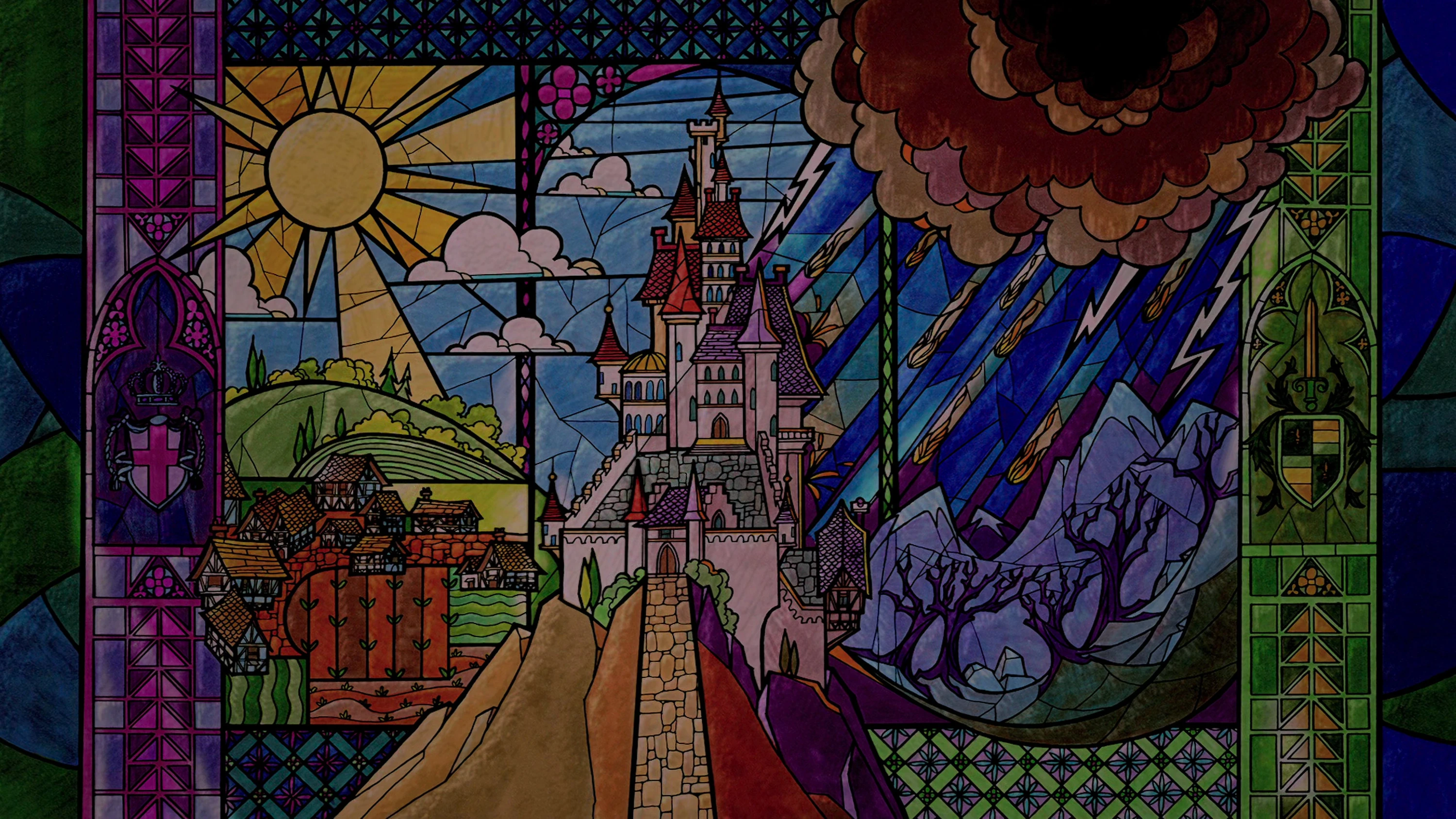
                            Related image

Because of the play, perhaps, I've been doing a lot of thinking about Beauty and the Beast, and, of course, the thin ice that goes with it. As I was going to have to spend a lot of time with it, I supposed I would have to reason out my own thoughts on it. But, you know, there's really much more to the story than meets the eye, as I found out. And I believe it deserves a second chance. Agree? Disagree? Well, either way, I hope to provide my apologia here for the story, coming to my conclusion above through examination of the singular story, particularly from a Catholic and generally Christian perspective.
If you're a Beauty and the Beast fan (or perhaps an enemy thereof), the discussion may interest you; I hope it does. If you're not, I offer my apologies for the blog space and time taken up over the next few months on the topic. But in however many installments it takes, I'm determined to clear the name of this defamed fable, so hold tight...

Some things I hope to cover will be the character of Belle and the villagers, the traditionality/progressiveness of the story, the views on marriage and sexuality contained within, the story's morals and message, the original fairy-tale, movie and play, the artistic aspect, writing, accuracy and bias, and virtue (or lack thereof) of many of the other characters. If you hold (or have heard of) any other bones to pick with the story, just shoot 'em at me - I'll do my best to cover them. If they wreck my conclusion, all I can do, once more, is apologize for the wasted time, I suppose, but I do want to communicate this one point by my efforts: I think the story deserves a second look, and has good in it. If you disagree or, even, when all is through, disbelieve my arguments or conclusion, then that's fine, but I would like to spend some thought on a topic that's very often dismissed. Hopefully you can be patient with me while I do!

Monday, August 26, 2019

5 Pro-Family Movies Worth Seeing

Hollywood is not my favorite - nor any traditional Christian's favorite - place today. With the long history of left-leaning politics going back to its beginning (even almost to the point of government intervention at one time - see the Hayes Code), it's never been a sterling place, but, today, it's especially hard to find a film that not only doesn't have some unnatural ulterior agenda, but also has a good one in its place. However - Hollywood has had a couple golden moments in the past concerning this, and I intend to explore them. In the future, I shall do a few more of these posts (for the sake of both the avid movie watcher, and because I have really slacked off on doing any Rebellious Writing posts, which these shall hopefully count for) - I shall list five movies of a certain genre, all within the realm of morality, and I shall summarize and rate them for the convenience of the viewer. As a note, any opinions expressed will always be my own, but all ratings expressed will always be laid upon fact. (Another Note: While most movies I watch are old movies, I shall endeavor to include newer movies within these posts to the best of my ability and knowledge. That being said, some genres will have more newer movies than others. I will try to arrange the posts chronologically to help.) And with that said, I intend to start the feature up with a collection of movies bearing a particular pro-family strain in them.


The Legend of Zorro (2005)
This is the one starring Antonio Banderas and Catherine Zeta-Jones. It is the sequel to the first Banderas Zorro movie, The Mask of Zorro (1998), but I have reasons for not including the first one on the list (among which is the fact that it does not follow the theme of the post, but I shall elaborate in a later post on the first movie's flaws). The story tells of how Zorro, now with his wife and son, struggles with being bored as the father - family life as a whole is not fulfilling enough, and he goes away to be Zorro often, despite his promises to his wife, Elena. All the while, Elena herself struggles with the fact that people need Zorro - after all, doesn't his son need him too? Their son, Juaquin, is unaware of the identity of his father and thinks his father a distant and unmasculine fop - a terrible example, in short. Then all three problems collide when Zorro and Elena separate, only to be pushed back together by a threat to their son and the bandit himself, in the person of Elena's sinister new suitor.

The movie definitely has a pro-family theme, with the mutual support and discipline of one another being the focus, as well as getting over what one wants for oneself. Juaquin wants to be rebellious because he can - he wants to be the man he thinks his father isn't. In the end, he is reprimanded for his rebellion - ironically enough, by the allegedly spineless father himself. Zorro wants to continue to wear the mask, even if it means spending more time on himself and less on family, but the end of the movie sees him willing to give it up for Elena and Juaquin. And finally, Elena wants to end the career of Zorro, having her husband all to herself, but, at the end of the movie, when it is Zorro himself who offers to give up the mask, she hands it back to him, freely giving this aid to the people even against her own will. Divorce, and especially its effect upon children, is viewed with unapologetic harshness in the movie, and traditional gender roles, particularly in the realm of parenthood, are played to be absolutely necessary to the family in the movie. Religious themes (this is Catholic Mexican California, after all) run through the movie as well, and, with a counter-theme to the first movie, declares that following one's heart can only be fulfilling when it is with a steady guide and goal beyond oneself (such as a splendid scene where Zorro kneels to pray to the Madonna for guidance in his mission).
There are a few random words of bad language in it, but, if my count is correct, it totals to about four counts of swearing in the whole movie (two of which are by the villain, and one of which is debatably legitimate use of the Lord's name rather than swearing, but mentionable nonetheless). Other than this, and one small innuendo which is quite subtle (it would completely go over a child's head), it is family-friendly. The costumes are historical, so mostly (aside from the inaccurate cover pic) pretty modest. And, while a rather strong anti-Protestant theme does come through (due to a Baptist-esque villain), the general Christian theme (and the pro-Catholic theme) is quite discernable. 

The Patriot (2000)
This one's a Mel Gibson movie with a quality even beyond the commendable acting and direction. The Patriot tells the story of exactly what it sounds like - a patriot in the Revolutionary War for the American side. What the title doesn't tell is the story of some boys growing up with the aid of their father, and eventually braving even death for their family. Now, I'm no Mel Gibson fan - pretty much this and his direction in The Passion are where I cut off - but his acting in this was absolutely superb. I must say, the overall quality of this movie was ten times the average recent release. The music, the acting, the costumes and sets, the story, and all the characters reflected the time period and the theme to perfection.

As to the theme, more on that... The story tells of a widowed father of seven whose oldest two sons - the younger of which being only around fifteen - wish to join the American Revolution against the British. The father Benjamin Martin, remembers losing his wife and so does not wish to split the family up further. But, eventually, he allows the oldest son to join when their state revolts, staying home with the rest of the family himself. When British invade their estates, though, and kill Martin's second son, it's much harder to remain passive. With this, Martin and his younger two sons (neither older than twelve) are forced to fight their way out of the town to family safety, and Martin afterwards has to bear with vengeful feelings and fear of cowardice over the loss of his son. When the oldest, Gabriel, and his new wife, are also cruelly offended by the British, Martin has to choose to be the patriot his sons were - fighting for freedom and for his family, and not for revenge. Overall, the theme is absolutely beautiful, portraying amazing masculine fatherhood, the beauty of marriage and children, the profundity of fear, and many other wonderful things. (My only note is that the movie contains a couple swear words and is pretty bloody.) The movie would be well summed-up in that wonderful Chesterton quote: "A true soldier fights not because he hates what is in front of him, but because he loves what is behind him."


Yours, Mine, and Ours (1968)
Starring Lucille Ball and Henry Fonda, this movie is pure comic genius at its best. The plot concerns a widowed mother of eight and a widowed father of ten meeting and getting together, to the chagrin of both Fate and their wayward children. Throughout the movie's various screwy events, the hilarious craziness (and fun) of large family life is portrayed ingeniously, as well as the point of family. The movie is definitely for teens and adults, but the reason for that is that is speaks very frankly (and sometimes quite satirically) about the real point of family and sexuality - it discusses such topics as birth control, large families, and love and marriage with a perspective quite refreshingly down-to-earth (for instance, when asked whether she really wants another baby, the expectant widow says rhetorically that, if she were to answer that, she would have to answer which child she would rather not have - who would she skip over if she had to do it again?). The only cautions morally are a depiction of a Catholic nun as rather rude (but it is just the one, and not nuns in general) and then, like I said above, very frank and open mentions of more mature topics.

The Thrill of It All! (1963)
This movie stars Doris Day and James Garner. It chronicles the story of a happy housewife being recruited by a soap company for advertising after an accidental pitch to the company's boss (one of her husband's, an obstetrician, patients). At first refusing the gig because she prefers her husband and kids to the idea of a career, she is eventually brought in by flattery and the prospect of a huge salary, despite her husband's dismay at it. When the career begins consuming her life, though, and causing her to see little of her children and nothing of her husband, he starts to get irritated. Eventually, their dual work schedules cause neither of them to ever meet on a daily basis. The movie resolves with the poor housewife having to help deliver the baby of her boss when her husband doesn't come in time, and her realizing that that's all she wants - a baby. She just wants to go back and be a wife, and a mother again. She doesn't care about salary, or fame, or career, or anything - she just wants to do what she did before and loved before.

With a romantic, hilarious, and stunningly pro-life climax, the movie was definitely above-par when it came to a pro-family, having what my best friend calls the "pro-life, pro-wife" combination. The affirmation of traditional gender roles and of the need for mothers was unanimous, from the poor, frazzled housewife's need to see her kids to the rich boss-lady proclaiming that the company couldn't matter less when compared with motherhood. While the movie was definitely more for teens and adults (since the main couple was married, it had a lot more, eh, mushy of romantic scenes) due to both mature romantic scenes and mature jokes, it didn't really contain anything objectionable other than a couple immodest costumes/settings. As a whole, it was a splendid movie both morally and comedically.

Children of Divorce (1927)
This one's a silent movie starring Gary Cooper, Clara Bow, and Esther Ralston. I must confess that my original reason for watching this movie was rather shallow - though the plot sounded good and all, I mostly watched it for the promise of a clean silent movie, safeguarded by the name of Gary Cooper (and... for Coops' acting). However... in the movie, I found a gem. While it was a silent movie, it had considerably better make quality than is generally associated with that genre. It had its own soundtrack (rather than dismal, faint Bach organ music, as many have), had top-notch Golden Hollywood acting (and actors - just wow to both Miss Ralston's and Miss Bow's performances), and the sets were actually quite cinematic and un-stagelike, being larger in proportion and fairly detailed. (I know that many people dislike the cheesy-seeming make of many silent movies, which is why I bring all this up, to the contrary.)

As to the theme of the movie, it was most certainly not comical, like most of the movies on this list up to date. It was a drama, and a smashing good one because, like all good tragedies, it was based on a sad truth of life - the wrecked lives that divorce produces. All three of the main characters, Ted (Cooper), Kitty (Bow), and Jean (Ralston), had had their parents divorced, and all of them grew up practically in confinement because their parents couldn't (or wouldn't) take proper care of them at home. And their separate levels of involvement in divorce developed even further their reactions to it: Ted's father remarried once, to a woman that expected Ted to pretend his real mother didn't exist, and so Ted resolved never to marry unless it was absolutely for keeps; Jean's parents divorced, but neither ever remarried, so she remained a tragic heroine, saddened by the fact, but still morally against divorce and not ruined by that history; Kitty's mother remarried five times and divorced every husband, three of those husbands during Kitty's young childhood, and, due to this, Kitty's views of love were very open, and slightly licentious, and she had no respect for marriage or committal love. The plot concerns what happened when all three of their love lives are thrown together after not seeing each other for years, and when a ruinous marriage between Kitty and Ted (against Ted's will) disrupts their friendship. The ending is actually a twist ending, and, while it was sad, it did resolve the plot pretty well.
The view on divorce and the breaking of the family was viewed with unapologetic harshness in the movie, which was refreshing. (It spoke of it with a bitterness that, to my mind, speaks almost of personal experience in the makers of the movie - and in that day and age, I would not be surprised if divorce had affected many of the makers of the movie.) As a note, though, they did approach the question more from a secular rather than religious angle (meaning, things like "divorce is wrong because it messes up a marriage and hurts the kids," rather than "divorce is wrong because Christ said so in the Bible and because the Church teaches so"); I didn't really mind this, but it's worth noting. Other than that, my only moral cautions on it would be an occasional slightly immodest costume. The moral value of the movie was much greater, and I could easily write a post on this movie alone (and perhaps will at some point).
***
That's all I have for the moment, though I would love to add onto the list. Hopefully this feature takes hold! Have you seen any of these movies? Would you? Do you have any favorite family-themed movies?

Thursday, July 25, 2019

Learning to Love Cowboys, or To Be a Hero

[A Note: To those who enjoy cowboy movies well, or looked at this post merely because it's on the link-up, you may be surprised at my rather harsh initial opinions on Westerns. For my opinions, I cannot lie that they are strongly felt, but for my language on them, I apologize. As it is generally my custom to warn readers when I feel there is something unexpected contained in a post, let this be a warning now, and an assurance that the post is meant in good humor. All opinions expressed are my own.]
If I am the only one here who, at the title above, thinks of a certain song from the cartoon The Princess and the Pauper, then this is indeed a sad day. However, I am not here to talk about how much I love old Barbie movies - old movies, yes, but of a different sort. As it is, it is currently Legends of Western Cinema Week over at Hamlette's Soliloquy  (thank Megan Chappie for this post, who alerted me of the goings on by her own lovely post here). And I am not a big Western person; in fact, I usually hate Westerns (or did, at least). I disliked John Wayne and Burt Lancaster, could not stand Western aesthetics or setting (usually), and generally had no enthusiasm for cowboys... except in a few specific cases - the cases that transcended the title of "cowboy" or "non-cowboy." And those cases are why I felt I had to get in on this.
The first Western I ever watched and enjoyed was Gary Cooper's High Noon (1952), and I was surprised. Even though Coops has long been my favorite actor, he certainly doesn't have a perfect score with me for the sake of that. But the fact is, one aspect of the movie transcended both Coops and my personal tastes - the heroism. If there was one thing that stuck with me through the whole movie, it was the sheer heroism of its hero, Marshal Kane (Gary Cooper's character).

The movie took a setting of three long-unseen roustabouts coming back to the town that sent them to prison with the motivation of revenge, particularly on Kane, who has just resigned from his long reign as sheriff there. There's a hitch, though. As much as Kane would like to go away peacefully with his new wife and forget about those three outlaws (his wife, a Quaker, requested his resignation from the gunslinging duties), the new marshal hasn't arrived yet. That would leave the town unprotected - completely unprotected. As it is, those three are incredibly dangerous, incredibly good shots, incredibly angry, and their leader is incredibly nuts. They would fill the town with bullet holes without a second thought, even just passing through.  Kane isn't going to let that happen.
At first, Kane tries to get other men to aid him in the fight - after all, the three won't give up easily, nor be beaten easily. And every single man in the town refuses to help him because they're scared, or they dislike him, or - in the case of Kane's deputy - because Kane can't give them anything in return. So, it seems, Kane will have to stay himself and battle it out alone. His wife, Quaker that she is, cannot allow this. She threatens that he will either leave this town to its own defenses, or else she will leave him right then and there - she won't have any husband of hers gunslinging or endangering his life before their honeymoon. What else could Kane do but refuse, though? The town needs protecting.

The three have a particular grudge against Kane. If any one of them ever saw him, he'd probably be dead in less than a minute. By himself, he'll likely die defending the town anyways. And yet... he won't leave. The town needs protecting, and even though he risks losing his wife, his freedom, his friends, and his life, he stays - why? Kane stays for no other reason than it's the right thing to do. All of the townspeople have snubbed him, left him on his own. A few have gone so far as to curse or wish death by the three upon him. Obviously they are no friends of his. And he's not staying out of guilt - he rightly and justly put the three in prison in the first place, and rightly and justly had the right to leave and no longer any obligations of the sheriff's office. But he stays only because he thinks any righteous man would do the same. If he gets out of the situation, he would have nothing - he'd be alone in the world, without much money, no home, and no wife. If he dies in the process, he'll have gained nothing - the town will still be threatened, he'll have gained no honor in anyone's eyes, and it won't change the minds of the three. But it's just the right thing to do.
This character embodies everything I love about cowboy movies. He's man enough that nothing matters except the right and wrong; there is no gray in the truth. Everything I hated about cowboy movies, I realized then and there, was summed up in what Marshal Kane wasn't - thinking of John Wayne's often rude characters, or Burt Lancaster's ulteriorly motivated, double-dealing hotshots always made me uninspired by the movies. But here was a hero who was not like that - everything he did, he did openly, everything he believed, he said, and everything he did, he did for no other reason at all than he believed it was right. That was why I hated cowboy movies - because I didn't realize that there was more than one facet of them. I thought all the cowboys were John Waynes and Burt Lancasters, and there were just a bunch of dust-covered, selfish, gunslinging drinkers who didn't care about much. But, as in many cases, when you're proven wrong once, you are soon after proven wrong again.

The next cowboy movie I really fell in love with was Along Came Jones (1945). I'm ashamed to say, that stubborn as I am, I did not pick up this other cowboy movie for the reason of my having been proven wrong about them, but rather because, once more, ole Coops was in it. (How much thanks I owe to Gary Cooper for being in cowboy movies!) This time, I enjoyed it mostly because it was Cooper, Young, and Duryea's splendid acting, and because it made fun of cowboy movies in general, being slightly on the comedic side. But afterwards, it struck me yet again. The main character in Along Came Jones, Melody Jones, is a humble sort-of fellow, and, like Marshal Kane, lands himself in trouble when he is not only allowed but encouraged to keep out of it and mind his own business. And for what reason? Exactly like Marshal Kane, once more, just because there's something more about than his own hide. Jones stays around against the urging of his best friend and his ladylove merely because he suspects that she is in some kind of trouble and needs help - not even because she's being shot at or anything, but just because she's in enough trouble to lie and cheat. And, ever humble, he forgives her every little lie she tells to help herself out, even though he sees through every one. In this, Jones actually made rather a Christ-figure out of the dusty old cowpoke (which is material for another post entirely).
Others among Coop's reportoire came later on to prove me wrong some more: They Came to Cordura (1959), with its repentant and striving protagonist had a theme outwardly showing humanity's sinfulness, revealing the inward beauty of the things that human beings must strive for; Man of the West (1958) had a hero that saved the heroine without even the motivation of being able to have her - he was tied down, and, unlike many married figures in romance movies, returned to his wife without anything to regret by the end of it; Vera Cruz (1954) had a hero who despised even the thought of lying, and ended up facing against and even shooting one of his only friends in the world merely for the sake of preventing lies and the deaths those lies would cause; The Cowboy and the Lady (1938) featured a man who so loved goodness that he would give everything he had just to make someone he thought was a good and struggling woman his wife.

Finally, I supposed I'd give up my stubbornness - I like cowboy movies now. Don't get me wrong - I still cannot stand the rude and nihilistic John Wayne, nor the amoral and whiny Burt Lancaster, nor a lot of similar cowboy heroes. But Gary Cooper's heroes showed me that that's not what cowboy movies are about - the other side is the side of the real heroes, the men who risk everything, and often lose everything, just to do what they believe is right. Perhaps Coops isn't the only good cowboy out there. Now, I'll watch those cowboy movies I've avoided for so long. In fact, I think I'll watch them with a vigor, knowing that they could prove me wrong yet again.
What do you think? Do you enjoy cowboy movies? What are some of your favorites? Have you ever seen High Noon? Is there a cowboy hero you like best?

Thursday, June 13, 2019

Good Comedy is Good For the Soul

Earlier this morning, my siblings and I had to proceed to the laborious task of clearing the enormous lump of laundry in need of folding. As is my own habit, we turned on a show to make the work lighter, and we ended up watching old recording of Abbott and Costello on the Colgate Comedy Hour back in the 1930's. Now, I had watched some newer movies not so long before, and the humor was, at best, worth a slight smirk (providing it was clean enough even for that). Abbott and Costello? One minute of them was worth barrels of uncontrollable laughter. The difference between the two was not, as it may seem at surface level, just funnier cracks; the difference was the feeling one had coming away.
With the newer movies, what humor I remembered, I remembered only very vaguely, and it rather stuck like bad peanut butter to the roof of my mouth - a not necessarily unpleasant, but on a whole rather uninspiring sensation, and in places, it brought about a sense of guilt because the humor was rather morally shallow or even quite questionable. With the twosome's routines, I walked away with a lighthearted sort-of gaity in my step, and rather profound (for me, at least) thoughts on my mind, pondering the subjects of some of their witticisms. Why? The answer is in good comedy, and why it is good.
(Pardon all this commentary please, but, before accusations of bias, of course I love Abbott and Costello, however, this is not why I wrote this post - let this post be the reason why I love Abbott and Costello.)

No doubt, all of you have at some point heard, seen, or otherwise witnessed some of the "humor of the modern man," as my father once put it - it is occasionally amusing, but on a whole rather dependent upon the base, noisy, and slapstick (or things less clever and subtle even than slapstick, as often is the case). Most of the humor is either identity humor ("I'm funny because I'm..."), shock humor ("that's funny because it involves that uproarious, surprising, or gross thing") , or put-down humor ("that's funny because it insults someone or something we all generally dislike or disapprove of around here"). It's all based on thinking a thing is funny only because of a certain viewpoint, rather than something that is inevitably and universally true.
Good comedy is not based on the humor of a viewpoint; such humor is political, taking a side in a shallow controversy without appealing to something deeper. Of course, humor in controversy can still be funny, for, as the immortal Catholic writer, G.K. Chesterton, once said, "[Every man] ought himself to be importing humor into every controversy; for unless a man is in part a humorist, he is only in part a man." But Chesterton's comment nowhere implies that humor should be based on debate or prejudice. In fact, he is saying the contrary - that every event and happening, including debate and prejudice, should be met with humor.
(Just as a warning, I shall be quoting dear old Mr. Chesterton a lot in this post, as Mr. Chesterton and I get along quite swimmingly... All quotes are taken from Heretics, I believe.)

Really, truly good comedy is based on two things - the first and foremost of these is basic truths of life. The truth is, life is funny; odd things happen, coincidences happen, and nothing seems to make sense at face value. Thus, if reality is a funny thing, it is no coincidence that humor is based off of a discovery of reality and the truth. Nowhere will anyone claim that the truth always is convenient or sensible-sounding. Oftentimes, it's not, and to our limited human understandings, it seems like the silliest and strangest thing. Thus enters humor. And thus enters the second aspect of humor, almost as important as the first and even more integral in humor's nature: humility.

Humility and humor really do go hand in hand. I mean, really, they even have the same root word. Humor is the manifestation of humility; it is the taking of joy despite and in spite of human flaws. We are imperfect, and that's what's so funny. The moment we take ourselves seriously, that is the moment we sin and become prideful. In taking ourselves seriously, we pretend that we are really worth something on our own, that we are respectable and praise-worthy, and that we really know what we're doing. Well... do we...? No, not usually, at least - we human beings almost never really know what we're doing properly. And most of the time, when we think we know best is when we make our worst and most regrettable decisions. Laughing at ourselves is the quickest way to route pride and grow humility because it admits to us that we really are strange, funny, awkward things, and we have no idea what to do and no power to do it on our own.
Now, this latter point is not to deny the value of human beings or anything like that; sure, we have value. But, really, doesn't it become arrogance when we assume that we have any value independently? Are we not created, finite beings without any power our own, except for free will, which we frequently abuse and never quite seem to understand? And yet, it is the divine nature within us - the flame of eternity that is emblazoned upon our hearts - that encourages us to humor. For, to quote Mr. Chesterton again, "Unless a thing is dignified, it cannot be undignified," and "Joking is undignified; that is why it is so good for one's soul." The heart of comedy is really an endless, round circle; as truth leads to humility, humility leads to truth. Without a basic yearning for truth and the infinite, we cannot realize that we are erroneous and finite. And without truly realizing our mortality, we can never reach for the greater truths beyond it. Humor is a beautiful, if difficult to acquire, virtue that touches the soul and combines two of the greatest goods to encourage man to reach higher and go beyond himself. Without a yearning for those two goods, we are prideful, ignorant beings indeed.

Good comedy touches a man and makes him simultaneous recognize his own lowliness and think of something greater than himself. "For a hearty laugh it is necessary to have touched the heart."

Good comedy is good for the soul.