Pages

Showing posts with label Writing. Show all posts

Tuesday, August 23, 2022

An Announcement and a Farewell

 Howdy, folks! I know it's been a while since I've posted, and there is a reason. I've been considering for a long time whether to keep this blog going or not. The pros of the situation are that I get to keep up with some very cool writing pals, that I have somewhere to put random junk I write, and that I can promote my stories here. I've been thinking on it for a while now, though, and I think the pros might not be enough to hold onto anymore. 

Of course, I'd love to keep up with all the writer friends in this lovely circle I've been privileged enough to be a part of, but I am in contact with most of them through some other format as well. Letter-writing, email, phone, etc., covers most of the friends I chat with on the blog. There are some of you I would miss if I left, but I think that it would be more productive to keep reading and commenting on your separate blogs than to try and keep this one running just for that purpose. As for putting random junk I write somewhere, I think we can all agree that that's not exactly necessary to writing - just fun. Besides, many of you in contact with me outside the blog still get the random junk from me anyhow. 

That brings me to the last point: promotion of stories. I guess if there is an announcement that goes before my departure, it's that I don't think I'm really interested in publishing. I've been writing for a long, long time (not as long as some!), and publishing is always a writer's expected daydream. To be sure, it's a fun thought. But you know, I've come to the conclusion that I really don't care that much whether I ever get published. I love writing, and I have no intention of giving it up, but I would still be perfectly content if the only people who ever read my books were my writing pals. My books aren't terribly publishable, except perhaps by self-publishing. I like a style that has long since been out of print, and I certainly don't intend to change what I like to write just because it's last season. My friends enjoy my writing, and I enjoy doing it, so the way I see it, there's not much point in changing to a more modern style. Perhaps I could publish without doing so, but I digress. It's not that I've unequivocally given up on publishing, but I certainly no longer hold it as an immutable goal on my bucket list. 

In addition to these pros losing a bit of their sway, there are cons as well. My school life keeps me very busy, not to mention my studio, job, and other responsibilities, so it's fairly common that I can't keep up with posting. Oftentimes, when I do end up posting, I end up posting either something completely random, or a cop-out post like a tag or something. Maybe I could remodel things and make a bigger effort with the blog, but I just don't think the blog is my priority, nor do I want it to be. There are lots of things going on in life that I haven't really even taken a look at yet, and I think I'd like to get out of my head and out into the world a little more. I think that it's better for me, better for my writing, and perhaps better for this blog as well. 

In other words, I think I'm leaving the blogging sphere. I'll probably leave this up, just because it has a lot of writing things stored on it, but I will not be posting anymore. I'll miss all you readers, but I'll keep on reading your posts, so I'm not totally splitting from the blogging world. Whether in a chatbox, email, text, or what have you, I look forward to the writing journey with everybody from here on out. 

God bless!

Sunday, April 17, 2022

On Realism

     Alleluia, He is risen! Happy Easter to all! As you may have noticed, I went off of blogging for Lent, but now I'm back to the blogosphere. (Goodness, what a horrifically dull introduction... My oratory skills are going to be stunning today...)


    Anyhow, I've come back to get right to business. I'd like to discuss a rather more big-picture concept in writing: the concept of realism and depicting things realistically or fantastically in general. In short, how realistic should fiction be? What side of reality should it portray and how much? 

    Now, before we begin, I'd like to make a bit of a disclaimer. These are only my own thoughts and my own philosophy. I do not claim to have all the answers, and there have great, virtuous, admirable writers on both sides of this debate and everywhere in between. I myself enjoy and love many works on all places in the spectrum. So, going through my thoughts here, just take them with a grain of salt. 

    In the usual way of things, my mind starts clattering with ideas and long freight trains when I'm supposed to be paying attention to something else, and my most recent rabbit hole was no exception. In my music history class, the topics were first Romantic Age grand opera, and then Romantic Age realistic opera. Now, without going too deeply into either of those things, they essentially boil down to this: earlier stories in opera were about larger than life figures with somewhat fantastical, romanticized stories and great questions asked and explored, while later opera stories were about more real, relatable people with sometimes hard or decrepit lives and more direct, tangible morals to the story. If you're at all familiar with opera, good examples would be Verdi's Nabucco and Bizet's Carmen respectively. Some classic literature parallels would be Beowulf and Little Women, or The Scarlet Pimpernel and The Great Gatsby. There are many more parallels too: Oedipus Rex and Our Town; Ten Commandments and Mr. Smith Goes to Washington; Les Miserables and West Side Story; Shakespeare and Tennessee Williams; the list goes on and on. (For the sake of clarity, from here on out, when referring to the philosophy as opposed to the usual meaning of the adjective, I'll capitalize "Realistic," and, while both things I'm referring to are sort-of Romantic, I'll refer to the non-Realist style as "Romantic.")

    The idea behind the change in storytelling was simple on the surface, but I think it merits a closer look. As the theory goes, we should depict real life more closely to how it is because audiences will connect with it more and be more engaged by it. They will be more moved by it and understand it better if it relates to them closely. While it's true that depicting certain things will not be pretty, neither is real life. Suffering is such a real part of life that neglecting to depict it, or depicting it in a way that is surreal and unrelatable, makes the work difficult to read/watch/hear without skepticism. Additionally, if what's being depicted as ordinary contradicts the everyday experience of the audience, then they may dismiss the work - setting, theme, and all - as unbelievable or untrue. 

    It has been countered that some things should never be portrayed. I agree wholeheartedly, and many people who wrote in a Realistic style also did. While later modernist writers took the philosophy to a whole new level, I don't think the intention of Realism is to simply shock the audience with vulgarity, bleakness, or depravity. While it came out that way sometimes for the sake of delivering the moral of the story - as in The Great Gatsby depicting the alcoholic, abusive life of the rich class to tell us that this world and all things of it are vanity - most Realist stories are not meant to be sensationalist for the sake of it, per se. 

    That said, I believe Realist stories are deeply sensationalistic. The comment is often leveled against Romantic stories that they are larger than life and don't depict reality accurately. Now, the problem with this criticism is that Realist stories don't either. I'll come back to that in a moment. On a shallower note, we really don't want them to. Any story that depicted reality exactly as we experienced it would be dull as paint. If I started reading a novel wherein the heroine wakes up early every morning, goes to school, works, and then goes home and does homework, I would lay it away pretty quickly. 


    When consuming works of art, we want something bigger than ourselves. While it's good for us to be reminded from time to time of the flaws in our patterns and lifestyles, we become desensitized to it if we hear it all the time. If all novels in the 1920s had been oratories on the upper class's dissipation and emptiness, the message would have been thoroughly ignored. As it was, Gatsby made an astonishing effect because it was unique in its depiction. While other writers glorified the '20s glitz and leisure, F. Scott Fitzgerald tore away the glitter and beads and showed it as the lost, restless culture that it was. And that is the real point of Realist stories. The point is not as much homogeneousness as it is homily. Realist stories have to be a little harsher, a little more familiar, and a little more down-to-earth because their point is to deliver a quick, hard, simple message that people need to hear. 

    It's extremely effective whenever it's been used. Sometimes people remember the characters and the settings, and sometimes not, but they remember the bottom line of the story. I probably couldn't tell you the names of half the characters in West Side Story, but I remember vividly the visceral repugnance at the gang violence that I was meant to feel. A Realist story is like someone in a speech saying "listen up" - it catches your attention and lets you know that this last thing is really important. 

    The problem with saying "listen up" in a speech too many times is that is loses its power. It becomes monotonous and signifying of nothing. You've probably listened to a speaker before who uses the same potent phrase or comparison too many times and loses his audience's engagement as a result. Realist stories are very much like this. They serve a good purpose in a crisis, but they become desensitizing in large doses. If we take in too much of the hard, direct, and the gray - especially the morally gray - then we can come to accept it as normal and tune it out. If we're constantly fed things we're supposed to relate to, then we tend to come to see it as being indeed everyday, and thus mundane and ignorable. 

    That's a bit of a problem with writing stories in general. While we want to relate to our audience, like I said above, too much relatability creates predictability or boredom. We don't want our stories to perfectly reflect real life, and I think there is a deeper reason for that. Life in this world is never perfect - quite the opposite - and if we are only fed with the ugly, the commonplace, and the familiar, then we feel unfulfilled and lacking. We feel a distinct need for something more - some sort of resolve to our suspended existence. 

    This leads to my other problem with Realist writing. Like I said above, I think that Realist writing is quite profoundly sensationalistic. It's always an exaggeration. Realist writing is by its nature stuck in this world, and, while that may offer us a lot of wisdom on how to (or how not to) conduct our daily lives, it doesn't give us anything more universal to look to. What's more, much (not all, but much) of Realist writing is stuck in a sort-of incomplete version of this world. It's true - suffering, hardship, and immorality exist, but they are only a piece of our nature and existence. In fact, they are a small piece, like a parasite on an independent body. Poverty, sickness, and depravity are true in daily life, but so are other more beautiful, good things like marriage, children, humor, health, and simple everyday love. Most Realist stories focus on those former, uglier qualities and forget that the beautiful part of everyday life exists. And in a sense, that can be a good thing. It's hard to deliver a tough message without cutting to the quick and focusing on one thing. But nobody likes to listen to a fire-and-brimstone preacher all the time, and that's why these stories can be dulling to our senses even more than any other Realist stories. It's easy to see why we go to Realist stories more like Little Women or Mr. Smith Goes to Washington when we want something lighter - while they do focus more on this world and its issues, they're uplifting because they present us with both the ugly and the beautiful sides of life. Even if they don't pack quite as much of a gut-punch when it's needed, they are good reminders in a more regular way. 


    Now to get to the meat of the matter. I believe that a more Romantic worldview is the superior one when it comes to writing stories. While it's true that it doesn't match up to real life, as I demonstrated above, no stories really do - that's rather the point of stories. We tend to ignore things that are too familiar to us. Romantic writing also can't come to arms in a crisis the same way a hard Realist story can, but, again, hard Realist stories are best to have in crises and not as the standard. Because Realist stories are stuck in this world - whether they present its good or not - they are always incomplete and imperfect. They may be splendid works, they may be some of history's masterpieces, but they never quite reach the thing that is most beautiful in them: the transcendental. 

    In any reaching for virtue, either by criticizing its lack or by encouraging its daily practice, a work touches on something universal. In Realist works, we only get these universal values through a human lens, but we yearn for a better look at them. Everyone wants the answers to the wide, vast questions of life, and this world can't give them to us. Nothing touches the heart and inflames the mind and soul like a work that explores a great question or some transcendental good. After all, one of the transcendental goods, beauty, is the basis of all art, including writing. Without it, there would be no good writing at all. Many love to read the Gospels and the Acts of the Apostles, but most Christians I've talked to agree that the books that captivate them the most are books like Psalms, Lamentations, and Revelation: the books of mystery and of the great, universal ideas. 

    As immortal beings, we are designed to love and be drawn to the immortal. Things that mystify and go beyond our senses are what interest and benefit us most. Mysteries are not relatable; if they were, they would not be mysteries. That's precisely the beauty and the attraction of them to our nature. Fiction should reflect that truth, that ultimate Reality: that we are not alone in this immense world, and there is so much more to know than what we see and experience. Beowulf sacrificing himself to slay the dragon is Christ on the Cross; Nabucco's people exiled in a foreign land are the Church, the New Jerusalem, chosen to suffer through this world; Jean Valjean in his struggle against the world to become a truly just person is Fallen Man on his path back to God. In that sense, Romanticism is really the true realism because it depicts and hints at the Reality that is more real than anything on this earth: the Reality of goodness, truth, beauty, and of God, who is all these things and Being Itself. 


    Grand scale characters and plots exploring questions that are perennial and maybe seem obvious to us can be overdone like anything we human beings do. However, I think that they communicate the vastness of this universe and this existence much better than stories trapped on this earth do. Because Romantic works give us such a huge view to look at, they force us to actively consider and choose what our focus is. We can't passively take in a good, Romantic work; we have to internalize the ideas presented or else we can't understand it. There is no way for us to simply let it be. On that note, this can often be why many people profess not to enjoy grand, Romantic works as much. They take more intellectual effort to appreciate and cannot be taken in without engagement. Oftentimes, it's easier to have a moral handed to us without further ado, like Christ giving us parables in the Gospels. (And there's nothing wrong with that.) Remember, though, Christ also gave us Revelation. We're not meant only to be pushed towards Heaven and the transcendental goods, but also to push ourselves, to make a constant, real effort to ask the questions we must answer and pursue the goods we must acquire. For those reasons, we need the challenges in our stories to look not down at the earth, but up to the Heavens, and to ask What lies within. 

Well, that's my two cents, anyhow. What are your thoughts? Do you prefer to read more Romantic or Realistic works? Which do you prefer to write? Share your thoughts, if you have any, and, meanwhile, have a wonderful Easter season! (And give Megan some extra applause if you enjoyed this post... Some parts were inspired by an old post of hers about language in writing, but I can't find the post anywhere to link to it anymore... [EDIT: Thanks to Megan, it's now linked in the comments below.]) 

Friday, March 4, 2022

Meet the Books! - To Save a Little Face

 Well, in true disorganized form, I have come with another linkup to save the blog from being neglected again. This may be the last Meet the Books! for a while, though... Unfortunately, this is my last archive story idea. (But the last two times I said that, I was struck by new ideas in time to make another linkup... Hmm... Well, we'll see how the muse behaves this time.) As always, if you want to join the linkup, the rules are pretty easy. Just answer the questions in bold below for your own story, and then leave a link to your post in the comment section here. You may use the image if you like (but I'm not sure why you would want to...). 

Well, shall we begin?

What is the title?

The title of this particular work, as you can see from the post name,* is To Save a Little Face. It'll make more sense when we talk about the plot.


*Why do I even have this question on here again...? 


What is the genre? Time period?

The genre is Comedy, quite possibly Romantic Comedy, depending on the way the wind blows when I write it. I know I said a long while back that Comedy simply was not my genre, but ever since I became an ardent pupil of Miss Megan's discipline of Comedy,* I have been quite in love with the genre. When I tried it again to write He Travels the Fastest, ** I found I actually quite enjoyed writing it. So, yes. The moral of the story is try new things and maybe vegetables don't taste as bad as they smell and all that jazz. (Although, really, most vegetables taste quite as bad as they smell.) 

As to the time period, it is in the American 1930s again. (I tell you, I'm really liking the way HTtF is set up...) 

*"Discipline of Comedy"... That sounds... odd.

** Oh, yes, did I mention that HTtF is now being drafted? It's been splendid fun. Perhaps I'll post some snippets some time. (What is with all these footnotes??? I feel like Megan...)


How is it written (POV, format, etc.)?

Third person, probably narrative, but I'm not sure yet. I'll figure that stuff out when I write it.


What is the setting?

The high society of America in the 1930s is our setting this time. We'll be hitting up Broadway and Carnegie Hall as well as the subways and street corners of New York. 


Who are the characters?

   In order of appearance...


    Donna Delany is a trained, gifted, gorgeous star of Broadway who aspires to even greater heights. After all, she was trained in a conservatory of music. Broadway is for lowbrows. She dislikes Broadway, dislikes working, and dislikes most people as well. She enjoys the applause, though she might not admit it, and she has gained a reputation for being witty, beautiful, and snobbier than an Englishman at Harvard. She has very little regard for anyone else's opinions or feelings.


   Neville Devine is a charming and troublesome actor from the Continent. Or at least, that's what he says. The man has a different backstory by the day, not to mention to new present stories he causes in the newspapers everywhere he goes. He's quite difficult to keep up with. 

    Mr. King is Donna's publicity manager. He usually lets Donna do what she likes, but he shouldn't be crossed. He is quite stubborn, and he's growing tired of trying to fix Donna's reputation...

   Karol Drozdoborod is a Russian-born pianist and composer who is on the rise in America. His beautiful compositions are the talk of the town, but he is a retiring, quiet man. He retains some visible facial damage from being in the wrong place at the wrong time during the Bolshevik riots in his home country. 

   Sergei, the fiddler, is a humble, immigrant street musician with traditional ideals. He doesn't ask much other than a home and everything being in its place. He loves to come to stage doors and see the actors with his fellow buskers. 


What does the plot consist of?

Anybody here read/remember "King Thrushbeard," of Grimm's Fairy Tales? This is pretty much a retelling of King Thrushbeard, if you can imagine it. With that said, I've pretty much given away every spoiler already, so be warned that I'm going to be pretty open with the plot twists. To configure the fairytale into this is pretty simple. Princess is Donna, the King is Mr. King, Thrushbeard is Drozborod, and the Fiddler is Sergei. (As for Neville... He is an interesting bit of plot device. Consider him what was necessary to spark the story into action.)

So, more or less, for those who are not familiar with "King Thrushbeard," here is a more detailed version from my summary notes:

       --A Broadway/stage prima donna who is very set in her ways won’t give the time of day to any man and criticizes all. Then, when a somewhat malicious rumor starts about her concerning a relationship with a scandalous fellow, her manager forces her to find someone to marry in order to keep an image of respectability. She has snubbed so many men, nobody will touch her with a ten-foot pole, and she doesn’t want anybody because she doesn’t think anybody is good enough. In a rage, her manager swears that the first honest, single man who walks in is going to be the one or else she’s fired. After all, she can just get divorced later, once the scandal dies down.

        A group of street performers come to her after her show and want her autograph. She’s disgusted, but one of them, a fiddler with some talent, plays for the manager and stops one of his coworkers from stealing from the place. The manager is delighted, asks if the man is single, and then arranges everything accordingly. The two are married quietly, and much to the disdain of the prima donna. Her new husband demands a good few things. He is very quiet and traditional, and he dislikes his wife doing certain things on the stage. He makes her change things and makes her help him with the house, and he won’t let her stay out late nights or go to a lot of parties. (Perhaps he even disguises himself and disrupts her performances.)

        Her ire increases when she sees how famous Drozdoborod - a turned-down suitor of hers - is becoming in America, his many concerts and compositions, and how rich he is. The fiddler lives practically in the slums and prefers Donna to stay with him instead of living at her penthouse. When her latest show flops, she is demoted to a small side role in the next musical. Her lesser
female co-stars are rising in popularity as she falls. She becomes disheartened. Finally, it’s heard that Drozdoborod has written an opera, and wants a classically-trained female actress to define the lead role. This fits Donna, and she wants the role badly at the same time as being embarrassed and regretful that she rejected Drozdoborod when she could have had him and the role so easily.

        It is announced that Drozdoborod himself will be leading the orchestra for the show. The lead role is given to her old female secondary, and she is given a one-song role that is very small and unsuited to her. She is angry, and angrier still when she realizes that Drozdoborod shows up for most rehearsals of the songs except her own, as if her song wasn’t even big enough for him to care. Finally, when it is showtime, she is so angry she doesn’t even see Drozborod properly until it’s her scene. At that point, facing him from across the orchestra, she sees that it is her fiddler leading the
orchestra. Completely distraught and confused, she bungles her one number, and leaves the stage in humiliation. She is too ashamed to come to even enter the cast party afterwards, but it’s said                that Drozborod demands her attendance.

        Knowing she will be fired from the cast and likely never see another stage, she humbles herself and goes anyhow, to get the thing over with. She goes in, and - lo and behold - it is Drozborod, but with some identifying element of her fiddler. She recognizes them as the same, and he reveals that very fact. She is mortified, but she admits that she sees the justice in it all. She submits to the idea of a divorce now that the scandal is over and he’s gotten his back. He dismisses the idea and brings her to the party with him, announcing their secret marriage to all, and there the story ends.--


Sorry about my notes being rather incoherent... If that made any sense at all, that's more or less the story in a nutshell.

What gave you the idea?

Well, I don't know about you, but I've thought King Thrushbeard would make a great Romantic Comedy for forever. I figured nobody else was going to do it, so here we are.


Who are the favorite characters so far?

Well, it's still archived, no actual writing, so there aren't any favorite characters yet.

What is the favorite scene thus far?

Once again, none yet.

Any drawings? Aesthetics?

I'm afraid not. This idea is pretty darn fresh (less than a year old), and I haven't done much work other than collecting notes and brainstorming.

Any themes of music for this story?

Not yet, but hold tight...

Any snippets?
Not written yet, so not at this time. (These questions, by the way, are for any linkup joiners... Obviously, I have very little to offer on them.)

Strong point in story?

I think that the plot is pretty strong. But I could also still be in new-story-idea euphoria.

Weak point in the story?

Hard to say at this point. Dialogue is always a safe bet, though. It's not my strong suit.

What are your plans for it?

Well, I'll write it, and after that, we'll see.

Any particular writing habits for it?

None yet.


If it were made into a movie, what would be your ideal cast for it?

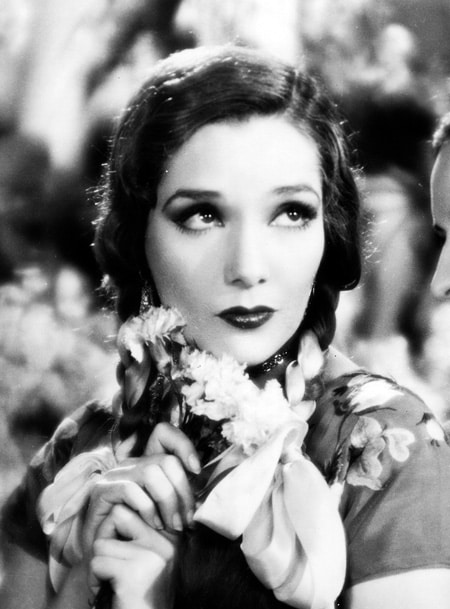
I like Ida Lupino (like in the picture above) for Donna. (If not her, then Jeannette MacDonald.) A slightly more marred Mel Ferrer could make a good Drozborod, if he actually did the accent. I think I see an Errol Flynn cameo for Neville Devine.

That's all for now, folks. Let me know what you think? Are there any fairytales you think would make good comedies? What are you all writing right now? Once again, feel free to join the linkup to introduce your own stories! (And I will see you all again come Easter!)

Saturday, January 15, 2022

Meet the Books! - Turning the Century

 Well, it's been a good while since the last Meet the Books!, and I've got two new projects (sort-of) since then, so let's get cracking. This one, previously known by the titles Divided and The World That Was, is coauthored with the Grim Writer, whose blog is here. I will mostly focus on my side of the story, as I know it better. (Perhaps Grim will grace us with her own Meet the Books! post to better introduce her side of the story...? EDIT: Grim's splendid supplementary post is here. Definitely go read it - it will make a bit more sense out of things.)

I really must redo this graphic at some point. It is so very pathetic...


What is the title?

The present title is Turning the Century, but it has been known by the above titles before now.

What is the genre? Time period?

Okay... Um. So we might have sort-of invented a genre...? I guess we'll call it a Fantasy. That works, right? It's a strange sort of Fantasy, though. It's strange because of the time period. You see, the book's world is divided into two halves, in two different period-inspired times. The first half is based on the 1920s, and the second half is based on the 1890s, I believe. 

How is it written (POV, format, etc.)?

We've gone with third person for this, mostly limited. We have stylistically strayed from limited a couple times, though, I think. We're going with a traditional novel format for the most part. Now, the one difference is that, since there are two authors, there is sort of a split of which characters/places are written by whom. In general, scenes in Bellafossa or from my characters' POVs are written by myself, and scenes in Bricklebury or from Grim's characters' POVs are written by Grim. 


What is the setting?

The setting is twofold. The first setting you see is Bellafossa, a rich, decadent, dissipated city loosely based off of Italian and 1920s culture. The second setting introduced is Bricklebury, an impoverished and war-torn fantasy village held together by a few influential patrons, inspired by Britain in the 1890s. 

Who are the characters?

In Bellafossa...


Gianni Verreni is a rich, young gentleman in Bellafossa. He is absent-minded, quiet, heartily lost in the world he lives in, old-fashioned, and perhaps a bit curmudgeonly. He is my main character and POV. He is quite fond of his younger sister,


Fioria Verreni, called Fio. She is a high socialite with spirits as bubbly as champagne and a character to match. She is quite independent, and she enjoys her riches and freedom. She's never worked a day in her life nor had to do anything harder than convince Gianni to take her places. She is Grim's main character and POV.

The suitors are a gang of high-society fellows, mostly working for Vin (explained in a moment), and all quite enamored of Fio. Those particularly worth mentioning are Addio, a fashionable sulker, one of Vin's right hand men, and the one most struck by Fio; Gerry, a fun-loving smooth talker who never misses a party or a trick, also one of Vin's boys.

Flavio Vitale is one of Gianni's best friends, but also a frivolous and somewhat nervous fellow, with good reason; he is very dangerously in debt to Vin and his boys. 

Iago Potenza is Gianni's other best friend. As he tells it, he witnessed his father, mother, and uncle, and his second cousin being shot when he was a boy. He is now an existentialist artist who believe the world is an abyss of suffering, and his only particularly real mission in life is to remove Vin's operation from power. He is always trying to do this, with the help of Gianni and Flavio. 


Vincente Vespa, commonly known as Vin, is a very rich, influential man about town who pulls most of the strings around Bellafossa. Nearly every chap from the old, rich families works for him, and he hosts much of high society at his nephew's ritzy place, the Rubino. It is well-known that he does things under the table and gets his power the hard way, but nobody can prove it. Vin and his boys - those who are admitted to his special circle - are the center of Bellafossa's society, regardless of anybody else's feelings about it. 

In Bricklebury...


Bernard Chester, later to be dubbed "Bob" by Fio for no particular reason, is one of the only pillars left holding Bricklebury up. He comes from an old, noble, wealthy family there, but doesn't have much wealth left, unless compared to the rest of the town. He is Grim's other MC. 

Anne Chester, known as Nancy, is Bernard's cousin. She is also one of my other MCs. She has mysteriously disappeared from Bricklebury when Fio arrives, and nobody but Bob and his confidantes seem to know anything about it...

Saoirse is Miss Nancy's maid, whom Fio renames Wyo because she can't spell Saoirse. 

Lady Macready is one of the strangest old women Fio has ever met (and, yes, her name rhymes). She lives in a house that has feet, apparently her dog is her long-enchanted husband, and she knows about secret things around Bricklebury. She is one of the only people helping Bob to keep the town afloat. 


Odysseus Wilde is a long-gone inventor and relative of Bob and Nancy. Rumored to be either quite crazy or a genius, bits and pieces of his various projects litter the Chester mansion. He hasn't been heard of since the War. Nobody is really sure what happened to him.

What does the plot consist of?

The plot begins with Fio and Gianni living it up in the Bellafossa half, a world that vaguely remembers the word "war," but has no idea what it means. They are comfortable and have their own private dramas until a hungover Fio messes with something she shouldn't and lands herself in the Bricklebury's world, a place where a great war still leaves its long shadow, impoverishing and dividing the land. Bricklebury has a grave problem with malign fantastical creatures. (Heh. Grave. Methinks I made a pun for you, Grim...) This leads some from Bricklebury to propose a great plan to try and reach the other side of the world using haphazard inventions from a lost lunatic. On Bellafossa's side, there is a serious gangster problem. Vin pretty much owns the city, and he has no intention of letting the threesome who oppose him go. Gianni increasingly gets in hot water when he starts a fight with one of Vin's boys on account of Fio's disappearance, and he is very soon on the run with a mysterious stranger who seems to know what happened to Fio...

(Anyhow, I described it really badly, but it should be a pretty fun story. Hopefully Grim will do a Meet the Books! for it as well so you can get some better synopses.)


What gave you the idea?

Eh.... *searching back into the abyss of brainstorming from years ago* I think we vaguely based the idea on some fairy tale awhile back. You know, the one where the girl falls down a well and discovers another world? Well, in the original draft of this story, Fio did fall down a well, but we changed the means of transportation to an old, crashed plane. I would give credit where credit is due with ideas and all that, but it's been so long, I really can't remember who came up with what. As for the time period overhaul, I suggested it to be funny, but Grim liked it and really fleshed it out (thanks for that!), so here we are. 

Who are the favorite characters so far?

Well, nobody's really read the whole thing, but I think Fio is pretty well-liked by authors and sneak-readers alike. She really was meant to be a flapper - the medieval period was really cramping her style. 

What is the favorite scene so far?

Again, nobody's really read it in earnest, so there isn't one yet.

Any drawings? Aesthetics?

I don't have any drawings, but I have a couple aesthetics. (Grim has even more, so let's hope she does a post also, at least to show off the aesthetics.) 

Storyboard. My image.


My image.


Any themes of music for the story?

Well, we've actually had to write a song for this story. Don't ask why... It's kind of complicated. Anyhow, though, we do have an original song for the story. It... does not have a name yet. We also have a playlist for writing it too, here. (Hopefully it's accessible... I can't tell). 

Any snippets?

Here goes...

***

“Back-step, kick-step, kick-kick-kick-back…?” Two feet crashed through the stained glass window, each belonging to a different person.

Gianni lifted his foot out of the conservatory window pane gingerly. “Don’t tell me that was what’s supposed to happen.”

“No, no, no!” Fio tossed her head back and laughed. “You can’t just keep kicking 

backwards. It doesn’t work that way.”

“Don’t forget, you did it too.”

“I was just following you.” She lifted her foot out of the window pane.

Gianni frowned at the broken window thoughtfully. “I think that’s the first time the conservatory window’s been broken since I hit a baseball into it when I was ten.”

Fio grinned. “Well, then, it’s about time, honey. It was in need of some excitement.”


***


It was swinging at the Rubino that night. If Fio hadn’t been thoroughly used to it, she might’ve felt a bit blinded walking in, the room glittering with champagne and diamonds. Just past the bar area, the open silver floor was barely visible through the many dancers. Every one of Vincente Vespa’s boys was there every night, and every rich doll, and just everybody who was anybody. Nobodies simply didn’t come to the Rubino. And judging from the atmosphere, it was going to be a killer diller night for everybody that did. Fio fluffed up the feathers on her dress excitedly. 

“Oh,” said Gianni dubiously, glancing around as they entered the floor. 

“What do you mean, ‘oh,’ you old grump?”

“The entire string of victims is here.”


***

Strangely, though the squirrels had quieted and the only birds singing were doves, as Fio kept walking, she had the distinctly unpleasant notion that she was not alone. Somebody was watching her.

“I’m just crazy with hangover and worry,” she said to herself, with a nervous laugh. But she started walking a little faster all the same.

There was the ravine ahead of her—but where was the path down? She walked to the edge and paced up and down a moment, trying to determine where the path had gone—but it seemed that years of weather had worn down the earth and rendered the cliff too steep to be traversed. 

“What a bummer,” she said aloud, pouting her lower lip in an attempt at humor, but in reality, she was close to tears. It was very silly of her to see that ravine and that old plane as the key to fixing her relationship with Gianni, no doubt, but she’d almost begun to believe her little daydream in her short time walking. She walked back the way she had come a bit, and stood peering over the ledge, trying to make out the details of the plane’s dark form on the bottom of the ravine. It was covered in leaves from all the autumns since she and Gianni had last visited it and brushed it off, but it was still there.


***

Gianni and Fio’s father had successfully got the machine to start when they had first found it. However, as he was not a pilot, and it was so old, he had determined he would never attempt to fly it, nor sell it, nor give it away. The children love playing on it, so there it shall stay, he had said. 

But that didn’t mean Fio couldn’t give it a go. With difficulty she managed to get herself into the seat, despite the years of forest debris within it. 

The key was in the engine—but when she reached for it something clinked to the floor of the cockpit. She reached down with a grunt—another key? Yes, a silvery one, with an odd shape, and a tiny face etched into the key’s end. There was a half-rotted string loop that had attached it to the other key until it had broken at her touch. 

Fio frowned, and, slinging her purse tighter over her shoulder, she stuffed the key into it and zipped it closed. 

Then she turned the other key in the engine.

“Well, here goes nothing.”

But the engine roared to life, and as she pressed her high heel against the accelerator, unbelievably, the plane began to move, crackling slowly through dry leaves, picking up speed—and then time seemed to freeze for her. 

Would it take off?

In that frozen moment, she smelt something peculiar—something marvelous—something far more pleasant than antique engine oil.

She didn’t have time to determine what it was before the plane took off—and she was rising up—up—through the trees, into that lovely sleek blue of the sky. 

Fio couldn’t help but whoop with delight at the sheer adrenaline high it gave her—

And then the engine stalled—and stopped.

With a bloodcurdling shriek, Fioria Verreni and her antique airplane plummeted to the earth. 

***

And, appropriately, I think, I'll leave you there at the end of my part of things...


Strong point in the story?

Well, the strongest point right now is probably Grim's energy for it, haha... But on a more serious note, I think we've been okay about making the fantasy and storyline and such fairly creative and not too reliant on any stereotypes. 

Weak point in the story?

Eh, my part, haha... In the original draft, my part was a little boring. My people just traveled around looking for something and never finding it. I think my part might still be a little boring unless I figure out another plotline to set up in it. 

What are your plans for it?

That is a good question... Unfortunately, I have no answer. Other than finishing it at our leisurely pace, I don't think we really have a plan. 


Any particular writing habits for it?

Not particularly, but it seems an almost universally true rule that if we both get on there to write, very little writing gets done... 

If it were made into a movie, what would be your ideal cast for it?

Okay... So, I spent way too much time trying to think of some good castings, but, really, just look at the face claims on the aesthetics. I think those are pretty good. (Grim has more face claims as well...)

Well, this post is ridiculously long, so I will end it without further ado. Have a good weekend, all!

Sunday, January 2, 2022

Life Updates

     Well, in all this time, it is a logical assumption that I have been doing things. (Or, at least, if I haven't been doing things, that I've successfully wasted a whole year.) 


Life in General

    To start, as I mentioned in my last post, my family moved this summer. They are now living down South, and I still abide in the lands of the North. I'm in a music school at present for a dual degree in Music Performance and Music Education (my primary instruments are voice and piano). I got another new sibling this past summer, and he's very cute and very fat. Pressured by location, I am back to the Novus Ordo grind and in the choir. I live with my best friend and writing confidante, and we have gotten a lot of nonsense and very little writing done thus far with this arrangement. On the side, I teach music, work a pretty effortless desk job, and help direct a high school musical theater group. Those are really the biggest things that are going on at the moment. 


Writing

    As far as writing goes, I was somewhat productive up until the school year started. The Second Brother is now finished and under critique from beta readers, and the sequel(s) have been started with some headway. I decided to trash My Land, My Heart (the idea was very trite), and my opera's present plot, In Greater Hands, and my Giselle retelling are also prospectively on the chopping block. I wrote some draft ideas for He Travels the Fastest, and I may be writing it in earnest as the next main project. I came up with another archive novel idea (which I will probably expound on in another Meet the Books! at some point). 

    Probably the biggest thing that happened as far as writing goes was a redraft, though. My writer friends on Camp NaNo may remember that I have a coauthored novel project which has never been talked about on this blog (mainly to respect my coauthor's privacy). Now, however, Grim has her own blog, and I plan to introduce the story via Meet the Books! sometime very soon. In a nutshell, the story was dull, medieval fantasy of a rather cliche type and has been - um - remodeled, shall we say? Very, very remodeled... Anyhow, more on that later.


Reading

It would take all night for me to cover the reading of a year, so I will just touch on some honorable mentions:

The Journal of Hildegard of Bingen, interpreted by Barbara Lachman

  • You must read it!
  • Don't read my translation because it was terrible. The lady was intent on making St. Hildegard out as some proto-feminist or female priest or something. Her footnotes were beyond weird. Do yourself a favor and find a better version. 
  • Overall, even with the terrible commentary, it was quite a fascinating look into life in a twelfth-century abbey. St. Hildegard was quite an inspiring woman, too - scientist, singer, composer, doctor, abbess, and mystic, and writer of the first musical, to boot. 
Awake, Not Woke: A Christian Response to the Cult of Progressive Ideology by Noelle Mering
  • This fabulous book takes the reader through a careful reconstruction of the processes leading to common political thought today in America. She then proceeds to look at each aspect of the philosophy through a Christian lens, with frequent recourse to the Bible, Catechism, writings of the saints and other great Christian authors. Certainly worth reading.
Beethoven: Anguish and Triumph by Jan Swafford
  • Okay, guys, you need to know about Beethoven. For better or worse, intentionally or not, this guy created the musical world we live in now. (The musical nerd side of me wants to promote it more, but I think I'd probably better stop before I get carried away.)
  • The one huge problem I had with this book was the anti-Catholicism of it all. The author showed rather painfully that she had no competent understanding of Christianity at all. She was quite biased when mentioning anything about the Church, and very strangely positive about every conflicting philosophy except traditional Catholicism. I find this a very high failing when dealing with a composer like Beethoven, who had a complicated and influential relationship with Catholicism. You'd think she would put a little more time and thought into that aspect of the book at least for Beethoven's sake. 
A Man for All Seasons by Robert Bolt
  • To be perfectly honest, I was actually a bit disappointed by the play. It was not as good as the movie (*gasp*), and the author had a very strange way of looking at St. Thomas's philosophy that didn't really show up in the original movie version. 
  • All the same, beautiful verse, splendid play. Definitely go watch the Paul Scofield movie. 


Music

    Well, All's Fair got two new songs added to it that it really didn't need and doesn't have a place for. I also wrote a quite useless, cheery little WWI style song and a fantasy for oboe and piano (the fantasy was for a composer's competition which I did not win but had a lot of fun with... the WWI song still has no purpose). I sang on the radio over the summer and got to perform at the reopening of a certain old theater building here, so that was cool. I also got somewhat addicted to TwoSetViolin for a period. 

    As far as music goes, I'm quickly gaining a persona as someone who collects and learns really random instruments. I've sung and played piano for a while now, but I now also play organ, banjo, and ukulele. I dabble in recorder and bagpipes. I plan to take up violin or cello for my strings class this semester and drop the recorder as soon as my wind exams are over. If anyone has need of a dying cat meme track, I would be happy to pick up my recorder for a little bit longer.

Well, that's really about it. How about all of you? What has life held for you this past year? How are the writing projects? Reading? And my musical buddies? (Does anybody else name their instruments...???) 

Saturday, September 5, 2020

Meet the Books! - He Travels the Fastest

The seasonal Meet the Books! is back again! And it seems I shall live to post another day, for, in the time since the last one, I have acquired another archive novel idea to write about for this installment. Anywho, let's proceed to the rules of the link-up and to the questions. The rules are to answer the questions of the link-up using one of your WIPs, use the picture (if so desired), and link your Meet the Books! feature in a comment here so that I can see all the lovely posts. Things have been a little less orthodox lately, so I'm quite eager to hear about any projects - novels, poetry, musicals, biographies of Robin Hood, etc. Anyways, onto the questions.


What is the title?
The title is He Travels the Fastest, taken, as some more adept readers than I might guess, from a line of Rudyard Kipling's - "He travels the fastest who travels alone."

What is the genre? Time period?
The genre is most decidedly Comedy. 'Nough said. The time period is strangely specific for one of my books -  1930 in America, specifically starting in New York.

How is it written (POV, main character, etc.)?
I'll actually be trying my hand at something new for this one - third person omniscient. After much reflection on the matter, I now believe it is either impossible or quite difficult to write a splendid comedy in anything but a somewhat narrative style. (So, to m'dear Megan Chappie, yea, you have finally convinced me...)

What is the setting?
Like I said, 1930 in America. While starting in New York, it will traverse all along the country into California.

Who are the characters?
There are only a handful, really. The main character is

"Chess" Ridley, a middle-aged American traveling salesman. Having been relatively successful at his gig for many years and now being quite tired of the business (and busyness), he plans to retire quietly out West alone, traveling by himself. A nice, slow, leisurely trip West to some quiet, country home all to himself is the only castle on a cloud the practical (and rather grouchy) salesman allows himself. Finally, he's saved up enough that he can quit the business and do it... or, so he thinks.


Marquesa Helena de Marcos is an aristocratic widow recently immigrated illegally from Spain. Just escaped from Ellis Island, she is iron-set and determined to get to her alleged American relatives in California, whom she is quite convinced would make her immigration legitimate. She and her brood - did I mention her eight children? - have come to America knowing little to nothing about the country, other than some broken English and the praises of its faraway freedom... Her brood consists of...

Consuelo is the Marquesa's oldest daughter, a pretty young Spanish girl of twenty with a dry tongue and some very odd ideas about Americans. Unfortunately, she draws the eyes of American boys at the most inconvenient times...

Inez is the second daughter, seventeen, and also possesses the Spanish belleza. She does not like the looks of Chess or this country.

Nuncia is the third daughter, sixteen, who has a most intense fondness for "Senor Ridley," who she believes to be in truth a kind and artistic soul... Needless to say, Senor Ridley doesn't exactly share the sentiment.

Alfonso is the oldest son, fifteen years old, and is extremely protective of the family... to the point of almost getting in a fist fight with every relatively grown male who looks at them funny.

Clemenz is the second oldest son and fifth child, at eleven. He also loves a fight, though more for its own sake. He tries ardently to pick up American phrases, but usually fails.

Constanza is the fourth daughter and sixth child, at nine. She is fairly quiet, but seems to possess the singular characteristic of never seeing when the little ones do something mischievous...

Miguel, third son and seventh child, has to be the naughtiest boy alive. Only his mother's looks save him from being utterly throttled. He is nearly six.


Margarita, or Mari, the youngest of all, is sweet, but the inseparable companion of Miguel, which means she gets in trouble regardless of her better tendencies. She is four.

There may be other assorted small recurring characters, but non relevant enough to mention.

What does the plot consist of?
As hinted above, the plot begins with Chess's resolve to take a long, slow trip West to lone retirement. His fate changes, however, when he runs into the family of illegal immigrants, and they attach themselves to him with a will, thinking he can guide them to California. Thus, the trip across the country begins, with plenty mishaps, misunderstandings, and misadventures along the way, all while being distantly chased by the police.

What gave you the idea?
Eh. Sorta the title. A good title really inspires a novel like nothing else. I always liked the idea of an ironic title, and the best path of irony according to that quote is to make poor Chess travel as un-alone as possible.

Who are the favorite characters so far?
Seeing as only my writing confidante and Madam Megan have seen even the rough sketches of what it will be like, there's not really a good answer. Possibly Chess.

What is the favorite scene so far?
None, since it's just an archive idea, and there aren't any written yet.

Any drawings?
Not quite yet.

Any themes of music for the work?
Mmm... The possibilities tempt me, but, unfortunately, there are none as of yet.

Any snippets?
Nope.

Strong point in story?
It will probably be the theme.

Weak point in story?
At the moment, the research. I've done some preliminary stuff, but I will have to research a lot more before actually writing it.

What are your plans for it?
To draft it, once I get a few current WIPs knocked out.

Any particular writing habits for it?
As I haven't written it yet, no, not at the moment.


If it were made into a movie, what would be your ideal cast for it?
Unlike my other archive novel ideas, I actually have thought about this. I think either William Powell or Fred Macmurray would be best as Chess (it would have to be a slightly older, slightly more disheveled version of either of them, though). I particularly see William Powell in his hobo dress from My Man Godfrey, for some reason. For the Marquesa, I see an older Delores del Rio. I don't know about the kids, though.

***
Anyways, that's the end of the questions. I hope you enjoyed the post, and I can't wait to see everyone else's Meet the Books! posts. Don't forget to link them up back  here so I can see!