Pages

Showing posts with label Books and Books and Books. Show all posts

Sunday, April 17, 2022

On Realism

     Alleluia, He is risen! Happy Easter to all! As you may have noticed, I went off of blogging for Lent, but now I'm back to the blogosphere. (Goodness, what a horrifically dull introduction... My oratory skills are going to be stunning today...)


    Anyhow, I've come back to get right to business. I'd like to discuss a rather more big-picture concept in writing: the concept of realism and depicting things realistically or fantastically in general. In short, how realistic should fiction be? What side of reality should it portray and how much? 

    Now, before we begin, I'd like to make a bit of a disclaimer. These are only my own thoughts and my own philosophy. I do not claim to have all the answers, and there have great, virtuous, admirable writers on both sides of this debate and everywhere in between. I myself enjoy and love many works on all places in the spectrum. So, going through my thoughts here, just take them with a grain of salt. 

    In the usual way of things, my mind starts clattering with ideas and long freight trains when I'm supposed to be paying attention to something else, and my most recent rabbit hole was no exception. In my music history class, the topics were first Romantic Age grand opera, and then Romantic Age realistic opera. Now, without going too deeply into either of those things, they essentially boil down to this: earlier stories in opera were about larger than life figures with somewhat fantastical, romanticized stories and great questions asked and explored, while later opera stories were about more real, relatable people with sometimes hard or decrepit lives and more direct, tangible morals to the story. If you're at all familiar with opera, good examples would be Verdi's Nabucco and Bizet's Carmen respectively. Some classic literature parallels would be Beowulf and Little Women, or The Scarlet Pimpernel and The Great Gatsby. There are many more parallels too: Oedipus Rex and Our Town; Ten Commandments and Mr. Smith Goes to Washington; Les Miserables and West Side Story; Shakespeare and Tennessee Williams; the list goes on and on. (For the sake of clarity, from here on out, when referring to the philosophy as opposed to the usual meaning of the adjective, I'll capitalize "Realistic," and, while both things I'm referring to are sort-of Romantic, I'll refer to the non-Realist style as "Romantic.")

    The idea behind the change in storytelling was simple on the surface, but I think it merits a closer look. As the theory goes, we should depict real life more closely to how it is because audiences will connect with it more and be more engaged by it. They will be more moved by it and understand it better if it relates to them closely. While it's true that depicting certain things will not be pretty, neither is real life. Suffering is such a real part of life that neglecting to depict it, or depicting it in a way that is surreal and unrelatable, makes the work difficult to read/watch/hear without skepticism. Additionally, if what's being depicted as ordinary contradicts the everyday experience of the audience, then they may dismiss the work - setting, theme, and all - as unbelievable or untrue. 

    It has been countered that some things should never be portrayed. I agree wholeheartedly, and many people who wrote in a Realistic style also did. While later modernist writers took the philosophy to a whole new level, I don't think the intention of Realism is to simply shock the audience with vulgarity, bleakness, or depravity. While it came out that way sometimes for the sake of delivering the moral of the story - as in The Great Gatsby depicting the alcoholic, abusive life of the rich class to tell us that this world and all things of it are vanity - most Realist stories are not meant to be sensationalist for the sake of it, per se. 

    That said, I believe Realist stories are deeply sensationalistic. The comment is often leveled against Romantic stories that they are larger than life and don't depict reality accurately. Now, the problem with this criticism is that Realist stories don't either. I'll come back to that in a moment. On a shallower note, we really don't want them to. Any story that depicted reality exactly as we experienced it would be dull as paint. If I started reading a novel wherein the heroine wakes up early every morning, goes to school, works, and then goes home and does homework, I would lay it away pretty quickly. 


    When consuming works of art, we want something bigger than ourselves. While it's good for us to be reminded from time to time of the flaws in our patterns and lifestyles, we become desensitized to it if we hear it all the time. If all novels in the 1920s had been oratories on the upper class's dissipation and emptiness, the message would have been thoroughly ignored. As it was, Gatsby made an astonishing effect because it was unique in its depiction. While other writers glorified the '20s glitz and leisure, F. Scott Fitzgerald tore away the glitter and beads and showed it as the lost, restless culture that it was. And that is the real point of Realist stories. The point is not as much homogeneousness as it is homily. Realist stories have to be a little harsher, a little more familiar, and a little more down-to-earth because their point is to deliver a quick, hard, simple message that people need to hear. 

    It's extremely effective whenever it's been used. Sometimes people remember the characters and the settings, and sometimes not, but they remember the bottom line of the story. I probably couldn't tell you the names of half the characters in West Side Story, but I remember vividly the visceral repugnance at the gang violence that I was meant to feel. A Realist story is like someone in a speech saying "listen up" - it catches your attention and lets you know that this last thing is really important. 

    The problem with saying "listen up" in a speech too many times is that is loses its power. It becomes monotonous and signifying of nothing. You've probably listened to a speaker before who uses the same potent phrase or comparison too many times and loses his audience's engagement as a result. Realist stories are very much like this. They serve a good purpose in a crisis, but they become desensitizing in large doses. If we take in too much of the hard, direct, and the gray - especially the morally gray - then we can come to accept it as normal and tune it out. If we're constantly fed things we're supposed to relate to, then we tend to come to see it as being indeed everyday, and thus mundane and ignorable. 

    That's a bit of a problem with writing stories in general. While we want to relate to our audience, like I said above, too much relatability creates predictability or boredom. We don't want our stories to perfectly reflect real life, and I think there is a deeper reason for that. Life in this world is never perfect - quite the opposite - and if we are only fed with the ugly, the commonplace, and the familiar, then we feel unfulfilled and lacking. We feel a distinct need for something more - some sort of resolve to our suspended existence. 

    This leads to my other problem with Realist writing. Like I said above, I think that Realist writing is quite profoundly sensationalistic. It's always an exaggeration. Realist writing is by its nature stuck in this world, and, while that may offer us a lot of wisdom on how to (or how not to) conduct our daily lives, it doesn't give us anything more universal to look to. What's more, much (not all, but much) of Realist writing is stuck in a sort-of incomplete version of this world. It's true - suffering, hardship, and immorality exist, but they are only a piece of our nature and existence. In fact, they are a small piece, like a parasite on an independent body. Poverty, sickness, and depravity are true in daily life, but so are other more beautiful, good things like marriage, children, humor, health, and simple everyday love. Most Realist stories focus on those former, uglier qualities and forget that the beautiful part of everyday life exists. And in a sense, that can be a good thing. It's hard to deliver a tough message without cutting to the quick and focusing on one thing. But nobody likes to listen to a fire-and-brimstone preacher all the time, and that's why these stories can be dulling to our senses even more than any other Realist stories. It's easy to see why we go to Realist stories more like Little Women or Mr. Smith Goes to Washington when we want something lighter - while they do focus more on this world and its issues, they're uplifting because they present us with both the ugly and the beautiful sides of life. Even if they don't pack quite as much of a gut-punch when it's needed, they are good reminders in a more regular way. 


    Now to get to the meat of the matter. I believe that a more Romantic worldview is the superior one when it comes to writing stories. While it's true that it doesn't match up to real life, as I demonstrated above, no stories really do - that's rather the point of stories. We tend to ignore things that are too familiar to us. Romantic writing also can't come to arms in a crisis the same way a hard Realist story can, but, again, hard Realist stories are best to have in crises and not as the standard. Because Realist stories are stuck in this world - whether they present its good or not - they are always incomplete and imperfect. They may be splendid works, they may be some of history's masterpieces, but they never quite reach the thing that is most beautiful in them: the transcendental. 

    In any reaching for virtue, either by criticizing its lack or by encouraging its daily practice, a work touches on something universal. In Realist works, we only get these universal values through a human lens, but we yearn for a better look at them. Everyone wants the answers to the wide, vast questions of life, and this world can't give them to us. Nothing touches the heart and inflames the mind and soul like a work that explores a great question or some transcendental good. After all, one of the transcendental goods, beauty, is the basis of all art, including writing. Without it, there would be no good writing at all. Many love to read the Gospels and the Acts of the Apostles, but most Christians I've talked to agree that the books that captivate them the most are books like Psalms, Lamentations, and Revelation: the books of mystery and of the great, universal ideas. 

    As immortal beings, we are designed to love and be drawn to the immortal. Things that mystify and go beyond our senses are what interest and benefit us most. Mysteries are not relatable; if they were, they would not be mysteries. That's precisely the beauty and the attraction of them to our nature. Fiction should reflect that truth, that ultimate Reality: that we are not alone in this immense world, and there is so much more to know than what we see and experience. Beowulf sacrificing himself to slay the dragon is Christ on the Cross; Nabucco's people exiled in a foreign land are the Church, the New Jerusalem, chosen to suffer through this world; Jean Valjean in his struggle against the world to become a truly just person is Fallen Man on his path back to God. In that sense, Romanticism is really the true realism because it depicts and hints at the Reality that is more real than anything on this earth: the Reality of goodness, truth, beauty, and of God, who is all these things and Being Itself. 
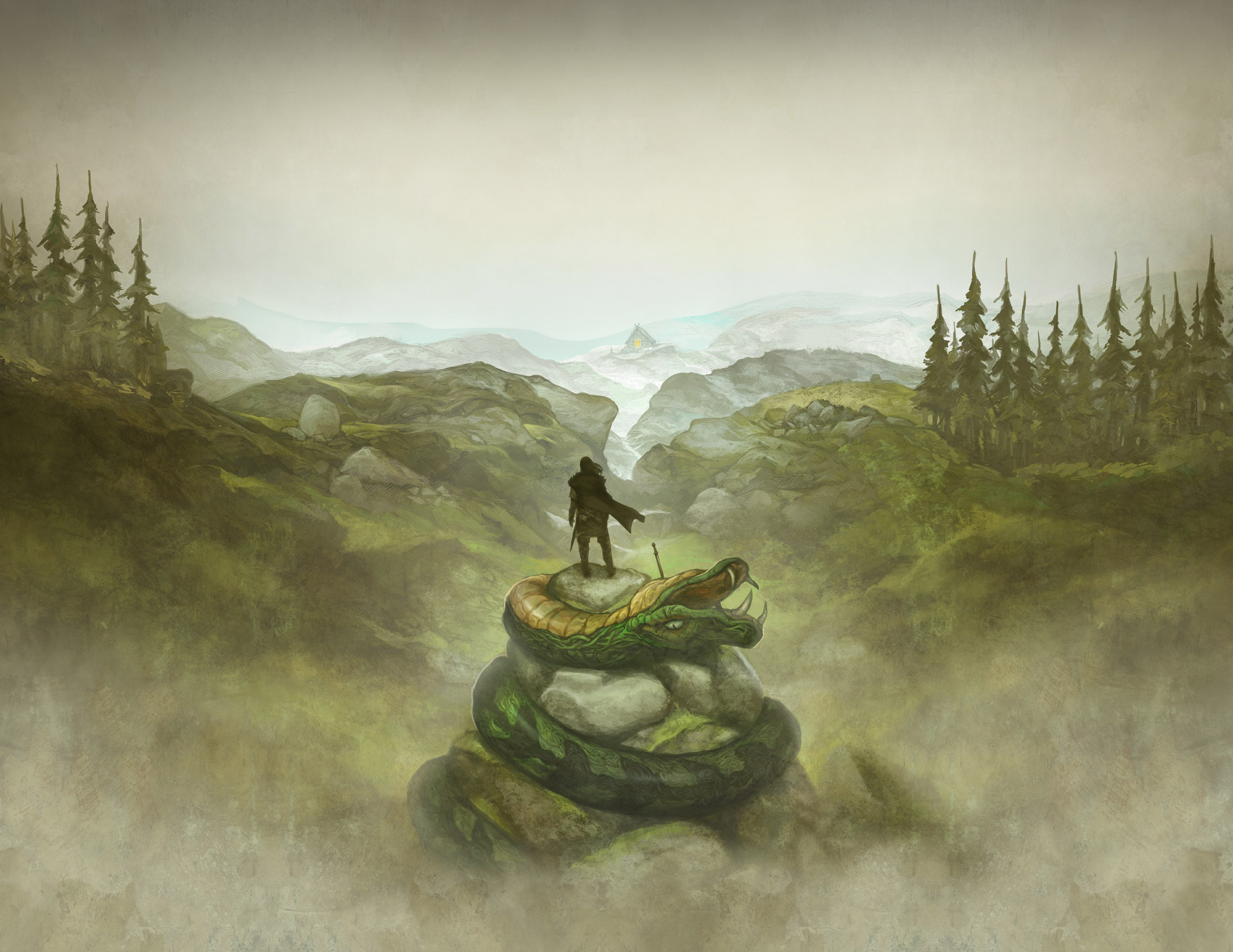

    Grand scale characters and plots exploring questions that are perennial and maybe seem obvious to us can be overdone like anything we human beings do. However, I think that they communicate the vastness of this universe and this existence much better than stories trapped on this earth do. Because Romantic works give us such a huge view to look at, they force us to actively consider and choose what our focus is. We can't passively take in a good, Romantic work; we have to internalize the ideas presented or else we can't understand it. There is no way for us to simply let it be. On that note, this can often be why many people profess not to enjoy grand, Romantic works as much. They take more intellectual effort to appreciate and cannot be taken in without engagement. Oftentimes, it's easier to have a moral handed to us without further ado, like Christ giving us parables in the Gospels. (And there's nothing wrong with that.) Remember, though, Christ also gave us Revelation. We're not meant only to be pushed towards Heaven and the transcendental goods, but also to push ourselves, to make a constant, real effort to ask the questions we must answer and pursue the goods we must acquire. For those reasons, we need the challenges in our stories to look not down at the earth, but up to the Heavens, and to ask What lies within. 

Well, that's my two cents, anyhow. What are your thoughts? Do you prefer to read more Romantic or Realistic works? Which do you prefer to write? Share your thoughts, if you have any, and, meanwhile, have a wonderful Easter season! (And give Megan some extra applause if you enjoyed this post... Some parts were inspired by an old post of hers about language in writing, but I can't find the post anywhere to link to it anymore... [EDIT: Thanks to Megan, it's now linked in the comments below.]) 

Monday, February 14, 2022

On Shoes, Gloves, and Romance

    There was once, I hear, a cobbler who had a marvelous ability. His skill with making shoes was so phenomenal that it extended beyond creation into transformation. He could take two shoes which were completely different, and he could alter them so that they would be a completely new pair, quite alike in every way. People came from far and wide simply to see this curiosity take place. Nobody knew how he did it, but they came and tried to figure it out just the same. The rich and the eccentric would bring shoes of different pairs and makes and designers to see them change form, and the less rich and eccentric would bring lone shoes without partners to make them of use again. Though all watched the process with their own eyes, the skill was beyond their understanding, and it completely eluded their senses. 

    Now, it came to pass one day that a young person became dissatisfied with the cobbler's mysterious ability and the way it worked. He brought to the tailor two shoes quite unalike, just like many others before him had. He had, however, a different demand: he wanted the tailor to only alter one and not the other. He wanted one to remain the same, and the other to change to be like it. Now, there was no reason for this. Both shoes were decent, plain shoes without adornment or beauty, and both were still useful to some pair of feet for a time. Neither one was particularly special. The fact of the matter was only this: the man simply disliked the limitation the cobbler put on what seemed to be an infinite ability. If the cobbler's custom of only transforming shoes together was arbitrary, then why not break it? The cobbler clearly had the skill to. 

    When the young man came with this request, however, the cobbler refused him. The young man, of course, wanted to know why. To this, the cobbler's reply was short and simple. We are given what we are given, he told the young man, and we must be content with it. A blessing is a blessing, and distinguishing between them, or favoring one over the other for oneself is ingratitude. Everything we receive, after all, is a gift. 


    Forgive me for starting with a small story, but I feel that this bit of musing probably would not make much sense without the train of thought that came before it, this little tale. For the moment, the tale stands alone, but I'll come back to it. 

    Have you ever noticed the use of romantic curios in stories? Things like handkerchiefs or roses or such things. At first, they're something silly and mundane, but then they take on a greater meaning as the couple's story and development go on. Here's one example, for those who have read Little Women. Do you remember Meg and Mr. Brooke? Their romance begins, perhaps, when Mr. Brooke finds Meg's missing glove. It is a little thing, and Meg dismisses it as gone, so he keeps the thing and cherishes it. Later on, it is a factor of revelation, telling us of Mr. Brooke's true intentions and helping Meg to realize her direction in life. She marries Mr. Brooke, and the gloves are reunited, a complete pair once more. 

    Such a little thing, but it's a lovely little bit of metaphor, isn't it? Of course, we've all heard that cliche old chestnut about couples completing each other and what not. Very often, that stuff is nonsense, or at least heavily diluted therewith, talking about soulmates and fated matches and such drivel. Of course, couples are not fated to be with one another anymore than anyone is fated to do anything, and one good man is equal to the next when it comes to choosing a spouse, if things are done properly. 

    But let me indulge in another example before I continue. I'm sure even those who have not read Little Women know the story of Cinderella. Cinderella loses one glass slipper, and the Prince finds it and returns it to her, restoring unity just like with Meg's gloves.

    In human romantic love, the two shoes or the two gloves are exactly what each spouse should be. One is like to the other in the same way - their fragility. Is it a coincidence that Cinderella's shoes should be made of glass, or that Meg's glove should be lost? The shoes and gloves are like to each other and are one set. 


    That's all well and good, and more competent literary scholars than myself have probably already noted the allegory. Something much more important, however is present in the image. Shoes and gloves are pairs, they are designed for one another, and they make a complete set of something, but there is another aspect as well. Shoes and gloves alike are designed for a purpose, a purpose even beyond completing each other. Shoes are meant to protect the feet and gloves to warm the hands. If shoes or gloves existed independently of any wearer, they would be completely meaningless. 

    The truth of the matter is, we are gloves or shoes or what have you. We are meant for each other in a smaller, more temporal sense (not meaning temporary, but, rather, within time), but we have a greater purpose that we must serve together. If we do it apart, with only one party serving, only half the goal is met. One glove alone does not keep the hands warm, though it's better than none. One spouse on the road towards Heaven alone may get there, but he is missing his traveling companion. We are meant to be together because Heavenly Love is a difficult ideal. For many of us, it is not given that we can know it directly in an intimate way. Instead, we are part of a pair, made to work together and learn of God by serving Him with our human love. If both shoes are found and united, only then are they of full use to the Wearer. 


    This brings me back to my story and to the fallacy of fated lovers. We are not unchanging beings - this is exactly why we cannot be fated for anything other than Heaven. After all, the only unchanging thing in us is the bit of God in us. Only His Holy Image in us does not change. God is the Cobbler in the story. We cannot remain the same and hope to find a match. Both parties must change for love to happen because love is a radical change, only capable of moving and perfecting when it meets with something hardened and imperfect. Love will always be in motion as long as it is finite because it longs so much to reach a state of infinity. The cobbler in my story cannot bear to leave one shoe as it is. He creates, but, more importantly, he transforms. 

    Without being changed, we cannot hope to become perfect. If we cannot hope to become perfect, we cannot hope to achieve Heaven. Fate has nothing to do with romance, really. There is nothing less romantic than being fated to something; it takes all nobility, all beauty, and any influence of God out of the picture of romance. We are malleable, changeable beings, just needing to be hammered into shape to work out as we ought. Ultimately, Our Lord is a Cobbler, making out of even mismatched, useless shoes a beautiful pair, worthy of a King.

Sorry for rambling a bit again... Hope it made some little sense, at least. Either way, Happy St. Valentine's Day, all!

Sunday, January 2, 2022

Life Updates

     Well, in all this time, it is a logical assumption that I have been doing things. (Or, at least, if I haven't been doing things, that I've successfully wasted a whole year.) 


Life in General

    To start, as I mentioned in my last post, my family moved this summer. They are now living down South, and I still abide in the lands of the North. I'm in a music school at present for a dual degree in Music Performance and Music Education (my primary instruments are voice and piano). I got another new sibling this past summer, and he's very cute and very fat. Pressured by location, I am back to the Novus Ordo grind and in the choir. I live with my best friend and writing confidante, and we have gotten a lot of nonsense and very little writing done thus far with this arrangement. On the side, I teach music, work a pretty effortless desk job, and help direct a high school musical theater group. Those are really the biggest things that are going on at the moment. 


Writing

    As far as writing goes, I was somewhat productive up until the school year started. The Second Brother is now finished and under critique from beta readers, and the sequel(s) have been started with some headway. I decided to trash My Land, My Heart (the idea was very trite), and my opera's present plot, In Greater Hands, and my Giselle retelling are also prospectively on the chopping block. I wrote some draft ideas for He Travels the Fastest, and I may be writing it in earnest as the next main project. I came up with another archive novel idea (which I will probably expound on in another Meet the Books! at some point). 

    Probably the biggest thing that happened as far as writing goes was a redraft, though. My writer friends on Camp NaNo may remember that I have a coauthored novel project which has never been talked about on this blog (mainly to respect my coauthor's privacy). Now, however, Grim has her own blog, and I plan to introduce the story via Meet the Books! sometime very soon. In a nutshell, the story was dull, medieval fantasy of a rather cliche type and has been - um - remodeled, shall we say? Very, very remodeled... Anyhow, more on that later.


Reading

It would take all night for me to cover the reading of a year, so I will just touch on some honorable mentions:

The Journal of Hildegard of Bingen, interpreted by Barbara Lachman

  • You must read it!
  • Don't read my translation because it was terrible. The lady was intent on making St. Hildegard out as some proto-feminist or female priest or something. Her footnotes were beyond weird. Do yourself a favor and find a better version. 
  • Overall, even with the terrible commentary, it was quite a fascinating look into life in a twelfth-century abbey. St. Hildegard was quite an inspiring woman, too - scientist, singer, composer, doctor, abbess, and mystic, and writer of the first musical, to boot. 
Awake, Not Woke: A Christian Response to the Cult of Progressive Ideology by Noelle Mering
  • This fabulous book takes the reader through a careful reconstruction of the processes leading to common political thought today in America. She then proceeds to look at each aspect of the philosophy through a Christian lens, with frequent recourse to the Bible, Catechism, writings of the saints and other great Christian authors. Certainly worth reading.
Beethoven: Anguish and Triumph by Jan Swafford
  • Okay, guys, you need to know about Beethoven. For better or worse, intentionally or not, this guy created the musical world we live in now. (The musical nerd side of me wants to promote it more, but I think I'd probably better stop before I get carried away.)
  • The one huge problem I had with this book was the anti-Catholicism of it all. The author showed rather painfully that she had no competent understanding of Christianity at all. She was quite biased when mentioning anything about the Church, and very strangely positive about every conflicting philosophy except traditional Catholicism. I find this a very high failing when dealing with a composer like Beethoven, who had a complicated and influential relationship with Catholicism. You'd think she would put a little more time and thought into that aspect of the book at least for Beethoven's sake. 
A Man for All Seasons by Robert Bolt
  • To be perfectly honest, I was actually a bit disappointed by the play. It was not as good as the movie (*gasp*), and the author had a very strange way of looking at St. Thomas's philosophy that didn't really show up in the original movie version. 
  • All the same, beautiful verse, splendid play. Definitely go watch the Paul Scofield movie. 


Music

    Well, All's Fair got two new songs added to it that it really didn't need and doesn't have a place for. I also wrote a quite useless, cheery little WWI style song and a fantasy for oboe and piano (the fantasy was for a composer's competition which I did not win but had a lot of fun with... the WWI song still has no purpose). I sang on the radio over the summer and got to perform at the reopening of a certain old theater building here, so that was cool. I also got somewhat addicted to TwoSetViolin for a period. 

    As far as music goes, I'm quickly gaining a persona as someone who collects and learns really random instruments. I've sung and played piano for a while now, but I now also play organ, banjo, and ukulele. I dabble in recorder and bagpipes. I plan to take up violin or cello for my strings class this semester and drop the recorder as soon as my wind exams are over. If anyone has need of a dying cat meme track, I would be happy to pick up my recorder for a little bit longer.

Well, that's really about it. How about all of you? What has life held for you this past year? How are the writing projects? Reading? And my musical buddies? (Does anybody else name their instruments...???) 

Thursday, June 18, 2020

The Writerly Sibling Tag

Hello! I am back with a tag that has waited a shameful span of time for me to complete it. Without further ado, I present The Doorman's Writerly Sibling Tag, tagged direct from the man himself. To start off, here are the rules:
  • Thank the blogger who tagged you and provide a link to their post. (Thankee kindly, good sir!)
  • Answer the inquiries, including any ones added by #6.
  • Always use your own characters. No exceptions, unless you don't actually have sibling characters (in which case you need to go and write some) or you don't write (in which case you need to start ASAP).
  • Tag three other bloggers.
  • If you happen to have any siblings who blog, they are automatically tagged, and they cannot count toward your three.
  • Add one question of prompt to the list you were tagged with (see at the bottom of this post, or at the bottom of Doorman's, as I was tagged first).
  • Close out the post with some honoring of the King of Kings. 
Alright. Now that that's settled, I will start answering the questions.

Fitted Dress with Velvet “Renaissance Memories” for sale. Available in: dark blue cotton, green cotton, blue cotton, burgundy cotton, black cotton :: by medieval store ArmStreet 


 Name the most annoying sibling character in any of your stories (Either annoying to you as the author or to any other characters)

Eh... That's a hard one. Really, siblings all annoy one another (let's be honest), so it's more realistic to pick ones annoying to the author. (Unless you're talking about those siblings whose life mission is to annoy their siblings. Then... that's a different story.) Owain from The Second Brother actually annoys me a lot, probably because he gets a lot from his writerly mama. It is an ongoing thing that I cannot stand any of my characters who act like me in any way, intentionally written so, or unintentionally. Because of this, I find Owain incredibly irritating at times. As for annoying to other characters... Feo might win that prize. 

Name the most caring sibling character in any of your stories

That one's fairly easy. Blakely from The Clarion Call/Alagna is, despite his frequent eye-rolling and scolding, extremely fond of his brothers, Francis and Edmond, and cares for them probably better than he does for himself. Heaven knows what kind of trouble they would get into if he weren't around to keep a check on them... and how bored they'd be if he didn't fall into their pranks all the time.

Name the most entertaining sibling character in any of your stories

Well, I sort-of already mentioned the Almost Twins (Francis and Edmond), but they'd probably get this award. Through thick and thin, the twosome find their greatest pleasure in the simple things in life... especially giving Blakely a hard time and, in their younger days (mostly), giving their mother gray hairs with their various escapades and misdemeanors. They have won particular infamy for a certain episode involving stew...

Name a sibling character who was inspired in some way by an actual sibling

Intentionally, I try to steer clear of basing characters off of siblings, as it can create too much trouble (what if I wanted to kill off the character...?). However, a couple characters became a reflection of real life without my permission, particularly Feo from The Second Brother. He was never meant to be based off of anybody, but is, in his present state, my first younger sister to a 't.' Just as Owain unwittingly soaked in my own personality, Feo seemed to become ZZ (my sister's nickname) out of sheer fatedness to be so. The only particularly great difference between them is that Feo is, obviously, a guy.


Name the largest character family (talking family, not family tree) in any of your stories

Well, there are a few competitors. Celeise from Alomina has four younger siblings, a boy and three girls (I think? I keep changing it...). Alejandro from A Broadway Waltz has five younger brothers (and an unofficial older one). Freddie Mayne from The Top-Hat Gang has seven sisters, either all younger, or all but one younger. The winner, though, I believe, is Vic Vance (from In Greater Hands), who has eleven siblings (three boys, eight girls). The catch there is that he is adopted, as well as a fair few of his siblings, so none of them are his biological family. (But then, nobody said that this tag had to be for biological family, right...?)

Provide one to three excerpts from your sibling characters' dialogue from any of your stories

Alrighty... Let's have Francis and Edmond, since it's been a long time since they've gotten any spotlight on the old blog...
***


            "Welcome to our humble abode, my lady." Francis did a little half-bow to her, playing along with her masquerade, as usual.

            Then all pretentions dropped. Alagna relaxed her form a little, smiling teasingly at the both of them. "Surely that's not your best bow?"

            "Of course it is," interjected Edmond grinningly. "He's just never learned as well as I, even for being the elder one." Edmond bowed with a flourish fitting for a king's crier.


***


             Confusion only grew in Blakely's eyes at Alagna's behavior. "Alagna    ," he began, but was cut off by a different voice.


            "Ah, Blakely?" Francis and Edmond came up behind him all of the sudden. Alagna might have laughed at their uncanny knack for it if it had been any other situation.


            Blakely half-turned from Alagna. "Yes? What is it, Francis?"


            Edmond's expression turned from a rather more serious one to a rather sly smile upon taking in Blakely and Alagna's close proximity. "And, ah, what might you be doing now, Blakely?"

            "Or, ah, saying?," joined Francis hintingly.
            "And to whom?"
            "And whatever about?"
            Blakely looked both of them over. "Nothing more than Alagna's name, I'm afraid, because     "
            "Because you were interrupted?" Francis laughed. "I wonder who did that..."

***

Name three published books which have an amazing portrayal of siblings and family

Well, Outlaws of Ravenhurst had a pretty awesome family in it, even if it was small. The mother, Lady Margeret Douglass was a great character - a Scottish lady and an accomplice to her outlawed priest brother. The family seemed so close, it was awesome (especially considering the protagonist hadn't met the other three members in nearly ten years). 

As tortured as the siblinghood was sometimes, the Books of Bayern by Shannon Hale had a good portrayal of siblings. Personally, I would only recommend the first one (as I thought the others were slightly stupid, plus, the second one had some content issues), but the first and last both had pretty good sibling characters and relatively low content caution. In the first one, the protagonist, Ani, barely knows her five siblings, and is distraught because she may never know them (she is sent away to be married off near the beginning). It really hits hard for anyone who grew up close to their siblings to think of never knowing them, and never seeing them again. Then, for a closer sibling relationship, Razo and Rinna in the fourth book were very close, constantly teasing each other and giving each other a  hard time, just like real siblings, and it was adorable. I think, despite the other issues of the middling books, the series as a whole has a believable pluck for large families. The happiest families are the Forest-Born ones, which range from a couple kids to eleven or twelve (mostly on the larger end, including Rinna and Razo's), and the least happy ones always seem to be those that are not close or don't have many siblings (like Ani's, where she wasn't allowed to know her siblings, or Selia's, as an only child). 

And what talk of siblings and family would be complete without Louisa May Alcott's Little Women? The story of four sisters and their way in the wayward world, always finding their way back to Marmee (their mother) and their beloved home. Need I say more?


Name another author's character family that you wouldn't mind jumping into

Hey! I thought we weren't allowed to use anybody else's characters...! Well, anyhow, I'd like to be in Peter Wimsey's family - seems like some smashing good fun, even though it's just him, his brother, and his mother (as far as I've read).


Provide an excerpt/quote of sibling drama or camaraderie from any title (though be sure to credit it)

Oh dear. I'm afraid I'm far too lazy to get books out at the moment, and this post has already been waiting too long. I believe I shall direct you to Little Women and sit back for the rest of this question.


Name two characters from two unrelated books that you feel would make for great literary siblings (whether in terms of getting along, or being a constant head-to-head combat)

Hmm. I think that Taran from The Chronicles of Prydain and Finn from The Goose Girl would have been good siblings. Finn, quiet as he is, would be balanced by Taran's outgoing nature, and Taran's slight hotheadedness would be tempered by Finn's common sense. Their skills and interests are also very similar - both grew up on a small farm but desire knighthood and the life of a warrior. It would be a siblinghood I'd like to see. 

***
As for tagging other bloggers, if you aren't tagged, consider yourself so. Particularly, I suppose I shall recognize Catherine Hawthorn, Sarah Seele, and Lia, at their leisure and capabilities, of course.
***

And there are all the questions for now. If' you'd like them in a list, here you are.
  •  Name the most annoying sibling character in any of your stories (Either annoying to you as the author or to any other characters)
  • Name the most caring sibling character in any of your stories 
  • Name the most entertaining sibling character in any of your stories  
  • Name a sibling character who was inspired in some way by an actual sibling
  • Name the largest character family (talking family, not family tree) in any of your stories 
  • Provide one to three excerpts from your sibling characters' dialog from any of your stories 
  • Name three published books which have an amazing portrayal of siblings or family
  • Name another author's character family that you wouldn't mind jumping into 
  • Provide an excerpt of sibling drama or camaraderie from any title (though be sure to credit it)
  • Name two characters from two unrelated books that you feel would make for great literary siblings (whether in terms of getting along, or being a constant head-to-head combat)

And I shall add this, per the terms of the tag:
Name sibling characters at odds with each other in any of your stories
And I believe that just concludes the tag, but for one last salutation.


Ad Majorem Dei Gloriam

Thursday, June 13, 2019

Good Comedy is Good For the Soul

Earlier this morning, my siblings and I had to proceed to the laborious task of clearing the enormous lump of laundry in need of folding. As is my own habit, we turned on a show to make the work lighter, and we ended up watching old recording of Abbott and Costello on the Colgate Comedy Hour back in the 1930's. Now, I had watched some newer movies not so long before, and the humor was, at best, worth a slight smirk (providing it was clean enough even for that). Abbott and Costello? One minute of them was worth barrels of uncontrollable laughter. The difference between the two was not, as it may seem at surface level, just funnier cracks; the difference was the feeling one had coming away.
With the newer movies, what humor I remembered, I remembered only very vaguely, and it rather stuck like bad peanut butter to the roof of my mouth - a not necessarily unpleasant, but on a whole rather uninspiring sensation, and in places, it brought about a sense of guilt because the humor was rather morally shallow or even quite questionable. With the twosome's routines, I walked away with a lighthearted sort-of gaity in my step, and rather profound (for me, at least) thoughts on my mind, pondering the subjects of some of their witticisms. Why? The answer is in good comedy, and why it is good.
(Pardon all this commentary please, but, before accusations of bias, of course I love Abbott and Costello, however, this is not why I wrote this post - let this post be the reason why I love Abbott and Costello.)

No doubt, all of you have at some point heard, seen, or otherwise witnessed some of the "humor of the modern man," as my father once put it - it is occasionally amusing, but on a whole rather dependent upon the base, noisy, and slapstick (or things less clever and subtle even than slapstick, as often is the case). Most of the humor is either identity humor ("I'm funny because I'm..."), shock humor ("that's funny because it involves that uproarious, surprising, or gross thing") , or put-down humor ("that's funny because it insults someone or something we all generally dislike or disapprove of around here"). It's all based on thinking a thing is funny only because of a certain viewpoint, rather than something that is inevitably and universally true.
Good comedy is not based on the humor of a viewpoint; such humor is political, taking a side in a shallow controversy without appealing to something deeper. Of course, humor in controversy can still be funny, for, as the immortal Catholic writer, G.K. Chesterton, once said, "[Every man] ought himself to be importing humor into every controversy; for unless a man is in part a humorist, he is only in part a man." But Chesterton's comment nowhere implies that humor should be based on debate or prejudice. In fact, he is saying the contrary - that every event and happening, including debate and prejudice, should be met with humor.
(Just as a warning, I shall be quoting dear old Mr. Chesterton a lot in this post, as Mr. Chesterton and I get along quite swimmingly... All quotes are taken from Heretics, I believe.)

Really, truly good comedy is based on two things - the first and foremost of these is basic truths of life. The truth is, life is funny; odd things happen, coincidences happen, and nothing seems to make sense at face value. Thus, if reality is a funny thing, it is no coincidence that humor is based off of a discovery of reality and the truth. Nowhere will anyone claim that the truth always is convenient or sensible-sounding. Oftentimes, it's not, and to our limited human understandings, it seems like the silliest and strangest thing. Thus enters humor. And thus enters the second aspect of humor, almost as important as the first and even more integral in humor's nature: humility.

Humility and humor really do go hand in hand. I mean, really, they even have the same root word. Humor is the manifestation of humility; it is the taking of joy despite and in spite of human flaws. We are imperfect, and that's what's so funny. The moment we take ourselves seriously, that is the moment we sin and become prideful. In taking ourselves seriously, we pretend that we are really worth something on our own, that we are respectable and praise-worthy, and that we really know what we're doing. Well... do we...? No, not usually, at least - we human beings almost never really know what we're doing properly. And most of the time, when we think we know best is when we make our worst and most regrettable decisions. Laughing at ourselves is the quickest way to route pride and grow humility because it admits to us that we really are strange, funny, awkward things, and we have no idea what to do and no power to do it on our own.
Now, this latter point is not to deny the value of human beings or anything like that; sure, we have value. But, really, doesn't it become arrogance when we assume that we have any value independently? Are we not created, finite beings without any power our own, except for free will, which we frequently abuse and never quite seem to understand? And yet, it is the divine nature within us - the flame of eternity that is emblazoned upon our hearts - that encourages us to humor. For, to quote Mr. Chesterton again, "Unless a thing is dignified, it cannot be undignified," and "Joking is undignified; that is why it is so good for one's soul." The heart of comedy is really an endless, round circle; as truth leads to humility, humility leads to truth. Without a basic yearning for truth and the infinite, we cannot realize that we are erroneous and finite. And without truly realizing our mortality, we can never reach for the greater truths beyond it. Humor is a beautiful, if difficult to acquire, virtue that touches the soul and combines two of the greatest goods to encourage man to reach higher and go beyond himself. Without a yearning for those two goods, we are prideful, ignorant beings indeed.

Good comedy touches a man and makes him simultaneous recognize his own lowliness and think of something greater than himself. "For a hearty laugh it is necessary to have touched the heart."

Good comedy is good for the soul.

Sunday, April 28, 2019

Books of 2019 - January to April

Happy Easter to all! Hopefully everyone's was wonderful (and nobody noticed my bowing out). Ahem. I know that my blogging has been rather sporadic lately - I apologize.
Anyways, as usual, when I cannot think of anything to blog, but have been neglecting the old thing, I blog about books. So - here are some books (reviewed in brief) that I have read so far this year. (And if anyone is curious why I rate the endings of fiction - as someone did ask about this last time - it's because I cannot stand good books with bad endings personally, or badly-done endings, probably more so than any other part of the book being done badly.)
The Space Trilogy (Out of the Silent Planet, Perelandra, and That Hideous Strength)
by C.S. Lewis
This was one of the best books series/trilogies I have ever read. It was enjoyable. It was intense. It was light and comic. It was profoundly allegorical. It had such lovable characters. It had such gripping plot. It had settings like I'd never seen anywhere before, and described so vibrantly so as to almost arouse a physical taste and sight and smell of them, truly. When I heard it was a space story, I suppose it would be like every other space story - dark and stars and spaceships and weapons and military and alien civilizations and all the sorts of boring black and silver tech aesthetics that accompany most space stories now. But was I wrong. The first two particularly had such well-developed settings that I was almost drowning in qualia.
For the plots, Perelandra easily wins the crown - all of them had good plots, but Perelandra's was great. The first one's plot seems like nothing to get excited over if you just read a summary of it, but in the book it is quite splendid and leads you on quite well. The last one took some time to get started up on its plot, that's for sure, but once it finally did, its plot might have been better than Perelandra even.
The characters were great, particularly the recurring link, Professor Elwin Ransom (who, by the way, I now have a stuffed owl named after). The Scot in the third book (don't ask me to spell his name, please) would be a candidate for one of the most amusing characters in classic literature I've read. And the characterization of Merlin in the third book was quite fascinating and definitely unexpected.
My Favorite Character - Prof. Ransom, of course.
Writing Style - I'd say a pretty easy 5/5 stars.
Morality - 4/5 stars. It's definitely for adults because of certain discussions therein, but they're quite enlightening and definitely profoundly insighted.
The Ending - 4.5/5 stars. It was quite a close, and the scene at Belbury near the end was utterly terrifying. Not to mention, the resolve of the main character's family conflict was such a relief after a whole book of back and forth stress over it.
Overall Rating - About 4.5/5 stars as well. I would actually give it that fifth star if not for a rather slow beginning in the third book (which was good anyways... just a bit less enthralling than the first two books and their beginnings).
The Lost Arts of Modern Civilization
by Mitchell Kalpakgian
This book was a collection of essays detailing some beautiful traditional cultural practices that have disappeared in modern days. Some of the subjects focused on included dressing well, letter-writing, courtship, pleasing people, and hospitality. It was definitely enjoyable, but it was rather sad because everything in it was, I'm afraid, rather true - so many practices have been neglected for no good reason nowadays, and those practices helped society and the next generation blossom. It really is a shame. But anyway, the book was very good if you enjoy the essay style (I like it well enough, though I would have probably preferred a full-on book rather than short essays collected together).
Writing Style - 3/5 stars. I really wish the book was longer.
Morality - 5/5 stars.
Overall Rating - Probably 4/5 stars.
The Scarlet Pimpernel
by Baroness Orczy
Unlike the others above, I had actually read this one before - numerous times. And it is probably my favorite book, if I had to pick just one. The allegory, the romance, the setting, the characters, the writing style, and the sheer beauty of the book (plus the wonderfully pleasant scarlet and gold binding on our copy) is just sigh-inducing, like a melodic overture to an opera or something poetic like that.
My Favorite Character - Sir Percy Blakeny, Esquire.
Writing Style - Absolutely amazing - 5/5 stars at least for my personal preferences, and still at least 4/5 for technicalities.
Morality - Only 4/5 stars for minor swearing.
Overall Rating - 5/5 star. It is possibly my favorite book, after all.
Anyone who has read and wishes to see a movie of The Scarlet Pimpernel should really seek out the  B&W Leslie Howard version - it's really the only one that's true to the story.
The Power of Silence
by Cardinal Sarah
I'm still reading this one in addition to My Imitation of Christ, but it's quite a book. It really makes one stop and think - as it's supposed to. The book chronicles how one can truly find inner potential, particularly spiritual potential merely by closing off the noise and distraction of the outside world for sessions. It is, as Cardinal Sarah points out, nearly impossible to have a tenable relationship with God in a world as loud and rushed and ours is, so silence is really necessary to maintain any sort of spiritual motivation or progress, particularly in developing the virtues and prayer life. It's been a very good book so far, and I hope to finish it soon after Lent.
Writing Style - 3/5 stars for my personal preference (I don't really like the interview style), but the efficiency and technical prowess of it is more like 5/5.
Overall Rating - So far, 4/5 at least, but I'm not terribly far in.
Overall, so far this year has had nothing but very good, very formidable, and very high-ranking books in my own opinion. I definitely encourage the reading of them, particularly The Space Trilogy and The Power of Silence. What did you think? Have you read any of these? Do you want to? What are you reading right now? What's on your list for the future? How was your Easter-Tide?

Sunday, January 27, 2019

January Updates

Hello, mi amici. I apologize for my sudden disappearance - I wish I had an excuse. Unfortunately, as you all know me well, you know that I am very prone to be absent-minded, and often poor old bloggie suffers for it. So... I apologize. And I figure, since it's been a while, I'll attempt to re-start the blogging train with what I've been up to lately.
Life
I'm not even sure why this is a section of my life updates, because, obviously, my life is not a big part of my life. Anywho. Primarily, I went to a swing dance, babysat a ton, and failed to make enough time for homework.
Books
Now we're into the more interesting part. I am in the midst of reading C.S. Lewis' Space Trilogy (I'm almost finished with the last book), but not quite done, so I'll probably write a review of it as soon as I finish, but so far, I can tell you that these books are seriously worth reading - I would say that they're easily better by far than The Chronicles of Narnia, and Narnia's pretty awesome, so that should say something. I also am reading the Sacred Heart Press's Imitation of Christ, which is also quite commendable.
Writing
I finished TPoaM, as you all know, of course, and am currently on a bit of a break before my next big writing project. I am working on a short story which I intend to make known soon enough, but just haven't written a Meet the Books! for yet - but I am trying a new genre. Also, the story that will get finished this year has been decided, I believe - The Second Brother will hopefully not see the end of the year incomplete. I have been reading a lot of other people's writing as well, though, and come across some serious gems, some honorable mentions being Catherine Hawthorn's The White Rose and Megan Chappie's Barnstormers.
Music
Well. It seems that I'm in over my head... as usual. Not only am I performing in a musical (thankfully in the chorus), but I agreed to do a piano duet for a talent show, and sing solo for a Mass at my music teacher's parish. Help. Not only that, but I am on the road to getting a song I composed published, which is both exciting and simultaneously terrifying. If it is without kinks, then it should be out probably before the summer, but even with kinks, I shall probably announce its arrival within the year. As for the rest of my music... I'm taking it easy for a while. I realize that my music is still pretty amateur, so I'm putting my opera on hold for a time when I can do it more justice, and working strictly on more simple things right now. Hopefully this will allow for more devotion to choir and more attention to other people's compositions.
In Conclusion...
Well, all in all, it's not been a terribly busy month due to sickness (thankfully my siblings are all better now), but blogging will be better soon, I hope, and I will definitely try not to lose the thread again. I suppose I shall try and get that Meet the Books! post up soon and another snippet of TPoaM, as well as (perhaps) a new tag. For now, though, I believe that's all!
What have you been up to this month? Have you ever been swing-dancing? Do you know Lewis' Space Trilogy? Can you ever forgive me for forgetting the blog?!

Wednesday, December 12, 2018

10 Terrific Tropes (That Are In Serious Need Of Revival!)

A while ago, I posted another list of ten tropes, but that one listing tropes that were either commonplace, cliche, unrealistic, or just plain bad writing in general (a phrase which here means 'all of the above,' to paraphrase Lemony Snicket). But, of course, nobody likes a dark cloud. Not in writing advice, and not anywhere else! Especially with how easy it is to despair nowadays with how many things, even culturally, and in writing specifically, are at a low. So I'm going to offer a constructive opinion as well on the matter - I'm going to share some of my favorite tropes that I haven't seen in a while as my afore-promised part the second. Some of them are related to the clichés, and some are quite their own matter, but hopefully you'll see some that you recognize. (There is one thing I must note first, though: with the first post, I had a factual guide as to which of the tropes to put on there - I simply put those that were undeniably, technically bad writing - but with these, there are far too many tropes that are technically good writing out there, so most of these are chosen by my own opinion; just tropes that I personally enjoy that do not have serious writing flaws and are unfortunately uncommon now. Just so no one feels bossed around by my - well-meant, I assure you - writing advice.)
Terrific Trope #10 - The Brothers
My goodness, but this has to be one of my favorite things to see in a book or movie - brothers (or brother-figures) that are just friends, amazing friends, but go through tough times and have to - despite this original friendship - pit against one another, ending back in friendship. Even if they don't start out friends, too, that's also pretty interesting. It makes for a brilliant conflict, I can tell you, and it serves for character development, and a creative twist on a story (as well as solving the age-old 'how to involve siblings of the MC' problem in novels). I put it at the bottom of the list merely because it's slightly less uncommon, though still far too uncommon. I'm not saying that everybody should do it (after all, that's what makes a trope commonplace), but if it's useful to the story, go ahead and use it, because there are plenty of readers who like it! I've talked to plenty of other readers (and writers) who feel quite the same about the trope, and want to see it get bigger. Some good examples are some of the Thor movies, the movie, In Old Chicago, and the book Enemy Brothers (which... I have long wanted to read due to this, but haven't been able to get my hands on for more than an hour).
Terrific Trope #9 - The Hidden Thorn
Everybody loves a character who suffers. But what about one who doesn't rub it in people's faces, doesn't go crazy/evil/outwardly damaged because of, and doesn't even mention it themselves? When all the suffering of a character is kept from you until a time when nobody can do anything about it, readers' hearts bleed all the more for the character. The character who suffers and still stays steady (at least on the outside) is something rarely seen now! A character who suffers silently is not only a good role model, but an instant favorite for readers who like conflict. Good examples of this are Percy Blakeny from The Scarlet Pimpernel, and Rogue from the old X-Men cartoon.
Terrific Trope #8 - Pa and Ma
Parents who not only have character, but have likable character are invaluable in fiction nowadays. Parents and parent-figures so often get jipped nowadays, being only reserved for the sentimental and the sappiest films wherein those character still at least start out in the wrong. How many parents do you know who are actually as stupid, malicious, or just strange as the ones commonly depicted on television? Some good examples of this trope are (as much I personally don't like him for other reasons) Mo Folchart from Inkheart (the books), Ma and Pa Ingalls from the Little House on the Prairie series (for whom this post is named), and King Gris from Medallion.
Terrific Trope #7 - Symbolism
I only didn't put this one as #1 because this is not a particular trope, per se, but rather a general aspect of writing. It seems like symbolism, allegory, and metaphor are so neglected in fiction nowadays, being reserved only to tell the shallow-most political and ideological messages. The last mainstream mention of symbolism in a story I heard of was the homosexual agenda thinly veiled within Frozen and Zootopia. Is that what symbolism's come to? Good symbolic books are The Lord of the Rings (obviously) and just about anything else by Tolkien, mostly, The Scarlet Pimpernel, and John C. Wright's sci-fi short stories.

Terrific Trope #6 - The Villain From Below
Again, this has to do a lot with allegory and metaphor. So few villains nowadays are actually respectable or scary - mostly they're sympathetic or rather pathetic now. If they're scary at all, it's only because of creepy makeup in their screen representation, their creepy hideout, or their gory habits. What about villains that actually scare the heck out of you? Villains that represent (or even are) something deeper than some creep in a costume or a robo-suit... Those are the villains that scare you the most, because those are the ones that are real. Some very good examples are Dracula, The Exorcism of Emily Rose, and, of course, the Silmarillion (actually, I hesitate to say it merely because of some other personal bones I have to pick with the villain, but Davy Jones from the PotC movies has some of these qualities, for sure).
Terrific Trope #5 - The Friends
Unfortunately, I must confess, I too am guilty of neglecting this trope. When a guy and girl are best friends in a story and don't end up together, it's so refreshing from the constant romance bombardment of today's culture (and I am by no means anti-romance!). It's not only refreshing, but realistic. Opposite genders can be friends, after all, without being in an erotic relationship. And writing should, at least to a certain extent, reflect reality. To simply end all male-female character relationships in some sort-of awkward romance is just a tad laughable. It's true, however, that, just because such friendships do realistically go both ways, this trope should be exercised with moderation, and friend-to-romance character relationships shouldn't be discouraged either. Some good examples are Beorn the Proud, Nya and Cole (after the sixth season!) in Lego Ninjago: Masters of Spinjitzu, and Dracula.
Terrific Trope #4 - Traditional Gender Roles
I'm quite positive that all of you have heard me rant about traditional gender roles at some point or other. They're the foundation of inter-gender relations! Enough said. Some good examples are Pride and Prejudice (and most Jane Austen novels, for that matter), and most old movies before the 1950's.
Terrific Trope #3 - The Artsy One
Imagine some of the most famous and long-beloved characters in fiction. Most of them have some sort-of quirks, right? And the ones who all seem to have the most distinction of character are the ones who have some sort-of art or task that they devote themselves to passionately. Think of Sherlock Holmes with both his logic and his violin. Think of Zorro with his fencing. Or think of Jo March and her writing. Having your characters care about something deeply that isn't necessarily a part of the plot gives them more personality and makes them more of a relatable person than just words on a page or an actor in a movie. Besides the ones I already mentioned, some good examples are Hercule Poirot from his self-titled mysteries, Bilbo Baggins from The Hobbit and LotR, and Flambeaux from the Father Brown Mysteries.
Terrific Trope #2 - The Wit
Don't you just love it when you read a book and there's one character who always has something to say for every situation? The one who makes you look up from the book and laugh out loud when you realize what they just said? I don't know about you, but I always love those characters whenever they're around. They're not only entertaining, but they're intelligent, and often are as much help to the main characters as they are comic relief. Two birds with one stone - that's good writing. Some good examples are Gambit from the old X-Men cartoon and Pyle's Robin Hood.
Terrific Trope #1 - The Conversion
I just love it when characters reform and redeem themselves, don't you? But isn't it even more satisfying when they convert right to the top? There are so few stories now that center around religious conversion, but it's such a beautiful and touching thing! So many people who are converts have told me how amazing the process was, and how much it took to make the decision. If those doesn't sound like qualities that make up a story, I don't know what does! It really is such a wonderful and real topic, I don't know why it's so neglected. Honestly, it's so rare now, I can't even think of a good example.

Well, that's all for now, folks. What did you think? How do you like these tropes? Can you forgive me for taking so long with this post? Have you any more tropes to add to the list?