Pages

Showing posts with label Ad Majorem Dei Gloriam. Show all posts

Sunday, April 17, 2022

On Realism

     Alleluia, He is risen! Happy Easter to all! As you may have noticed, I went off of blogging for Lent, but now I'm back to the blogosphere. (Goodness, what a horrifically dull introduction... My oratory skills are going to be stunning today...)


    Anyhow, I've come back to get right to business. I'd like to discuss a rather more big-picture concept in writing: the concept of realism and depicting things realistically or fantastically in general. In short, how realistic should fiction be? What side of reality should it portray and how much? 

    Now, before we begin, I'd like to make a bit of a disclaimer. These are only my own thoughts and my own philosophy. I do not claim to have all the answers, and there have great, virtuous, admirable writers on both sides of this debate and everywhere in between. I myself enjoy and love many works on all places in the spectrum. So, going through my thoughts here, just take them with a grain of salt. 

    In the usual way of things, my mind starts clattering with ideas and long freight trains when I'm supposed to be paying attention to something else, and my most recent rabbit hole was no exception. In my music history class, the topics were first Romantic Age grand opera, and then Romantic Age realistic opera. Now, without going too deeply into either of those things, they essentially boil down to this: earlier stories in opera were about larger than life figures with somewhat fantastical, romanticized stories and great questions asked and explored, while later opera stories were about more real, relatable people with sometimes hard or decrepit lives and more direct, tangible morals to the story. If you're at all familiar with opera, good examples would be Verdi's Nabucco and Bizet's Carmen respectively. Some classic literature parallels would be Beowulf and Little Women, or The Scarlet Pimpernel and The Great Gatsby. There are many more parallels too: Oedipus Rex and Our Town; Ten Commandments and Mr. Smith Goes to Washington; Les Miserables and West Side Story; Shakespeare and Tennessee Williams; the list goes on and on. (For the sake of clarity, from here on out, when referring to the philosophy as opposed to the usual meaning of the adjective, I'll capitalize "Realistic," and, while both things I'm referring to are sort-of Romantic, I'll refer to the non-Realist style as "Romantic.")

    The idea behind the change in storytelling was simple on the surface, but I think it merits a closer look. As the theory goes, we should depict real life more closely to how it is because audiences will connect with it more and be more engaged by it. They will be more moved by it and understand it better if it relates to them closely. While it's true that depicting certain things will not be pretty, neither is real life. Suffering is such a real part of life that neglecting to depict it, or depicting it in a way that is surreal and unrelatable, makes the work difficult to read/watch/hear without skepticism. Additionally, if what's being depicted as ordinary contradicts the everyday experience of the audience, then they may dismiss the work - setting, theme, and all - as unbelievable or untrue. 

    It has been countered that some things should never be portrayed. I agree wholeheartedly, and many people who wrote in a Realistic style also did. While later modernist writers took the philosophy to a whole new level, I don't think the intention of Realism is to simply shock the audience with vulgarity, bleakness, or depravity. While it came out that way sometimes for the sake of delivering the moral of the story - as in The Great Gatsby depicting the alcoholic, abusive life of the rich class to tell us that this world and all things of it are vanity - most Realist stories are not meant to be sensationalist for the sake of it, per se. 

    That said, I believe Realist stories are deeply sensationalistic. The comment is often leveled against Romantic stories that they are larger than life and don't depict reality accurately. Now, the problem with this criticism is that Realist stories don't either. I'll come back to that in a moment. On a shallower note, we really don't want them to. Any story that depicted reality exactly as we experienced it would be dull as paint. If I started reading a novel wherein the heroine wakes up early every morning, goes to school, works, and then goes home and does homework, I would lay it away pretty quickly. 


    When consuming works of art, we want something bigger than ourselves. While it's good for us to be reminded from time to time of the flaws in our patterns and lifestyles, we become desensitized to it if we hear it all the time. If all novels in the 1920s had been oratories on the upper class's dissipation and emptiness, the message would have been thoroughly ignored. As it was, Gatsby made an astonishing effect because it was unique in its depiction. While other writers glorified the '20s glitz and leisure, F. Scott Fitzgerald tore away the glitter and beads and showed it as the lost, restless culture that it was. And that is the real point of Realist stories. The point is not as much homogeneousness as it is homily. Realist stories have to be a little harsher, a little more familiar, and a little more down-to-earth because their point is to deliver a quick, hard, simple message that people need to hear. 

    It's extremely effective whenever it's been used. Sometimes people remember the characters and the settings, and sometimes not, but they remember the bottom line of the story. I probably couldn't tell you the names of half the characters in West Side Story, but I remember vividly the visceral repugnance at the gang violence that I was meant to feel. A Realist story is like someone in a speech saying "listen up" - it catches your attention and lets you know that this last thing is really important. 

    The problem with saying "listen up" in a speech too many times is that is loses its power. It becomes monotonous and signifying of nothing. You've probably listened to a speaker before who uses the same potent phrase or comparison too many times and loses his audience's engagement as a result. Realist stories are very much like this. They serve a good purpose in a crisis, but they become desensitizing in large doses. If we take in too much of the hard, direct, and the gray - especially the morally gray - then we can come to accept it as normal and tune it out. If we're constantly fed things we're supposed to relate to, then we tend to come to see it as being indeed everyday, and thus mundane and ignorable. 

    That's a bit of a problem with writing stories in general. While we want to relate to our audience, like I said above, too much relatability creates predictability or boredom. We don't want our stories to perfectly reflect real life, and I think there is a deeper reason for that. Life in this world is never perfect - quite the opposite - and if we are only fed with the ugly, the commonplace, and the familiar, then we feel unfulfilled and lacking. We feel a distinct need for something more - some sort of resolve to our suspended existence. 

    This leads to my other problem with Realist writing. Like I said above, I think that Realist writing is quite profoundly sensationalistic. It's always an exaggeration. Realist writing is by its nature stuck in this world, and, while that may offer us a lot of wisdom on how to (or how not to) conduct our daily lives, it doesn't give us anything more universal to look to. What's more, much (not all, but much) of Realist writing is stuck in a sort-of incomplete version of this world. It's true - suffering, hardship, and immorality exist, but they are only a piece of our nature and existence. In fact, they are a small piece, like a parasite on an independent body. Poverty, sickness, and depravity are true in daily life, but so are other more beautiful, good things like marriage, children, humor, health, and simple everyday love. Most Realist stories focus on those former, uglier qualities and forget that the beautiful part of everyday life exists. And in a sense, that can be a good thing. It's hard to deliver a tough message without cutting to the quick and focusing on one thing. But nobody likes to listen to a fire-and-brimstone preacher all the time, and that's why these stories can be dulling to our senses even more than any other Realist stories. It's easy to see why we go to Realist stories more like Little Women or Mr. Smith Goes to Washington when we want something lighter - while they do focus more on this world and its issues, they're uplifting because they present us with both the ugly and the beautiful sides of life. Even if they don't pack quite as much of a gut-punch when it's needed, they are good reminders in a more regular way. 


    Now to get to the meat of the matter. I believe that a more Romantic worldview is the superior one when it comes to writing stories. While it's true that it doesn't match up to real life, as I demonstrated above, no stories really do - that's rather the point of stories. We tend to ignore things that are too familiar to us. Romantic writing also can't come to arms in a crisis the same way a hard Realist story can, but, again, hard Realist stories are best to have in crises and not as the standard. Because Realist stories are stuck in this world - whether they present its good or not - they are always incomplete and imperfect. They may be splendid works, they may be some of history's masterpieces, but they never quite reach the thing that is most beautiful in them: the transcendental. 

    In any reaching for virtue, either by criticizing its lack or by encouraging its daily practice, a work touches on something universal. In Realist works, we only get these universal values through a human lens, but we yearn for a better look at them. Everyone wants the answers to the wide, vast questions of life, and this world can't give them to us. Nothing touches the heart and inflames the mind and soul like a work that explores a great question or some transcendental good. After all, one of the transcendental goods, beauty, is the basis of all art, including writing. Without it, there would be no good writing at all. Many love to read the Gospels and the Acts of the Apostles, but most Christians I've talked to agree that the books that captivate them the most are books like Psalms, Lamentations, and Revelation: the books of mystery and of the great, universal ideas. 

    As immortal beings, we are designed to love and be drawn to the immortal. Things that mystify and go beyond our senses are what interest and benefit us most. Mysteries are not relatable; if they were, they would not be mysteries. That's precisely the beauty and the attraction of them to our nature. Fiction should reflect that truth, that ultimate Reality: that we are not alone in this immense world, and there is so much more to know than what we see and experience. Beowulf sacrificing himself to slay the dragon is Christ on the Cross; Nabucco's people exiled in a foreign land are the Church, the New Jerusalem, chosen to suffer through this world; Jean Valjean in his struggle against the world to become a truly just person is Fallen Man on his path back to God. In that sense, Romanticism is really the true realism because it depicts and hints at the Reality that is more real than anything on this earth: the Reality of goodness, truth, beauty, and of God, who is all these things and Being Itself. 
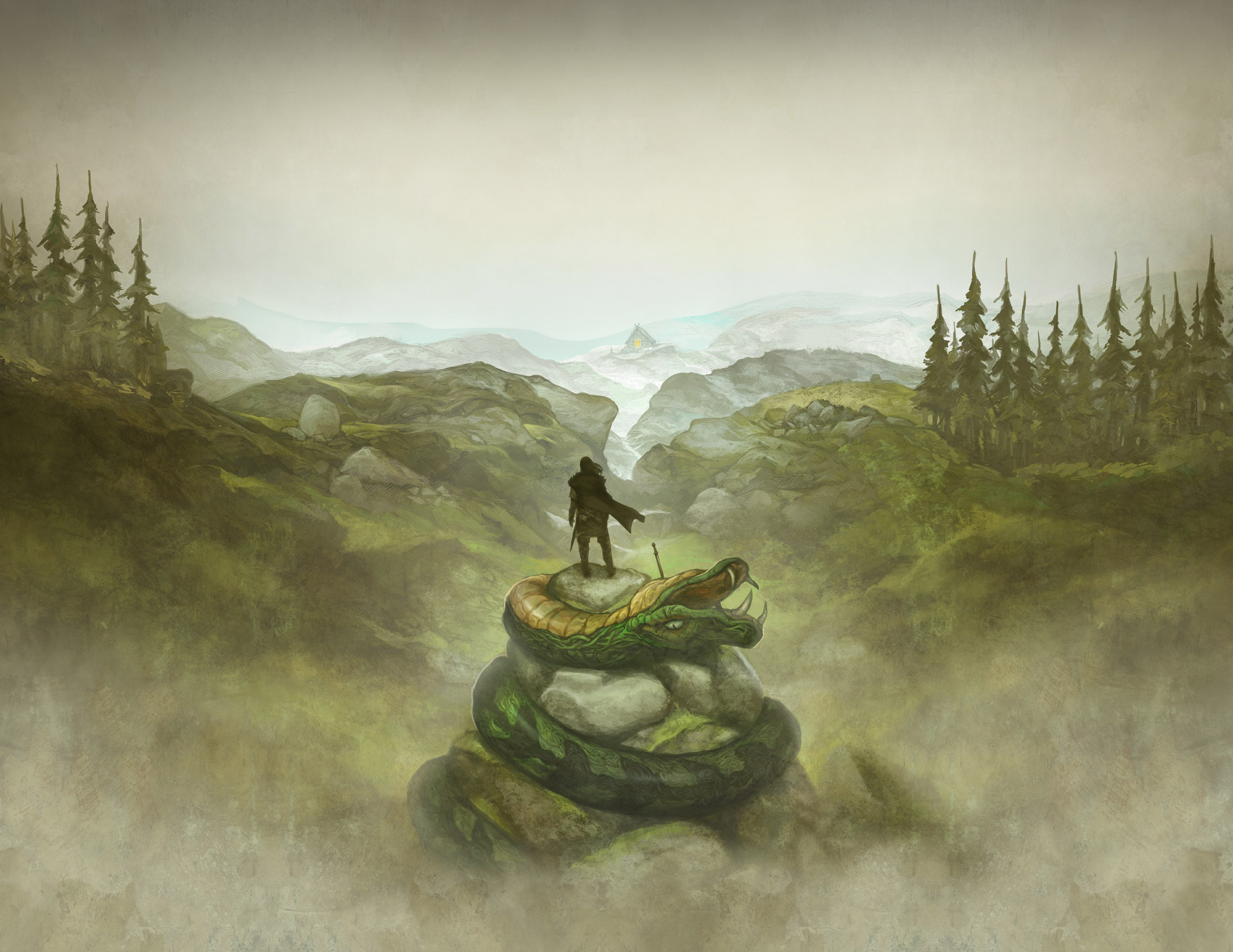

    Grand scale characters and plots exploring questions that are perennial and maybe seem obvious to us can be overdone like anything we human beings do. However, I think that they communicate the vastness of this universe and this existence much better than stories trapped on this earth do. Because Romantic works give us such a huge view to look at, they force us to actively consider and choose what our focus is. We can't passively take in a good, Romantic work; we have to internalize the ideas presented or else we can't understand it. There is no way for us to simply let it be. On that note, this can often be why many people profess not to enjoy grand, Romantic works as much. They take more intellectual effort to appreciate and cannot be taken in without engagement. Oftentimes, it's easier to have a moral handed to us without further ado, like Christ giving us parables in the Gospels. (And there's nothing wrong with that.) Remember, though, Christ also gave us Revelation. We're not meant only to be pushed towards Heaven and the transcendental goods, but also to push ourselves, to make a constant, real effort to ask the questions we must answer and pursue the goods we must acquire. For those reasons, we need the challenges in our stories to look not down at the earth, but up to the Heavens, and to ask What lies within. 

Well, that's my two cents, anyhow. What are your thoughts? Do you prefer to read more Romantic or Realistic works? Which do you prefer to write? Share your thoughts, if you have any, and, meanwhile, have a wonderful Easter season! (And give Megan some extra applause if you enjoyed this post... Some parts were inspired by an old post of hers about language in writing, but I can't find the post anywhere to link to it anymore... [EDIT: Thanks to Megan, it's now linked in the comments below.]) 

Thursday, August 20, 2020

Ancilla Domini - A Poem in Honor of Our Lady

Ancilla Domini


A handmaid once did live in days of God’s good, golden earth;
She was the girl who knelt before Him,
He to whom she gave birth.

An angel came, declaring to her things mystic, absurd:
She was the girl who knelt before Him,
And so received the Word.

A nodded head her answer was, no doubt of Man to heed,
For she was the girl who knelt before Him,
Her “Fiat” her one creed.

A mother was she all His days as, growing, He prepared;
She was the one who knelt before Him
Before all others dared.

She walked with Him his weary way as Sorrow’s Mother, Heir,
And she was the girl who knelt before Him
As He hung, dying, there.

What pain did prick that purest heart when seeing naught but sin?
She was the girl who knelt before Him
When Man made mocking din.

The Word, unheard, did seem to go, in silence three long days,
But despite grief, she knelt before Him
When faded was His Face.

And when return-ed He from rest, new life rang in the lands,
And she was the girl who knelt before Him,
Kissed his pierc-ed hands.

To His Will stay’ng, though sorrowful, Maid did her Master miss,
She was the girl who knelt before Him,
Her heart heavy with His. 

But death’s bells came like sweet chimes tolling when united was she,
The girl who often knelt before Him,
With sweet Eternity.

Beauty’s Bliss, Divine Son, was her dolor there to drown,
For she was the girl who knelt before Him,
And He gave her a crown.

J.M.J.

Wednesday, October 30, 2019

Concerning Halloween...

So... If you're a Catholic (or really any more rooted Christian), you've probably, at least once, run into the controversy of celebrating Halloween. You may only vaguely remember it and what it's about, or you may be so thoroughly sick of it at this point that you ignore that very existence of Halloween. Either way, it's worth another look. Why? Because I believe that there are too many "you're wrong, I'm right," approaches to the discussion (not meaning, of course, that there isn't a solid truth to the matter, but, rather, that people tend to talk over each other for whatever side of the debate they're on, and very rarely try to even understand the other opinion).

For those who don't remember as well, the debate mostly parts into two paths - no, you should not celebrate Halloween (or if you should, do not acknowledge it as Halloween, but merely an early All Saint's Day) because, you know, demonic influence and such; yes, you should absolutely celebrate Halloween (even if detached from All Saint's/Soul's Day) and it's all in good fun and there's nothing harmful about dressing up as human nightmares and pleasuring in darkness. Well. If you're on one side, I apologize for the bluntness, but, in all honesty, I cannot stand either argument a lick. They're both wrong.

Let's tackle the easier one first. If you're a traditional Christian, you're probably already looking at the latter description above and thinking "Eh, duh! - of course there's something wrong with dressing up as human nightmares and pleasuring in darkness - what is wrong with this world?!". You are right. But I have definitely met people who think otherwise. Because the line is so fine between celebrating harmless and harmful Halloween, many people tend to think that, as long as it's not serious, anything goes. Sure, you can have your silly costumes. Sure, you can put up your little cartoon ghost picture. Sure, you can go and tp houses at night. Sure, you can rope up a bloody, misshapen, raggedy doll on our tree outside so that it looks like it's hanging. Ahem. You get the point; it gets out of hand fast.

There is (as I will demonstrate later) absolutely nothing wrong with dressing up or having cartoon figures around the house during Halloween. Both, in fact, are at their root very Christian traditions. What's wrong is making a celebration of all things dark, ugly, and macabre. If you find putting fake bloody fingerprints on your window fun, then you've got a problem. Because we don't understand the difference between mocking and celebrating evil, we often stray towards the latter, patronizing nightmares, fictional mass-murderers, and demons. We can't just say, "you know, some things about Halloween are harmless, so that must mean I can celebrate everything about Halloween!". It just doesn't work that way.


Now. If you're in the other camp, you might already be disagreeing with me that there are some harmless things about Halloween. Well, disagree with major Vatican exorcist, Fr. Vincent Lampert:

"Ultimately I don't think there's anything wrong with the kids putting on a costume, dressing up as a cowboy or Cinderella, and going through the neighborhood and asking for candy; that's all good clean fun."

Fr. Lampert does not in any fashion mean that there is nothing wrong with the current celebration of Halloween; in fact, his point he leads up to in this statement is that it's not cowboys or Cinderella that are walking through the neighborhoods these days; look around Halloween night, and see if you don't find witches, serial killers, and bloody ghosts any way you look. Is that good clean fun? I don't know about you, but Fr. Lampert (and I) would say no. 

In truth, it is actually the kinship with evil that is accomplished which is the true crime oft committed on Halloween: we watch scary, unhealthily gruesome movies, we, in all seriousness, try to dress up as the most grotesque of figures, and we play games invoking a demonic theme (or even, directly, the demonic). Not only this, but, even those of us who merely engage in harmless, cartoonified revelry forget the point of Halloween - God. Halloween is a mockery of evil, a day to triumph, for we know that many have smitten the devil and gotten to Heaven, and many yet may. If we cannot keep in mind the purpose of a celebration, then that celebration becomes mere gluttony. If we're eating candy and dressing up and all such things without even a thought of why we're doing it, then we've just become blind pigs, eating without need for survival, and reveling without joy.

For ages, Christians have celebrated Halloween - we've celebrated it longer than the seculars, and we've celebrated it (despite common belief) longer than the pagans (the pagans did not celebrate All Hallow's Eve, a day for thoughts of Heaven, but, rather like today's common celebrations, merely celebrated a liberation of and communication with evil spirits on a similar date, which, by the bye, they did at the end of every month, and not specifically October). The reasons to not celebrate Halloween are similar to those who might advocate the end of Christmas celebration:
  • Bad people, and, in fact, most people now celebrate it wrongly.
  • It's become so secularized.
  • There was a pagan holiday vaguely associated with its date.
  • It's an occasion for evil influence. (Every day with an occult-curious, atheistic, or badly faith-formed person is an occasion for evil influence!)
  • Not only God, but morality in general has disappeared from it. 
  • Nobody goes to Mass that day anymore.
  • And other similarly related reasons of its religious lacking.
Just because a holiday (holy-day) has become abused, we do not have to boycott it. In fact, I would say that is all the more reason to celebrate it - if people are celebrating it wrongly, then let us do it justice. Use the occasion to gain graces available that day, and make spiritual amends for the wrong done by the rest of the world. 

In fact, in addition to condemning the mainstream materialist and occult celebrations of Halloween, the Vatican-endorsed International Association of Exorcists in 2014 encouraged celebrating what they called "Holy-ween" - a vigil with prayer and remembrance of Our Lord's death and Resurrection, as well as a celebration of the saints.

I absolutely love this idea. Whoever thought this up is a genius. My toddler sister saw it and immediately exclaimed "It's a pumpkin Mama Mary - so pretty!"

If there is a harmless Halloween and a spiritual Halloween, then, I believe, we should be celebrating it. If your kid wants to dress up as a superhero, a princess, or, better yet, a saint, let them, and even encourage them! As a fairly recent Catholic article suggested, we should use the occasion to teach children about Halloween, its true meaning, and its opposite, not pretend it doesn't exist. Because Satan has no influence unless we give it to him, we've got to reclaim the holiday as Christian - don't let the seculars take a Christian holiday, and certainly don't let the demonically-inclined do so! Halloween will only get better if we're actually making it what it's supposed to be.

That's it for me. Your thoughts? Agree? Disagree? Anything to add or comment on? Do you celebrate Halloween? Or, more importantly, how do you celebrate Halloween? Are you getting frustrated with the number of slasher villains running around your neighborhood on Halloween? Or perhaps are you (lucky dog) preparing to go to an All Hallow's Eve Mass or saint-oriented costume party? 

Thursday, September 12, 2019

From Many Burdened Hearts... A Prayer Request

Not so long ago, one of my best friends sent me a recording of fifteen decades of the Rosary, in Psalter-style Gregorian chant. Of course, I was delighted - what a rare treasure to find on YouTube, of all places! The recording was beautiful, and I cannot express enough thanks to both my friend and the user who put the video up. But there was a catch. As is a bad habit I have, my eye came upon one of the comments on the video. The comment in question claimed that the Luminous Mysteries are not part of the Rosary and not to be honored as the rest. It also called Vatican II the "Judas Council," and claimed that a concern with sedevacantism was motivated by pride and ignorance, as well as being irrelevant. Of course, everyone knows that reading comments online, accidentally or not, is a bad idea because there are such things as trolls. But here's the catch - the comment in question was made by the maker of the video.
I was very confused when I first read the comment, of course - why would such a seemingly orthodox user almost pointblank deny the Pope's authority, as well as insult other devout Catholic listeners? Well, I scrolled back up to the information on the video, and found similar claims by the author contained within, including, even, a link to an essay claiming that St. Pope John Paul II could have been a heretic.

What a horror. Unfortunately, it's not actually that uncommon, this bizarre occurrence. In fact, it's rather become a trend in some traditional Catholic circles - not most, no, but there are a few where its roots are planted quite firmly. The root in question is a mindset which is mostly quite traditional and orthodox, but has two sometimes mortal flaws. Firstly, the more common and less mortal one, is to assume, in a matter where the Church allows open opinion (such as the death penalty, modest dress, movies, or prayer outside of Mass), that one single opinion is the written, de facto, absolute law. This is just snobbery - it's not pleasant, but it's not apostasy. The second flaw is a more serious one: the tendency to view anything given by the Church (including but not limited to the Pope, the councils, and the bishops) that is anything less than 100% traditional as heretical.

It is a terrible mindset. But why is it so terrible? It is terrible because it rips the Church limb from limb, and divides even orthodox Catholics among themselves in a time when unity is so, so very important, and allegiance to the Church even more so. This refusal to accept anything that is not gleaming with idealism is a refusal to accept the Catholic faith, which is not idealism, but, rather, an attempt to reach the immortal idea, and the immortal Good. A defense of Vatican II and its actual traditionalism, or an argument against the sedevacantist viewpoint is best left for another day - that's not the point.

Unfortunately, it takes some bitter medicine sometimes to get the real point to us - this is definitely the case with me. Call me uncharitable (as I can be), but my first thought, coming back to the YouTube user above, was not "Lord, help his soul, please," but, rather, "Oh dear... Why must you spoil this...?". Thank the Lord for memory... because my second thought was to remember something.


A friend of mine who was in the Tridentine Schola with me back when I lived in Virginia was one of the most devout Catholics I have ever met. He was reserved, kind, well-read, and had a devotion and intelligence quite rare. He was even discerning the monastic life... before something else happened. When more scandal broke out in the Church, including the sex abuses, Pope Francis' editing of the Catechism, and word of a few awry councils, my friend left the Church, determining that the seat of Peter was empty - there was no authority left. As far as I know, he is still a sedevacantist, and I have only seen and talked to him once since he left.

That was probably the only thing that connected me to the misled YouTube user - a friend who, despite all goodness and presence of mind, thought exactly the same way. I don't know to what extent the man on YouTube has fallen from the Church. I cannot judge his soul. I could not even tell you if, at this point, he has changed his mind about the statements he made on the video - I pray that he has. But this connection made me realize something: there is so much sorrow, so much suffering in the Church, from being led away by such views, and also, so much more, from the heretical spirit that inverts so many progressive churches, and gives these people so much doubt about the Rock of St. Peter. It is a terrible burden that the Church has, to bear sin upon its shoulders as Christ did, and it is far too easy to despair because of it.

Please, pray for my friend. Pray for the Youtuber. And pray for all those burdened hearts that have lost their grip on the Rock Christ built on. Because they who could be the life of the Church are struggling to live themselves.

Monday, April 1, 2019

The Crusade - A Poem

My apologies for both lack of my usual Lenten Meditation post (I will try to post it soon!), and for the rather militaire rather than penitential nature of this particular poem - hopefully it is not too contrasting with the season...
***

Oh, how the cross's trumpets rang;
Hear what they had to say -
"Come over hill, come over dale,
Come march, we march away
To battle vice and win for Christ
Jerusalem, we pray -
Jerusalem, we pray!"

"As crimson as the blood we pledge
Is the red cross we bear -
Oh, come over hill, come over dale,
Come into the Eastern air,
To give your all for glory or fall
To give to our Host-King fair -
To give to our Host-King fair!"

Oh, have you heard the clarion call
That did so long ago
Come over hill, come over dale
To let all Christians know
Their time was for a godly war
Against all sin and woe -
Against all sin and woe?

And did you know that, although Time
Has since that holy ring
Come over hill, come over dale,
It still to all Christians sings:
"Standard unfurled, go purge the world
Of any unholy thing -
Of any unholy thing"?

And since, commanded, we must do
As we have thus been told,
Come over hill, come over dale,
Your courage and effort unfold
'Til our war-band may, hand-in-hand,
March into the gates of gold -
March into the gates of gold.

Sunday, May 13, 2018

Praise For Fictional Mothers

Happy Mother's Day (and Feast of Our Lady of Fatima, coincidentally) to all! :D I thought it might be fun for Mother's Day to explore some of my favorite moms fiction has to offer - care to join me? :)Because mother character so rarely get applauded, I would love for anyone and everyone to add any they can think of in the comments, even their own story's mother characters! Because we need mom characters - they are the ignored heroes of the stories. Without them, would we even have the heroes?
Queen Frigga from Thor
M'dear friend Megan has already pointed out each and every one of this amazing mom's qualities, both as a character, and as a mother here, and I couldn't agree more! Frigga is strong in the midst of weakness, and is the glue to a broken vase, so to speak. No family in fiction that I can think of is quite so broken up as Frigga's at that start, and yet no mother in fiction that I can think strikes me a stronger in the situation.
Mrs. March from Little Women
Ya know, I'd always felt, even as a little girl reading the story, that there was something special about Marmee. She was every bit as caring as a real life mother, and had a character all her own, which is an attribute sadly lacking in many fictional mothers. She seemed almost the definition of a mother - caring, but fierce in her own way as well. And I must say that a good few words of Marmee's advice have stuck with me quite determinedly through all these years. After all, Mother knows best - and Mrs. March is no exception!
Galadriel from Lord of the Rings
Perhaps for most people, mother is not the first thing that comes to mind when they think Galadriel. They might think 'Ring-bearer,' 'Forest-queen,' or even, perhaps, if their mind is inclined to agree with the stupid movie Gimli's ramblings, 'Elf-witch.' Putting aside that last one, she is all of these things. But also a mother. And a mother primarily. You know, without her, there would be none of Arwen and Aragorn. Because there wouldn't be Arwen. While the movies ignore it quite blatantly, Arwen is the granddaughter of Galadriel, child to Galadriel's daughter, Celebrian. And, you know, once I found out, I was never really able to think of Galadriel in any other way. She just seems like a mother, though her role as one is quite hidden in LotR. But the truth is, motherhood isn't glory. But it's goodness. And that I am sure even those who at the start of this thought like Gimli would agree Galadriel has. Because, believe it or not, she was a mother before she was ever an 'Elf-witch.' ;)
 Resa Folchart from Inkheart
Okay. I'll admit it. I was never a big fan of Resa, even having watched the movie basically since it came out. But, honestly, she deserved my fandom. She was a mother whose motherhood was torn from her, and what did she do? She didn't just move on. She didn't make a new life. She didn't try to get glory for herself. She spent her every last ounce of effort - even unto slavery, imprisonment, and almost death - to be a mother again. She used every power within her just to get back to her child. Now that's a determined mother. I think she deserved my fandom.
Eudora from The Princess and the Frog
There's unfortunately not a whole lot about Eudora in the movie. She's Tiana's down to earth, hard-working, wise-woman Mama, and that's most of what you get. But that's enough. Even just the little bit you get of her, you can tell a lot. She worked herself to pieces just to raise Tiana. She's been poor, widowed, and been through quite some trouble. And, even though Tiana was a good worker like her mother, Eudora always had to try and convince Tiana of what she really needed. And though it seemed never to work, she kept on trying. And finally, it worked. Finally, throughout a chaotic sequence of events, Tiana remembered her mother's words and finally found what she needed.
We Need More
Sure, there are good mother characters out there. But they're few and far between. Most of them are from old or obscure books, and are not commonly known. I've tried my hand at making some - and sometimes met with some measure of success. Queen Gianna from The Clarion Call (previously, Alagna) is a mother who actually has a good relationship with her children, Anwynne's mother in The Pain of a Memory, though little-mentioned, actually cares about her daughter, despite Anwynne's own rather uncaring character, and Felicia from Clarion Call actually has a relevant role in the story. But these are not enough. So I'm calling all of you *cue Uncle Sam picture* to write mother characters. Good ones. Intimate ones. Real mothers. Will you answer?
What do you think? Can you add any other good mothers in fiction who need praise? Have you written any mother characters? Are you willing to answer the need for more?

Wednesday, March 28, 2018

A Handful of Lenten Traditions From Belle's Corner of the Season

Haha, I know this post is incredibly last-minute, but I did want to post a little more on Lent - just wasn't brilliant enough to find much to say. :P But! - I at least have some things to share, if no wonderful meditation to speak or profound speech to give. So I decided I'd share a few of my own Lenten traditions with you folks for the last few days of Lent there are. :)
The Movies of Lent
One of my family's traditions every Lent is to watch certain movies during the season at some point, the most unbroken one being watching The Passion on Good Friday with whoever is old enough to watch. Another movie, though a more recently-added one, is watching Risen on Holy Saturday or Easter. I also tend to watch The Robe during the Easter season, but I guess that doesn't really count for this post. ;P The main one, however, is watching The Passion, and it gets more fulfilling each time because each year or two at least one more person is old enough to see it for the first time, so the audience gets larger with time. :) This time, it'll be me, my parents, and three(?!) of my siblings.
The Friday Meal
I'm sure all of you probably have your own preferences and traditions as to what meal to do on those Lenten Fridays wherein carnivorousness becomes heinous, but we have one of our own that goes back a couple generations. Mia famiglia (and me, of course) have a tradition of doing grilled cheese and tomato soup... for whatever reason. Maybe 'cuz it's a filling, non-meat meal. Maybe it's 'cuz most of us despise fish and any other seafood. Maybe it's just 'cuz we know how to make it. But, for whatever reason, that's what we do.
Holy Week and Mass
Perhaps we could be a bit more creative with our traditions, but we always like to go to daily Mass during Holy Week as a family at least once. However, as this is probably a fairly common one with all you Lent-lovers out there, I will skip over it. ;)
The Watch of the Hour
Even from my youngest days, I remember my dad always watching the hours on Good Friday for the most Holy of Hours. Every year, whatever us kids were doing, he would come and tell us when it was the time, and we would usually do a Rosary or other prayer of some kind. I used to hate it, because my dad would always interrupt whatever we were doing, but now I look forward to it as a helpful reminder.
Getting in the Mood
My mom, my sisters, and I all are advocates of the veil/mantilla/hat/other awesome head covering at Mass, and Lent is no exception! However, when the priest gets his seasonal Mass vestments, doesn't it make you want to get in the mood too? Well, it did me, so now I (and sometimes the women of mia famiglia join me on this) wear a black mantilla all during Lent instead of my favorite white one - just to get into the look of things during the season of penance. I mean, really, we used to do this back in the old days, why not now? :D
The Torture Device
Ya know, I used to think giving up sweets for Lent was such a wimpy thing to do. And perhaps for me it is. But my dad does it - along with other things - every single year. And this perhaps wouldn't be such a big deal... except for my sister. She has a fascination with baking, and is extraordinarily skilled at it, and she always picks Lenten time to try out those delicious new sweet recipes... just when most people have exempted themselves from sweets. I almost think she does it religiously now, as an unbroken tradition to tease all those poor, pious souls who have given it up. However. I actually love it that she does do it, because now, giving up sweets is a much more grace-garnering penance than it used to be. ;)


What did you think? What are your Lenten traditions? Your family's? Have you done any of these? Would you consider them? Have you ever seen The Robe??? :D

Wednesday, March 7, 2018

A Writer's Dilemma - Writing and Racism

I used to worry a lot about a good few things in my writing. Some of them, well, I still do worry about. But there's one that needn't be worried about - for really anyone I've seen.
Let me lay out a scenario. You're a white writer, and you like to write novels. Now, many or most of the characters in said novels are white. You suddenly realize you have few or no black characters, few or no Asian characters, few or no Hispanic characters, few or no Polynesian characters, etc. Mostly plain old white. And you start to worry - am I being a racist? Is writing primarily Caucasian characters going to make me unpopular with non-Caucasian people? Is it going to offend or exclude them? This is exactly the scenario I've found myself in before. I have tried to amend it, of course, since then:
  • Sam Bastikka and his son, Felix, from In Greater Hands are both Jamaican, and so black
  • Alejandro Lorenz from A Broadway Waltz is Hispanic/Latino
  • Chalera from The Treasure of the Twin Temples is Native American in basis, though from a fictional country
  • Dominique Morales from The Treasure of the Twin Temples is Hispanic (duh!)
  • Kate Venji from In Greater Hands is Indian
Above are my frail ways of mending the situation. But, you know, slowly perhaps, but truly, a question dawned on me. Is it racist to naturally have a tendency to envision majorly white characters? The answer in short, friends, is no, it's not.
Imagination and Familiarity
I like to think of it rather like the many images of Our Lady that there are. Think about it. An African painting of Our Lady depicts her as black, wearing perhaps a Nigerian woman's garb. But we know Mary was not Nigerian. A Russian depiction of Our Lady may have her wearing many mantles and layers of illustrious jewelry, as was the fashion of the Russian monarchs, and it may depict her with blonde or red hair. But we know Mary was not Russian. A Chinese depiction of Our Lady shows her wearing a kimono, having black hair and dark eyes like the Chinese themselves do. But we know Mary was not Chinese.
I think the reason people do this is because when they sympathize with a character or person, they don't just start being like that person, they start making that person like them. When we imagine a character, or in this case, Our Lady, we want her to be familiar to us - a part of our lives, and our culture. Now, whatever that respective culture may be, it's usually not the one that Mary really came from. But we paint and draw her akin to us nonetheless, because we not only want to see us in her, but we want to see her in us - we want to imitate her. So we start by giving her something in common with us.
Writing is exactly the same way. When we make a character, the character usually starts out with something in common with us. Think about it - every single one of your characters, Writer, even villains, even the ones who don't physically look like you, have absorbed some part of you from their beginning. And chances are, later on, you started to absorb them too (although hopefully not as much so in the case of the villains). But we start with familiarity in our imagination, so it shouldn't shock you that that's also how we start out in writing. If we start out with white characters, it's usually not because we're racist, it's because we're white. I mean, black writers probably start out with black characters. It's just natural. We write what we daily see around us; what we look in the mirror and see; what is familiar. This is why most girl writers tend to have female main characters, and other way around for guy writers. This is why many underage writers (like myself) tend to have younger main characters, while sometimes older writers will write older main characters naturally. It's not racist. It's not sexist. It's not age-ist, to make up a completely new, ridiculous word. It's. Just. Natural. So don't be embarrassed by it.
Writing What We Know
This is similar to the concept of familiarity - we write what we know. Oftentimes, also, the races and respective looks of our characters depend on what kind of a culture we set them up in. Kudos to the people who make up their own cultures, but even those are based off of something. And when we write cultures, we like to use ones we know well.
Most Irish-descended writers I've met write at least part of one of their stories (if not far more) in a Celtic or Celtic-based setting. An African friend of mine particularly favored African settings. I myself am Norse-German, and as I am writing my newest novel, I'm finding that I unintentionally somehow picked a Germanic setting. There's a simple explanation, again. An Irish person likely has their talkative Irish grandparent to tell them all about beautiful ole Ireland. My African friend's parents always told her stories from Africa when she was younger. I myself have been told quite abundantly about my Viking and Frank ancestors, I assure you. So the cultures we know the most about tend to take precedence in our writing... and those usually tend to be the ones we have that wise old granny or storytelling uncle from.
But Should We Fight It?
This is the big question. Is it racist to write that way naturally? - no. Is it racist to wittingly keep writing that way? - well, no. Obviously, we should all strive for a certain amount of variety in our characters, in every aspect of them, which includes race, nationality, and looks, but that's not correcting racism, that's just good writing - a writer's common sense, if you will. If all our characters looked and acted the same, it would be quite old after just one novel, much less an author's whole repertoire. So it is definitely good to explore other types of people - not just racially and culturally, but psychologically and characteristically as well.
However. That being said, you shouldn't push yourself to write in a way that is estranging. So, yes, have multiracial characters and stories, but don't make all of it that way if it feels unnatural. Don't try to write what you don't feel comfortable with. So if you're uncomfortable writing a guy's POV, then do it less than the girl characters'. If you're uncomfortable working with a culture you don't know - research, of course, but if it's just not your thing, then just do it less than you do your signature cultures. As for characters of other races - strive for it! But don't put it before writing well and writing what you want to read.
What do you think? Anything to add? Have you ever struggled with this dilemma or something similar? Chat with me! - I would love to hear your thoughts. :) 


Wednesday, February 14, 2018

The Song of Violetta, Our Song - A Lenten Meditation From the Opera

Some time ago, I was having a sleepover with my best friend - it was pretty fun, and we did a lot. But the one thing that stuck in my mind was the opera we watched: the Gheorghiu/Lopardo production of La Traviata (The Fallen Woman). And within that, one part in particular, here.
It's a very famous part in the opera, but it didn't strike me for its fame - it struck me for its familiarity. The woman - Violetta Valery - and her song were all too familiar. The words are now almost painful to hear, knowing them. Violetta sings as though she hasn't a care in the world, doesn't she? And even the two words she always repeats are so carefree and pleasured; "Sempre Libera!," or "Ever Free!," she sings. And yet, there is a tone of pain. Who could guess that just before this, she was singing a different tune? A sad, drawn, and pained one, with a melody quite heartrending. And within that, she was singing of something else entirely.
In Sempre Libera, Violetta sings "Libera" (free), "Gioia!" (joy), "Follie!" (folly), and "Piacere" (to pleasure). So it seems she has forgotten her anxiety of before. But then suddenly a voice drifts in from the outside... a voice Violetta knows. The voice of Alfredo, Violetta's only faithful admirer, drifts in. She - being the fallen woman that she is - scorned him for being faithful, laughing at him. But that didn't change Alfredo. It did change Violetta, though. The melody Alfredo sings in the distance recalls when he first revealed his faithfulness to her, and it haunts Violetta, but she nonetheless tries to regard it as "Follie!" and enjoy herself. The words describe love, but in a different way from the love Violetta knows - "Mysterious, high, both cross and pleasure..." Violetta does not know of anything like this, and is disturbed.
The sad song of before, Ah, Forse Lui (Ah, Perhaps He...), spoke not of death, or pain, or really anything like that... and yet, it terrified Violetta and brought out mourning from her. It spoke of Alfredo, oddly enough, and Violetta considered to herself whether to actually stop and have love, serious, true love. She has never even thought about this before - Violetta is a prostitute, you see, originally from very poor beginnings - and faithful love is a strange idea to her. And a terrifying idea. Violetta's carefree joy seems to come from her later thoughts, that she must be free and enjoy herself, and love and party as she pleases, and only anxiety comes from thinking about faithful love and giving things up. How familiar.
The words remind me firstly of our culture - how many times have we heard nowadays from our public that we need to be free, be ourselves, enjoy life to its fullest? And they, unfortunately, suggest doing so in the same way as Violetta. They tell us that loving as we please and withholding from ourselves nothing we really want is the way to enjoy ourselves, the only way to be free and empowered. They tell us that it's all about us, and not about love really. And so we enjoy ourselves. We gallivant and break hearts and go about being 'ever free,' a stranger to anything other kind of love. And then, when faced with true love, we are confused. Maybe even pained. 'Why do we have to give other loves up for one?,' 'Why should we be faithful?,' 'Why must we have love in a certain manner?,' 'Why can't we just love anyone we want?,' We complain, and we think we are bound and shackled by these limitations.
Poor, poor Violettas. A lot of them. They agree so much with Violetta in the beginning, but they ignore what happens later. Even she caves in, and finally gives herself up to the true love of Alfredo. But it is still about her for a while. She lives with him and loves, but then one day, something happens. Alfredo's father comes to Violetta, requesting a simple thing. He speaks of Alfredo's sister, unwed, weak. She will never wed or be cared for properly if Alfredo and Violetta's relationship does not stop, because her reputation will be tarnished by it. So Alfredo's father, Signor Germont, asks Violetta to end it, pleading with her for the sake of love. But Violetta refuses. It is her love! Alfredo is hers now - what business has anyone to end this joy? But then, thinking once more of the words about love Alfredo once sang to her long ago, Violetta finally agrees. Now she fully acts in love, though she knows it will be hard. Because she can see Alfredo, her love, in the weak, unknown girl so much in need of care. And so Violetta gives herself up.
Now that Lent has started, I think ever more of this story. Because it's even more familiar than how I pointed it out above. Not just our culture is reflected in poor Violetta's story. What does the love of Violetta recall more than the Church, Christ's imperfect Bride? We are Violetta in a way. We do as we please, considering nothing but "Gioia" and being free. And yet, when faced with the alternative, we are scared. Faithful love terrifies us, because it shows us what we don't do. It shows us something radically different from being ever free or taking joy and pleasure above all else. Christ loves us more than anything, and far more faithfully even than the metaphorical Alfredo. And yet we remain Violetta in her Sempre Libera - we will have our freedom! And when we really think about giving ourselves up, the thoughts are pained and sad, and we only can think of how hard a path it would be. But perhaps He has real love for us. Perhaps we will give ourselves up. There's no better time than Lent. What are you giving up for faithful Love?

Monday, January 15, 2018

Suffer Your Characters To Suffer

What would you say your favorite story is? If you're like me, you probably can't pin down just one, but a list. And what do the stories on this list have in common? I can guess at least one thing - for my favorites all have it in common as well. Suffering. The characters and suffering.
It makes a better book out of a bad one
Physical, emotional, mental, or spiritual, all good books have suffering. Does this make a good book? Not necessarily, but it will make a better book. Even if your plot is as holey as Swiss cheese and your setting as overused as the word cliché and your characters as bland as angel food cake without frosting, suffering can at least help. Making your characters suffer will bring more attachment to them from the reader, at least out of empathy, and making high, difficult situations makes a plot more intense and a more enthralling read. Making your characters suffer can even help a boring setting, because it invokes urgency in the reader's mind, making them think that this is a dangerous or very undesirable place and situation (and all of us, the odd creatures we are, enjoy reading about other people being in trouble). Making your characters suffer will add interest in their wellbeing, because any sympathetic human being will at least be mildly interested in their solution to this suffering.
It polishes an already good book
Even if you have a nice, creative setting, good characters, and an intricate plot, you should still incorporate difficulties and strife. If your amazing characters are uncomfortable, it will have twice the empathetic effect as characters who are not amazing. If the reader loves your characters, their heart will ache all the more seeing them suffer, and be all the more invested in it. If your plot is already good, this  - even if it doesn't increase the stakes themselves - makes the stakes seem higher for losing it all. Same with the setting - suffering increases the human element in a story's setting because it is an essential part of humanity and earthly life.
It will increase your creativity
Thinking of new ways to make trouble for your characters that nobody else has used is one of the best exercises an author can do for creativity. A bajillion authors let somebody get shot in the shoulder with an arrow. What about in the middle of Central Park? A bajillion authors let people die in the last stretch of the book. What about early on? Even if the idea isn't necessarily a good one to actually use, your span of new ability for ideas is broadened by having it.
It develops your characters more
What makes each of your characters suffer? In trying to figure out even just this tiny question, you are delving right into your ink-and-paper person's heart. A tiny bit of heartache for a character can mean pages worth of development on them.
But isn't it a bit psychotic?
I've heard a few authors concerned before that making characters suffer can decrease the author's empathy, or make an author become rather obsessed with, or even a bit psychotic and inhuman in their normal life. However, let me dispel these fears. Actually, at least in my case, making my characters suffer has made me far more empathetic. Submerging myself in the darks and lights of other fictional people allowed me to see into the different viewpoints of other real people. In fact, I believe writing has done wonders for my relationships with my siblings and close friends especially, because I can imagine things from their point of view. And even random people, I start to analyze their viewpoints in my mind - it helps to know them better and to respect their actions more. As for being inhuman, many authors tend to give off that vibe, but most of the time it's not because they're authors. It's because a lot of authors are introverts, who also seem to give off that vibe, but in truth are merely people in their own little world. If authors don't pay attention to other people, or seem too quiet, it's merely because they think more about what those other people are saying or doing, not less. And being obsessed with making your characters suffer is a problem I have never come across in all my days of being an author or meeting other authors. A few may celebrate it, but that few are the people who like to pretend they're psychopaths anyways, and so writing was just one of many ways they found to channel that usually comically-meant persona. As far as I've observed, none of us are really, truly obsessed with seeing other people suffer.
Why do we write suffering?
Yes, you may agree with my arguments at this point, but there is the creeping question that I haven't answered yet. Why? Why do we as readers love books with suffering? Why do we as writers tend to write suffering? Why? I think the first reason has to do with what I've mentioned above - suffering is such an integral part of humanity, that it gives us a revelation of our own lives and world to see suffering. We realize how much it reflects our humanity and it plays upon our hearts' attachment to our fellows. To see another suffer reflects our own suffering, and we wish for both to end, but we are interested because it tells us what we bear in this life.
Another reason is the reason for real-life suffering - it is a cross we must bear, but it touches us. In suffering, we grow within ourselves, and in sticking with others through their suffering, the same effect is accomplished through our human empathy. We are perhaps sobered by the fact of suffering, but we also take joy in the fact that it is not all there is to existence. So reading it makes us feel the presence of both joy and sorrow, so deeply written in our being.
The final reason is perhaps the most profound. We, as humans, imitate what we love or admire. In our real suffering we imitate Christ on the cross. In writing suffering, we wish our characters to imitate that same scene. We love to see them as sacrificial, and beautiful, and a profound insight into the greatest things of life. In writing their suffering, we are expressing our desire to be like Christ even in our works. And in having our works imitate Him, we give him glory - and is that not the ultimate goal of any art?
Summary
 If you are writing a book, let your characters suffer. There is nothing better you can do for your book - and it can even be spiritually aiding for you in addition. And, perhaps, it can lead your reader also to an image of what they most want to be - a true human, who suffers with us all.
So there's my light writing-tip post turned all meditational and profound. This happens every time I write posts without pre-decided guidelines... :P But, despite the inconsistent change of mood mid-post, what did you think? Do you agree? Do you have anything to add? Are there any of the aforementioned mock-psychopath writers in my audience? And is anyone else frustrated with how incongruous the aesthetic of this post is???


Thursday, October 12, 2017

A Few Musings On Celeise

[Content Warning: Medium to high spoilers content within]
For the past couple weeks, I've been doing posts on a particular character for character interviewing. This, of course, is completely normal - just their bio and then their interview. But somehow, this one, Princess Celeise, is different. Maybe it's just because I don't think about her as much as other characters. Maybe it's because of all this posting on her. Maybe it's because my lovely audience has finally awaken me to several factors about her. But, whatever the reason, Celeise has been catching my thoughts lately. Maybe it's conceited to write a whole post just off of one of my own ink-and-paper people. But, I don't intend this post as a boast - just as a mere sharing of my thoughts as of late. Hopefully it won't bore anyone. :)  A few factors in particular I keep thinking about in accordance with Celeise.
How much she was unwittingly like me... A lot of her factors are. Her father, King Edarian, is her best friend, and she can't imagine anybody better - she even dreams that her future spouse will be like her father. Maybe it's because of my own love of my father - I truly cannot think of any better man, even in my wildest dreams. If I could just manage to fall in love with someone half as good as my dad, I'll be happy forever. Maybe it's a bit cleche to say that I can't imagine life without him, but it's true. And really, even though - unlike Celeise - I do have very close friends besides him, my dad has always been one of my first best friends, and still is one of my foremost. Maybe that's why I always liked King Edarian so much too - while he wasn't very much like my father, I could see through Celeise's eyes the same admiration for him; wanting more than anything to be like him, to measure up to him, never wanting to disappoint. The thought of any reader ever misunderstanding Edarian and disliking him always made me mad, perhaps also for this reason. I wanted everyone to love him as much as Celeise and I did - writing Edarian almost was a way for me to make the world love my dad too, I think. But in Celeise, I hoped to communicate that aridity of spirit, a sheer depression and loneliness - it could make someone fall into despair, but if they strove on, they could overcome it. I still have problems with it a lot. Celeise struggled with it without even knowing it existed before Percy came, but then afterwards she knew it and fought it - and she was better. Maybe Celeise's struggle and eventual victory over it was my way of giving all with that state hope.
*super spoilers* Another thing that I always seem to come back is the fact of Celeise's betrothal, and the contrast between the two sides of the said arrangement. Prince Lothaire - when his brother, king Lucellus, arranged it - was resentful of it. He even grew to despise his brother for it. How could a choice like that - a choice for his life - be made by someone else, even whole kingdoms? And he hated the idea, and vowed he would avenge himself -make himself superior somehow to his brother, who had thought himself powerful enough to direct Lothaire's life. Little did he know, though, that his bride faced the same fate. And what did Celeise do? She didn't resent her father for it. She didn't even resent the arrangement. She humbly submitted herself to it - even when her own heart raged against it, she chose to say, "No - not my will be done, but thine." This perhaps is the difference between Lothaire and Celeise - between the villain and the heroine. One chose to fight, the other chose to give in. And anyone who reads the story can see very well where each separate one ends up. The flip-side of the coin was all Lothaire needed to look at - maybe it would have changed him. And in their sheer contrast, perhaps this is why one ends with his resentment still nursed as well as if he were Achilles, and the other - in her plain humility - has forgiven everything done to her.  How they treat their fellow also makes them so different. Celeise loves her father more than anyone else in the world, and Lothaire never so much as said "I love you" to his brother, even before he resented him. *super spoilers end*
Maybe with all Celeise's grandeur, one might think her vain. But maybe I - like Percy - always saw through that, even from the beginning. When I described her as being beautiful, I never intended just to give all good traits to her, nor to bow to the flooding obsession with beauty. I never meant for her to have mile-long lashes and perfect bow-shaped lips that are always smeared with paint. I only meant for true beauty in her. One might note that I also describe Mina as beautiful. Perhaps a reader might think that it is too much for both heroine so be acclaimed as lovely. But, to my own mind, I think all women should be beautiful. Not in the sense I noted above - not in the flawless made-up look that is little short of a clown - but in a true sense. Women just are beautiful. Men are not beautiful by definition - there are a few that maybe women would call such, but no man would ever agree. Women are just meant to be beautiful, and even other women say so.
Perhaps I just overthink some things. But, whatever it is, somehow Celeise has caught my mind. I hope she catches yours too. :)
What do you think? Have you any characters who you ponder often? Have you anything to add? Tell me your thoughts, if you will. :)

Friday, September 29, 2017

A Writers' Call To Arms - Bring Back Real Men!

Today, I'm here to protest. No wishy-washy protesting today, no sir. However, I will nonetheless try to be as fair as possible. I have a problem - so do you - so does everyone in this world! The US especially has partaken in this horrid trend. What is it? Making men into monsters. The only reason so many horrific immoralities take place nowadays is because men aren't men. Women can do a lot, yes, but what about when we too have become debased? And even if we weren't, we're still only half the battle.
When jokingly speaking with my friend, Lucy Agnes, we got into a kind-of agreeing debate. She remarked that women had no high standards, but really ought to. And I said in agreement this: if Juliet has no balcony for Romeo to climb, then how does she know he loves her enough to climb it if she did? And at the time, I didn't think much about it. But now, as I ponder the subject more, I think how terribly true it is. We don't have any balconies. We don't even have any garden steps. Some of us have even sunk so low as to not even have a door in the way. And it's so sad. See, really, my protest here is about men, but I have to begin with someone else. The ones allowing it to happen - women. Everywhere I look in the world, women are debasing themselves for no reason. What happened to the days where a romance wen like this:
Lady is high above gentleman. He loves her and wants to make her know. So he tries. And fails. And tries again. And again. And again. And again. He does everything in his power to make her come down to him. But then he realizes that he must not let her stoop down - he must come up. So he climbs, and climbs, and climbs - up to her. And finally, he is admitted.
Now, some may think this sounds stuffy, but it's a whole lot better than this:

Lady is high above gentleman. He just says "Hey, get down here, I don't deserve having to climb all that way, and you don't deserve being up there". She comes down to him... only for him to then run away to a different girl's balcony.  
It's very sad. I hope in this comparison I have made my case concerning the part of women. Now to tackle the main subject.
Writers, ask yourself this: have I ever described men in a debasing way in my stories? Made a supposed to be sympathetic male character with no backbone, or who is effeminate? Made my leading man whiny, unintelligent, angry, or unsteady, while my villain was masculine and clever? Have I ever made my leading lady throw herself away in the hope of getting said leading man without ever regretting it? Have I viewed or described a childish leading man in my story as a good or ideal man?
If you answer yes to any of these questions without good reason, then I'm afraid you too may have fallen to the trend. What is it with us writers, then? Why is it that in the movies and books we get heroes like Harry Potter, Captain Jack Sparrow, and Iron Man? People who could care less about anyone other than themselves, even though they (with the exception of Captain Sparrow) make pretense of being heroic? They care about nothing  but their own acclaimed heroism, glory, and good name (and sometimes not even that). If somebody despises them, they don't just get over it. They despise the person back; insulting them and tricking them in whatever way possible (examples: Harry Potter always making fun of his unpleasant cousin Dudley; Captain Jack trying to double-cross Barbossa, Will, and Elizabeth constantly; Iron Man making crude jokes about whatever villain he's facing, not to mention Cap as well).
And not only that, but if they ever 'reform', it's only half way. And the writer sticks with them. Rowling often supports Harry in his poking fun at Dudley by agreeing that Dudley is fat, not so good-looking, and not incredibly clever. And what do we see in Jack's friends but people who not only deserve to be tricked, but also would backstab Jack as well on the turn of a dime? And how many Marvel fans and even Marvel makers out there are saying that Cap just needs to 'loosen up' about Iron Man? Loosen up on what? Loosen up on being a hero, on being a real man? The type that would give his life for even the random, villainous henchman who most heroes would say doesn't deserve to live? The type that would put his all into even the smallest acts, and never let go of what he believed if he knew it was good, true, or beautiful? The type that never disrespected boundaries that other people set unless said boundaries endangered someone? The type that could possibly want to remain true to the same girl for 70 years, and even afterwards, when she's dead, take her over anyone else were she still there?
And then there's Iron Man. The only heroism in him is the instinct to take glory and save lives because it makes him look like a hero. The only manhood in him is the cold definition of manhood - simply being an adult male. Iron Man doesn't even make pretense of giving up his life for people who have hurt him. He would be the one saying that the villain doesn't deserve to live. Iron Man even fights to save the world haphazardly, without plan and on whatever impulse or clever notion he thinks he has. And Iron Man only sticks to his beliefs (what beliefs he has) when they involve his oh-so precious ego. Not even to mention his habits of being a terribly unfaithful jerk.
So what is it with writers then? Why do we write these things? Well, it's a simple answer. It's because that's how things really are in real life. So we write what we see. It's another symptom of modern times - that realisticism in writing that is obsessed with making things out right down to the speck of dust realistic. No goodness, no beauty, just the singled-out dirtiest and most horrific facts. No art to writing anymore is there because of this. However, while I do have quite the bone to pick with realisticist writers (and I know 'realisticist' is not a real word, ironically enough), I shall deal with them another day. But they have helped cause this problem. The problem in society is caused by the fact that we don't want it to change. Obviously we don't, because we just write about what we see and think that's totally okay. We write these anti-heroes who never really change, these playboys who never really reform, and these male feminist wimps we would like to call men. We need to write not as things are - for that is a terrible, mottled thing in these days - but as things should be. A problem will never be solved if we are willing to just live with it.
So today, I have a challenge - a call to arms for all courageous writers out there. Today, just write one hero - a real hero. A man who knows himself, and - even despite struggles - can win over his dark side. A man who is true, good, and beautiful in the truest sense of those words. A man who is willing to climb those balconies and mount those obstacles. A man who is willing to stand strong like a mountain in the midst of a raging blizzard. A man who protects those he loves, and even those who don't love him, without credit or reward or glory. A man who does not give way to women in strength. A man who doesn't speak words of poison. A man who doesn't pitch temper-tantrums or whine or brood. A man who is not some macho braggart either. A man who takes full responsibility, uncomplaining, for all his actions, even when he knows he was wrong. A man who is just doing the right thing. Don't write the Duke of Mantua. Don't write Iron Man. Write instead Nemerino, or Captain America. A hero. Today, writers, write a man who is really a man.
What do you think? Will you respond to my call to arms? Please, take up your pen and respond to this call, much needed in these times! Every hero, no matter how small, will help in this quest. Just remember that, in artfully writing virtue - though the world is against you - you are never alone. Stand with me, writers.